





Adding a jump rope to your daily exercise routine is one of the most effective moves you can make for your health. It requires no gym, no machine, and no complicated program. Just a rope, a small space, and a few minutes. Your body responds in ways that surprise most people.
This is not just an activity for kids on a playground. It is a full-body workout used by boxers, athletes, and fitness coaches worldwide. And increasingly, everyday people are adopting it for real results without a complicated schedule.
Here is what happens when you make it a daily habit.
Jump Rope Strengthens Your Heart
Your cardiovascular system responds almost immediately to jump rope. Within the first minute of jumping, your heart rate climbs, your lungs work harder, and your blood circulation improves. This is the kind of stimulus your heart needs to stay strong over time.
What happens to your heart during a jump rope session
When you train consistently, your heart becomes more efficient. It pumps more blood per beat, which means your resting heart rate drops over time. This is one of the clearest markers of improving cardiovascular fitness.
European Heart Journal research found 15 minutes of vigorous activity per week cuts heart disease risk by 18%. Short daily sessions count toward that total. A short daily session fits that window perfectly. A focused 10-minute session hits the intensity threshold that produces cardiovascular adaptation.
Short answer: Does skipping improve heart health?
Why it matters: Yes. Regular sessions raise heart rate into the moderate-to-vigorous zone. This strengthens the heart and improves circulation over time. Even 5 to 10 minutes daily produces measurable cardiovascular benefit within 4 to 8 weeks.
Best next step: → Start with the Elevate Beaded Rope — designed for beginners who want consistent rhythm and a comfortable learning curve.
It Supports Weight Management and Calorie Burn
Skipping burns roughly 10 to 16 calories per minute depending on body weight and intensity. That makes a 10-minute session comparable to a 30-minute brisk walk — in one-third of the time.
Why full-body engagement matters for calorie burn
Unlike cycling or walking, this activity activates your entire body simultaneously. Your legs drive the jump, your core stabilises your posture, and your arms control the rope rotation. This full-body engagement means more muscles are working — and more energy is being used — with every rotation.
The EPOC effect adds to this. After a high-intensity session, your body continues burning calories at an elevated rate for up to three hours. This makes rope more time-efficient than most steady-state cardio options.
Jump Rope Improves Coordination and Balance
Coordination is a physical skill — and like any skill, it improves with practice. It demands precise timing between your hands and feet on every single rotation. Over weeks of daily practice, that timing becomes automatic.
How rhythm training transfers to daily life
The coordination you build is not isolated to jumping. It transfers. People who skip regularly report improved balance and better posture. Everyday movements like climbing stairs feel more fluid too.
This is particularly valuable as we age. Coordination and balance decline without active maintenance. Daily skipping is one of the simplest ways to preserve both.
Short answer: Does skipping improve coordination?
Why it matters: Yes. Skipping requires continuous hand-foot synchronisation, which trains proprioception — your body's awareness of its own position in space. Consistent practice improves balance, posture, and physical confidence over time.
Best next step: → The Elevate Beaded Rope gives you clear audio feedback on every rotation — making it easier to build rhythm from day one.

It Boosts Mental Health and Daily Energy
The mental benefits are immediate and cumulative. After a single session, most people report feeling calmer, more focused, and less stressed. After several weeks of daily practice, those effects compound.
The neurochemistry of jumping
Skipping triggers the release of endorphins, dopamine, and serotonin — the brain's primary mood regulators. A JAMA Psychiatry study linked short sessions of moderate exercise to reduced symptoms of depression and anxiety. Jump rope hits that intensity threshold easily.
Beyond the chemistry, the rhythmic nature of jump rope has a meditative quality. The focus required to keep rhythm clears mental noise in a way that passive rest cannot. Many practitioners describe their daily jump rope session as a mental reset — not just a physical one.
Jump Rope Builds Functional Muscle Strength
You do not need heavy weights to build functional strength. Skipping activates the calves, hamstrings, glutes, core, shoulders, and forearms in every session. The repetitive impact and stabilisation demands create muscle tone that translates directly into everyday physical capability.
Why compound movement builds better strength
The strength built this way is different from isolated weight training. Multiple muscle groups work at once. The body develops integrated strength — the kind that helps in real-world tasks. Carrying bags, climbing stairs, and good posture all improve as a result.
→ For additional resistance, the Elevate Heavy Rope adds load to every swing, increasing the muscular demand without changing the movement pattern.
It Supports Bone Health Over Time
Bone density is built through impact, and skipping delivers it in a controlled, manageable form. On each landing, ground reaction force travels through your skeleton. This signals your bones to adapt and strengthen. This process is called mechanical loading.
Research in the Journal of Applied Physiology found that 40 jumps three times per week improved bone mineral density measurably. For anyone concerned about long-term bone health, this is a significant finding. The time investment is minimal.
Short answer: Does skipping strengthen bones?
Why it matters: Yes. Each jump generates 2 to 4 times bodyweight in ground reaction force. This stimulates osteoblast activity and improves bone mineral density. This makes it one of the most effective bone-building exercises requiring no equipment.
Best next step: → Explore the full Elevate Rope range and find the right rope for your fitness level and goals.
Jump Rope Builds Discipline Through Daily Habit
One of the most underrated benefits is what a daily habit does to your sense of self. Small daily commitments, kept consistently, build self-trust. Most people chase that feeling through motivation instead. Motivation fades. A five-minute daily habit does not.
It works as a habit anchor because the barrier to entry is so low. You do not need to change clothes, drive anywhere, or set up equipment. You pick up the rope and go. That simplicity removes the negotiation that kills most fitness habits before they form.
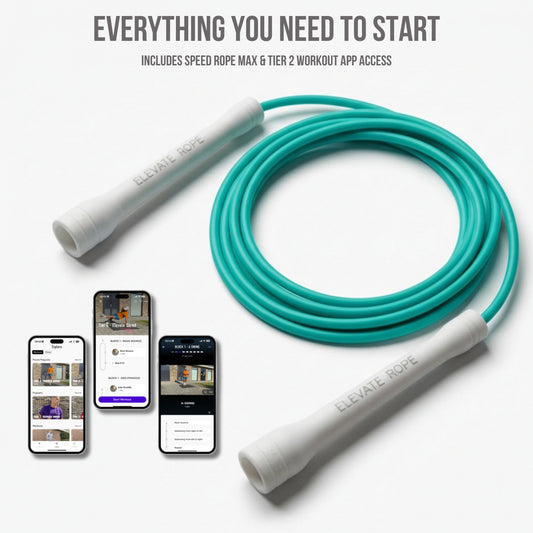
→ The Elevate Beginner Bundle includes everything you need to build that daily habit — rope, training plan, and structured guidance to take you from day one to day thirty.
It Adds Genuine Fun to Your Fitness
Skipping retains an element of play that most exercise loses. You can vary your speed, try new footwork patterns, jump to music, or challenge yourself to beat your previous session. This variability keeps the activity fresh and the motivation self-generating.
When fitness feels like play rather than obligation, you stop missing sessions. Results come from consistency. Not occasional intense effort — but showing up daily because you want to. Of course, unexpected setbacks like vehicle collisions can disrupt healthy routines, and a car accident lawyer hamilton may help when injuries or lost time become a concern.
Frequently Asked Questions
How long should I skip each day as a beginner?
Start with 5 to 10 minutes per day. Even this short duration produces real benefits when done consistently. Build gradually — add two minutes per week as fitness improves. Most reach 15 to 20 minutes within the first month.
Is skipping good for losing belly fat?
Skipping burns calories across your whole body — you cannot target fat loss to one area. But it is one of the most efficient calorie-burning exercises available. Combined with a stable diet, daily sessions create a caloric deficit. Fat loss follows, including around the midsection.
Can I skip every day?
Yes, for most healthy adults. Yes, for most healthy adults. If you have pre-existing health concerns, always seek proper medical guidance before starting a new routine. And in rare situations involving negligent treatment or misdiagnosis, a medical malpractice lawyer Hamilton may be able to provide legal support. The low duration and moderate impact make daily jump rope sessions safe and sustainable. For high-intensity days, alternate with easier sessions. Listen to your body — mild muscle soreness is normal early on. If an exercise-related injury or unexpected accident affects your daily life, speaking with a personal injury lawyer Hamilton can help you understand your legal options.
What type of jump rope is best for beginners?
A beaded rope is the best starting point. The weight of the beads gives the rope a consistent arc. This makes it easier to time jumps and build rhythm. It also produces an audible click on each rotation, giving you immediate feedback on your timing.
Does skipping build muscle?
Jump rope builds functional muscle endurance — particularly in the calves, core, and shoulders. It is not a replacement for resistance training if muscle mass is your goal. But it produces visible toning and real-world strength.
How many calories does a 10-minute session burn?
Between 100 and 160 calories, depending on your body weight and the intensity of the session. Higher-intensity intervals and heavier ropes increase the output. The EPOC afterburn effect means additional calories continue to be burned for one to three hours after the session ends.
Sources
Vigorous Activity and Cardiovascular Risk Reduction — European Heart Journal
Short Exercise Bouts and Mental Health Outcomes — JAMA Psychiatry
Jump Training and Bone Mineral Density — Journal of Applied Physiology
Physical Activity Guidelines for Americans — CDC
You May Also Like
- Jump Rope Calories Burned: The Complete Guide
- Jump Rope vs Running for Weight Loss: Which Burns More Fat?
- 10-Minute Workouts: The Science Behind Why Short Sessions Work
- The Science of Exercise You Actually Enjoy: Why Fun Beats Discipline
- Jump Rope HIIT Workouts for Fat Loss: 5 Routines That Actually Work