





You know the gym ghost notification. The one from your bank app that arrives every month like clockwork. Another €40 vanished. Another thirty days of paying for a membership without stepping foot inside.
You're a gym ghost . You haunt the membership rolls without ever materialising at the squat rack. The gym counts you as a member. Your bank account confirms it. But the last time you actually went? You'd rather not calculate those months.
This isn't a character flaw. It's an epidemic. Research shows that 67% of gym memberships go completely unused. The fitness industry's business model literally depends on people like you—paying consistently, attending never.
The guilt is real. Every ignored workout notification chips away at your self-image. Every unused month feels like proof that you're not the kind of person who follows through. But here's what nobody tells you: the gym was never the problem. The model was.
This guide is for every one ready to stop haunting memberships and start actually moving. No commute required, crowds to navigate, monthly fee funding someone else's facility.
What you'll learn:
- Why gym memberships fail so many people (and why it's not your fault)
- How to build a home workout habit that actually sticks
- The minimal equipment that replaces an entire gym
- A complete 4-week program designed for recovering gym ghosts
- How to finally cancel that membership without guilt
Why You Became a Gym Ghost
Understanding how you became a gym ghost is the first step to becoming something else. The pattern is predictable because the obstacles are universal.
The friction started before you even left the house. Pack a bag. Find clean workout clothes. Locate your membership card. Check the gym's crowd levels. Calculate commute time. Decide if you have enough time to make it worthwhile. Each micro-decision created an exit ramp your brain eventually took.
Then came the gym itself. Waiting for equipment. Navigating unspoken social rules. Feeling watched during exercises you weren't confident performing. The ambient anxiety of being surrounded by people who seemed to know exactly what they were doing while you improvised.
The commute killed whatever motivation survived. Twenty minutes there, twenty minutes back—forty minutes of life spent travelling to and from exercise rather than actually exercising. On a busy Tuesday after work, that math never computed.
Most gym ghosts don't lack discipline. They lack a model that works with human psychology instead of against it. The gym requires activation energy that depletes over time. Eventually, the path of least resistance wins, and you become another membership statistic.
Answer Block: Why Do So Many Gym Memberships Go Unused?
Short answer: 67% of gym memberships go unused because the gym model creates compounding friction—commute time, preparation requirements, social anxiety, equipment availability, and scheduling constraints. Each barrier provides an opportunity to skip, and over time, skipping becomes the default behaviour.
Why it matters: guilt assumes the problem is personal discipline. In reality, the problem is structural. Understanding this shifts the solution from "try harder" to "remove barriers."
Key insight: The gym industry profits from non-attendance. Facilities would be impossibly crowded if every member actually showed up. Your unused membership isn't a personal failure—it's the business model working as designed.

The Home Workout Advantage for Recovering Gym Ghosts
Every friction point that created your gym ghost status disappears when you work out at home.
No commute. The distance between your bed and your workout space is measured in steps, not minutes. This alone eliminates the forty-minute tax that made gym sessions feel impossible on busy days.
No preparation. You don't need a packed bag, clean gym clothes, or a membership card. You need to stand up and start moving. The activation energy approaches zero.
No scheduling. The gym isn't open at 5am when you can't sleep. It's crowded at 6pm when you finish work. Your living room is available 24/7, empty every time, and requires no advance planning.
No social friction. Nobody watches your form.Nobody waits for your equipment.Nobody judges whether you belong. The anxiety that made every gym ghost hesitate simply doesn't exist.
No financial guilt. Cancel the membership and redirect that €40 monthly toward equipment that actually gets used—or pocket it entirely. Either way, the recurring reminder of failure disappears from your bank statement.
The gym ghost becomes something else entirely when the barriers vanish: someone who actually exercises.
Minimal Equipment That Replaces a Gym Membership
You don't need to replicate an entire gym. You need equipment that delivers results while fitting your space, budget, and likelihood of actual use.
The essentials (under €100 total):
A jump rope (€20-€40) replaces every cardio machine in the gym. Ten minutes of jumping equals thirty minutes of treadmill jogging for cardiovascular benefit. It stores in a drawer and requires no electricity, maintenance, or dedicated floor space. For a recovering gym ghost , this single piece of equipment eliminates the "I don't have time for cardio" excuse permanently.
A set of resistance bands (€20-€35) replaces cable machines, provides progressive resistance for strength training, and stores in a small bag. Bands support hundreds of exercises targeting every muscle group.
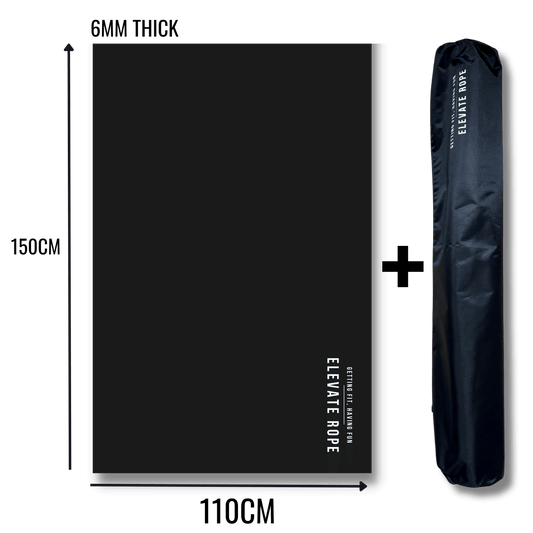
A yoga mat (€15-€25) defines your workout space, cushions floor exercises, and signals to your brain that this area is now a gym. The psychological trigger matters as much as the physical function.
Optional upgrades (€50-€150 each):
A kettlebell (single 12-16kg for most people) enables swings, goblet squats, presses, and rows—compound movements that build strength and cardiovascular fitness simultaneously.
A pair of adjustable dumbbells expands strength training options significantly but requires more investment and space.
A pull-up bar (doorframe mounted) adds vertical pulling to your exercise library, addressing the main limitation of band and bodyweight training.
What you don't need:
Treadmills, stationary bikes, cable machines, squat racks, bench press setups, or anything else that consumes permanent floor space and costs more than a year of gym membership. Every gym ghost who transitions successfully does so with minimal equipment, not by building a home gym that recreates the facility they already weren't using.

The 4-Week Gym Ghost Recovery Program
This program assumes you're starting from zero consistency. The goal isn't transformation—it's habit formation. You're not training for a competition. You're proving to yourself that you're someone who exercises.
Week 1: Five Minutes Daily
Every gym ghost needs to start embarrassingly small. Five minutes isn't a workout—it's a proof of concept.
Days 1-7: Set a timer for five minutes. March in place, do bodyweight squats, stretch, move however feels manageable. The only rule: do something physical for five continuous minutes.
Don't add time. Don't increase intensity. Just complete five minutes every single day. You're building the neural pathway that says "I'm someone who exercises daily."
Week 2: Ten Minutes, Introducing Structure
Days 8-14: Increase to ten minutes using this simple structure:
- 2 minutes: Warm-up (marching, arm circles, gentle squats)
- 6 minutes: Alternate between 30 seconds of squats, 30 seconds of push-ups (modify as needed), 30 seconds of high knees, 30 seconds of rest. Repeat twice.
- 2 minutes: Cool-down stretching
Still daily. Still building the habit. The gym ghost identity begins shifting toward something else.
Week 3: Fifteen Minutes, Adding Equipment
Days 15-21: Introduce your jump rope.
- 3 minutes: Warm-up
- 10 minutes: Jump rope for 30 seconds, rest 30 seconds. Repeat for 10 rounds. If you trip, restart immediately. Tripping is learning.
- 2 minutes: Cool-down
Every gym ghost who picks up a rope for the first time feels uncoordinated. This is normal. The skill develops quickly with daily practice.
Week 4: Twenty Minutes, Full Program
Days 22-28: Your sustainable long-term structure.
- 3 minutes: Warm-up (including 1 minute of easy rope jumping)
- 8 minutes: Jump rope intervals (30 on/30 off for 8 rounds)
- 7 minutes: Strength circuit (squats, push-ups, lunges, plank—45 seconds each, 15 seconds rest, repeat once)
- 2 minutes: Cool-down
Twenty minutes, daily, at home. No commute.No crowds.No membership fee. The gym ghost has officially retired.
The Psychology of Gym Ghost Recovery
Physical changes follow psychological shifts. Understanding the mental game helps every gym ghost transition successfully.
Identity precedes behaviour. You don't become consistent and then see yourself as someone who exercises. You start seeing yourself as someone who exercises, and consistency follows. The five-minute daily sessions in Week 1 aren't about fitness—they're about identity reconstruction.
Small promises kept matter more than large promises broken. Every gym ghost has made ambitious commitments: "I'll go four times this week." "I'll do an hour every session." These promises break, eroding self-trust. A five-minute promise you keep rebuilds what larger promises destroyed.
Environment beats willpower. Leave your jump rope where you'll see it. Put your workout clothes next to your bed. Remove friction by designing your space for success rather than relying on daily motivation to overcome obstacles.
Celebrate the streak, not the workout. A wall calendar with X marks for completed days provides more motivation than any app. The visual chain creates psychological pressure to not break it. Gym ghosts become consistent exercisers one X at a time.
Forgive missed days without abandoning the habit. You'll miss a day eventually. This doesn't reset your progress or prove you're still a gym ghost . It proves you're human. Resume the next day without self-punishment.

How to Cancel Your Gym Membership Without Guilt
The final step in gym ghost recovery is making it official. Here's how to cancel without the guilt spiral.
Reframe the narrative. You're not quitting fitness—you're choosing a model that actually works. Cancellation isn't failure; it's strategic reallocation of resources toward something you'll use.
Calculate the savings. At €40/month, a year of unused membership costs €480. That's enough for a complete home gym setup with money left over. The cancellation saves money while increasing the likelihood of actual exercise.
Anticipate the retention pitch. Gyms will offer freezes, discounts, and guilt trips. They profit from gym ghosts and don't want to lose the revenue. Be prepared with a simple script: "I've set up a home workout routine that's working well for me. Please process the cancellation."
Set a specific date. Don't wait until you "feel ready." Pick a date within the next two weeks and mark it on your calendar. Gym ghost status ends on that date, regardless of how you feel about it.
Celebrate the decision. Cancelling an unused membership is a victory, not a defeat. You're removing a recurring source of guilt and redirecting resources toward something functional. That deserves acknowledgment.
Frequently Asked Questions
How do I stay motivated without the financial pressure of a gym membership?
The membership fee isn't motivating you now—it's just creating guilt. Replace external pressure with internal tracking: a calendar showing completed days, a habit app, or simply a note on your phone. The streak becomes its own motivation. Most former gym ghosts find they exercise more without the membership because they've removed guilt and friction simultaneously.
Can I really get fit working out at home?
Yes. Your muscles don't know whether they're contracting in a gym or a living room. Progressive overload—gradually increasing challenge—drives adaptation regardless of location. A jump rope, resistance bands, and bodyweight exercises provide sufficient stimulus for most fitness goals. Elite athletes sometimes need specialized facilities; the other 99% of us don't.
What if I've tried home workouts before and failed?
Previous failure likely resulted from starting too ambitiously. Every gym ghost has also been a "home workout ghost" at some point—buying equipment that gathered dust. The difference this time: start with five minutes. Build slowly. Focus on habit formation rather than fitness transformation. The program succeeds because it meets you where you are.
How much space do I actually need?
A yoga mat footprint (roughly 180cm x 60cm) handles most bodyweight exercises. Jump rope needs about 2m x 3m with 2m ceiling clearance—most living rooms and bedrooms qualify. You don't need a dedicated room or home gym setup.
Should I tell people I cancelled my gym membership?
If it helps accountability, yes. If it invites unwanted opinions, no. The gym ghost to home exerciser transition is personal. Share with supportive people; avoid those who'll question your decision or predict failure.
What if I actually liked some things about the gym?
Identify specifically what you liked. The equipment variety? Home setups can address this over time. The social element? Consider outdoor workout groups or fitness communities. The structure? Programs and apps provide structure anywhere. You're not abandoning what worked—you're eliminating what didn't.

From Gym Ghost to Someone Who Moves
You've spent months—maybe years—paying for fitness without receiving it. Every notification was a reminder of promises unkept, intentions unfulfilled, membership fees funding someone else's workout.
That ends now.
Not with a dramatic transformation or an expensive home gym build-out. With five minutes tomorrow morning and a willingness to start smaller than feels meaningful. The gym ghost doesn't disappear overnight. The ghost transforms gradually into someone who moves daily, at home, without barriers or guilt.
A jump rope. A few square metres of floor space. The commitment to show up for five minutes before optimising for thirty.
That's the entire prescription for gym ghost recovery.
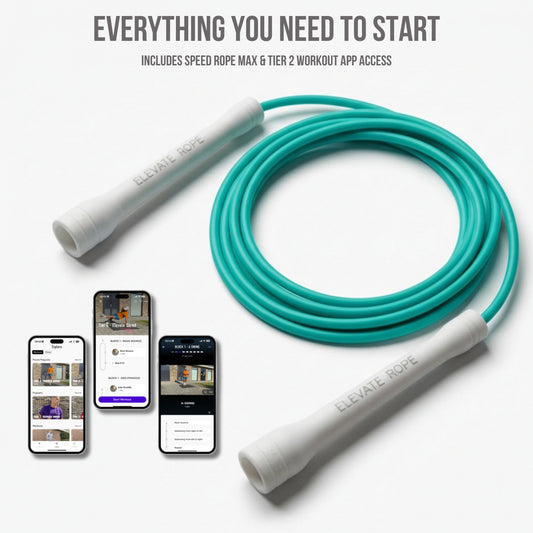
If you're ready to start, our complete guide to jump rope for home cardio covers everything from equipment selection to building sustainable routines. The Elevate Dignity Beaded Rope is designed specifically for beginners—the beads provide rhythmic timing feedback that makes learning faster than traditional ropes. For those ready to advance, the Elevate Speed Rope MAX handles whatever intensity you bring.
Cancel the membership. Keep the money. Start moving.
Sources
The 67% unused gym membership statistic references research from the International Health, Racquet & Sportsclub Association (IHRSA) and fitness industry analyses tracking member attendance patterns. Cardiovascular equivalence between jump rope and jogging references research by John A. Baker at Arizona State University, published in The Research Quarterly. Habit formation principles reference behavioural research by BJ Fogg at Stanford University on tiny habits and friction reduction as drivers of sustainable behaviour change.