


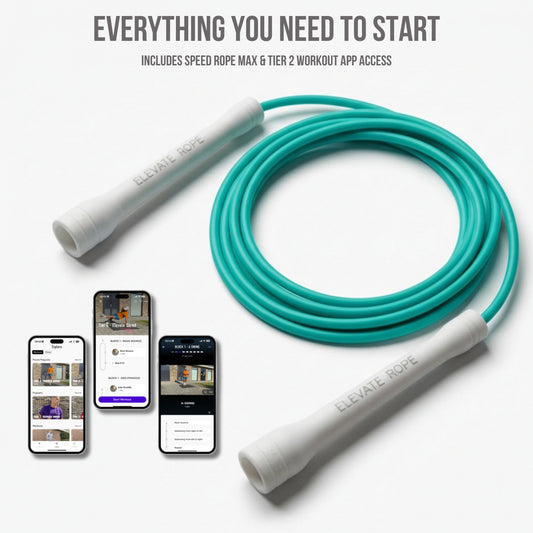




Fun cardio sounds like a contradiction if every workout you've tried felt like a punishment. It isn't. The dread is a design problem, not a character flaw. Pick movement that's short, skill-based, and a little playful — like a jump rope — and cardio stops being the thing you avoid.
New to all this? Our beginner's guide to starting (and keeping at it) covers the basics. This page is about the part nobody fixes: why cardio feels awful, and how to make it not.
What this covers
- Why does cardio feel like punishment?
- Does "fun" cardio actually work?
- What does fun cardio actually look like?
- Why a jump rope, specifically?
- How to start without it becoming a chore again
- FAQ
Why does cardio feel like punishment?
Most people don't hate cardio. They hate how it's been sold to them. "Earn your dinner." "No pain, no gain." Forty grim minutes on a treadmill going nowhere.
That framing has a cost. Research on exercise shows a clear pattern: how a workout feels predicts whether you'll still be doing it months later.¹ Feel bad during it, and you quit. Feel decent, and you come back.
Running is the classic trap. It's not that running is bad. It's that being told to run, when you find it boring or hard on the knees, almost guarantees the bad feeling that ends habits.
There's a second trap hiding underneath: the calorie-debt mindset. When movement is just a way to "pay back" what you ate, it becomes a chore you resent. Every session is a punishment for existing. That framing is exhausting, and it's the first thing worth dropping.
A jump rope sidesteps most of that. It's short, it's a skill, and it gives you something to get better at. That changes the feeling — and the feeling is what brings you back.
Short answer: Cardio feels like punishment because it's been framed as punishment.
Why it matters: The bad feeling, not laziness, is what makes people quit.
Best next step: Swap "earn it" for "play with it" and pick a skill you can improve.
Does "fun" cardio actually work?
Short answer: Yes. Enjoyable doesn't mean easy, and it doesn't mean useless.
An often-cited 1968 study at Arizona State compared 10 minutes of rope skipping a day with 30 minutes of jogging.² After six weeks, both groups improved their cardiovascular fitness about equally. It was small and old, so treat it as a direction, not a law. But the direction holds: a jump rope is genuinely hard work.
Harvard's calorie tables back this up. Fast jump rope sits among the higher-burn activities, right alongside running.³ You are not trading results for enjoyment. You get the results in less time, with far more variety.
The point isn't that fun cardio is magic. It's that the version you'll actually repeat beats the "optimal" one you abandon in a fortnight. Consistency wins, and consistency follows enjoyment.

What does fun cardio actually look like?
Strip away the marketing and fun cardio comes down to a few features. Hit most of them and the dread fades on its own.
It's short
Ten minutes you finish beats an hour you dread. Short sessions are easier to start, and starting is the whole battle.
It's a skill, not a sentence
Running asks you to endure. A jump rope asks you to learn — single bounce, then alternate feet, then crossovers. Progress you can see is its own reward.
It has rhythm
Movement set to a beat feels less like effort. A jump rope has a built-in rhythm; plenty of people jump to a playlist and forget to watch the clock.
It varies
Thirty seconds fast, thirty seconds slow. A couple of tricks. A small game with yourself. Variety is the opposite of the treadmill stare.
| Punishment cardio | Fun cardio | |
| Goal | Burn off calories, "earn" your food | Move, improve a skill, feel better |
| Length | Long and grinding | Short and repeatable |
| Feedback | A number on a screen | A skill you can watch improve |
| Variety | Same machine, same pace | Intervals, tricks, music |
| What happens | You dread it, then quit | You come back, almost by accident |
Why a jump rope, specifically?
If fun cardio is short, skill-based, rhythmic and varied, a jump rope checks every box — and a few others.
It fits anywhere. You need about a square metre (11 sq ft) and a little ceiling height. No gym, no commute, no weather excuse.
It scales with you. Week one is staying upright. Month three might be double-unders. The jump rope you bought as a beginner still challenges you a year later.
It's cheap and it's yours. One rope, one cost, no subscription — versus a treadmill gathering dust or a membership you never use.
→ For most people building fun cardio, a basic Speed Rope is the simplest start: light, fast, and easy to find the rhythm on. If you want more feedback per turn, a beaded rope is the gentler option.
Short answer: A jump rope is short, skill-based, portable and cheap — fun cardio in one tool.
Why it matters: Fewer barriers means you actually do it.
Best next step: Start with two minutes a day and let the skill pull you forward.
How to start without it becoming a chore again
The mistake is going hard on day one. You get sore, it stops being fun, and the old story — "I hate cardio" — wins again.
Do the opposite. Start absurdly small, around two minutes. Stop while you still want more. Leave the jump rope somewhere you'll see it. Attach it to something you already do, like waiting for the kettle.
And drop the streak pressure. Missing a day isn't failure; it's a Tuesday. If routines tend to collapse on you, there are real reasons workouts stop sticking that have nothing to do with willpower.
One more trick: pair it with something you already enjoy. A podcast you only let yourself hear while skipping. A playlist that makes you move. A friend on a video call doing the same thing. Tying movement to a small pleasure does more for consistency than any burst of motivation ever will.
Curious how a jump rope stacks up against the run you've been avoiding? We compared jumping rope and running side by side. And if you just want the evidence, here's the case for jump rope as a real workout.
Frequently asked questions
Is a jump rope good cardio if I'm badly out of shape?
Yes, as long as you start slow. Begin with short bouts — 30 seconds on, 30 seconds rest. The jump rope scales down as easily as it scales up.
How long until cardio stops feeling miserable?
Faster than you'd think, if you keep sessions short. Misery usually comes from doing too much, too soon. Leave wanting more and the feeling flips.
Do I have to run to get fit?
No. The WHO's guideline is about 150 to 300 minutes of activity a week, in any form you'll keep doing.⁴ A jump rope counts, and so does dancing or brisk walking.
Won't 10 minutes be too short to count?
Short, intense sessions add up. Ten honest minutes you repeat beats an hour you do once and then quit. Frequency matters far more than length, and a hard ten minutes is real training.
What's the best fun cardio for someone who hates exercise?
Whatever you'll do twice. For most people that means short, skill-based and portable. A rope fits the bill, but the rule is the same for any activity you choose.
Where to go from here
If cardio has always felt like punishment, the fix isn't more discipline. It's a better format.
Start with two minutes of skipping today, and stop while it's still fun.
Pick a rope you'll actually reach for, and let the skill do the motivating. Fun cardio isn't a softer version of training. It's the version that's still in your routine a year from now.
You may also like
- Jump Rope for Beginners: The Complete Guide to Starting (and Sticking With It)
- Jump Rope vs Running: Which Fits Your Goals?
- Is Jump Rope a Good Workout for Adults? What the Evidence Says
- The Real Reason You Can't Stick to a Workout Routine
- Your First 30 Days: A Beginner Plan Without the Streak Pressure
- How to Jump Rope: Step by Step for Complete Beginners
Sources
- Williams DM, et al. (2008). Acute Affective Response to a Moderate-intensity Exercise Stimulus Predicts Physical Activity Participation 6 and 12 Months Later. Psychology of Sport and Exercise, 9(3), 231–245. PubMed
- Baker JA (1968). Comparison of Rope Skipping and Jogging as Methods of Improving Cardiovascular Efficiency of College Men. Research Quarterly, 39(1), 240–243. Taylor & Francis
- Harvard Health Publishing. Calories burned in 30 minutes for people of three different weights. health.harvard.edu
- World Health Organization. Physical activity (fact sheet). who.int