





Learning advanced jump rope skills is what separates the people who quit three months after hitting their goal weight from the people who are still jumping years later — leaner, stronger, and genuinely hooked. If you came to the rope to lose weight and it worked, congratulations. But here's the quiet truth nobody warns you about: the scale stops moving, the novelty fades, and one missed session turns into one missed week. The fix isn't more discipline. It's a new game to play.
That's what skill progression gives you. The moment your rope stops being a calorie-burning chore and becomes a craft you're slowly mastering, you've solved the consistency problem for good. This guide walks you through seven skills — from your first clean double under to flowing freestyle combos — and shows you exactly how to build them.
What you'll learn
- Why skill-based training keeps you consistent long after weight loss plateaus
- Seven advanced jump rope skills, ordered from achievable to genuinely impressive
- The exact progression drills to learn double unders, crossovers, and freestyle
- Which rope suits each stage of your skill journey
- How to structure practice so skills actually stick
Why Advanced Jump Rope Skills Keep You Hooked
Weight loss is a finite goal. You reach it, and then what? This is the exact point where most home-fitness habits collapse — not from lack of willpower, but from lack of a reason to keep showing up. Research on exercise adherence consistently points to intrinsic motivation (doing something because the activity itself is rewarding) as the strongest predictor of whether people stick with it long term. Chasing a number on a scale is extrinsic. Chasing your first unbroken set of double unders is intrinsic, and that difference is everything.
Skills also create a progression ladder with no ceiling. There's always a cleaner crossover, a faster set, a smoother combo. That open-endedness is the same mechanic that makes video games and musical instruments so absorbing — you're never "done," so you never have a reason to stop. When your training has that quality, consistency stops being something you force and becomes something you look forward to.
Quick answer: Advanced jump rope skills keep you consistent because they replace a finite goal (losing weight) with an infinite one (mastering the craft). Skill-based training is intrinsically rewarding, which research shows is the strongest driver of long-term exercise adherence. Once you're chasing double unders instead of a number on the scale, you've solved the motivation problem permanently.
There's a physical payoff too. As you'll see, the skills below demand more coordination, power, and conditioning than basic bouncing — so you keep getting fitter even after the weight is gone. You're not maintaining; you're still levelling up.

The 7 Advanced Jump Rope Skills, In Order
Work through these roughly in sequence. Each one builds the timing, wrist control, or footwork the next one needs. Don't rush — clean beats fast every single time.
1. The Double Under
The gateway skill. The rope passes under your feet twice in a single jump, which means faster wrist rotation and a slightly higher, tighter jump. This is the first trick that makes people stop and watch — and the foundation for almost everything that follows.
How to build it: Start with "power jumps" — single bounces jumped deliberately high, no extra rope rotation, just to find the height. Then add one fast double rotation every fifth or sixth jump. The cue that fixes most people: the power comes from your wrists flicking faster, not your arms swinging wider. Keep your elbows tucked in close to your ribs.
2. The Boxer Step
A rhythmic shift of weight from one foot to the other while you jump, mimicking a boxer's footwork. It looks effortless and it's your first taste of "flow" — it teaches your lower body to stay relaxed and absorb impact, which protects your joints over long sessions.
How to build it: Drop the rope first. Practise shifting weight side to side on the balls of your feet to a steady count. Once it's automatic, add the rope at a slow, comfortable tempo and let the footwork ride underneath it.
3. The Side Swing (Rope Release)
Swinging the rope to one side of your body without jumping it, then opening it back out to resume jumping. It's a "rest" move that lets you keep rhythm without a full jump, and it's the connective tissue of every freestyle combo.
How to build it: Bring both handles together on one side and swing the rope in a figure-eight beside you, in time with a phantom jump. The trick is timing the re-open so the rope arrives under your feet exactly when you bounce.
4. The Crossover (Criss-Cross)
You cross your arms in front of your body as the rope comes down, jump through the loop, then uncross. The signature "I know what I'm doing" skill. It demands precise timing and a wide, confident cross — half-hearted crosses catch every time.
How to build it: Exaggerate the cross. Bring your hands all the way past your hips so the loop is big enough to jump through. Alternate one normal jump, one crossover, repeat. A rope with good cable feedback — like a → beaded rope — makes the timing far easier to feel while you're learning, because you can literally hear the rhythm.
Short answer: The crossover is learned by exaggerating the arm cross — bring your hands fully past your hips so the loop is wide enough to clear, and alternate one normal jump with one crossover.
Why it matters: A timid cross is the single most common reason the rope catches; width buys you margin for error while your timing develops.
Best next step: Practise with a rope that gives audible or tactile feedback so you can hear when your rhythm is right.
5. The Double Under Crossover (Crossed Double Under)
Exactly what it sounds like: a crossover performed during a double under. This is where the skills start compounding, and where your double under and crossover need to be genuinely solid before you combine them. The payoff is huge — it's a real "wow" skill.
How to build it: Don't attempt it until single double unders and standing crossovers are both automatic. Then do one normal double under, one crossed double under, alternating. Speed and confidence beat caution here.
6. The Mic Release (360 Release)
You let go of one handle, spin, and catch it again mid-rhythm — or release and re-grip while turning. A genuine showpiece that blends timing, spatial awareness, and a bit of theatre. This is where jump rope starts to look like dance.
How to build it: Practise the release-and-catch standing still first, no jumping. Get comfortable with the rope leaving and returning to your hand on beat, then layer it into a slow jump rhythm. A → long handle rope gives you more leverage and control for release tricks, which is why freestyle athletes favour longer handles.
7. Freestyle Combos
Stringing skills together into a continuous, flowing sequence — boxer step into side swing into crossover into double under and back out. This is the summit: not one trick, but the ability to improvise and link everything you've built. There's no end point, which is exactly why it keeps you hooked for years.
How to build it: Pick just two skills you already own and practise transitioning cleanly between them. Add a third only when the first transition is seamless. Filming yourself is the fastest feedback loop — you'll spot the catches and stumbles your body can't feel in the moment.
How Long Does It Take to Learn Advanced Jump Rope Skills?
Honestly, it varies — but here's a realistic timeline for someone already comfortable with basic jumping and practising a few times a week. The point isn't to hit these dates exactly; it's to see that every one of these skills is reachable with consistent, deliberate practice.
| Skill | Difficulty | Realistic time to first clean rep |
| Double under | Moderate | 1–3 weeks |
| Boxer step | Easy | 3–7 days |
| Side swing | Easy–Moderate | 1–2 weeks |
| Crossover | Moderate | 2–4 weeks |
| Crossed double under | Hard | 1–3 months |
| Mic release | Hard | 1–3 months |
| Freestyle combos | Ongoing | Lifelong |
Short answer: Most jumpers land their first clean double under in one to three weeks, a crossover in two to four weeks, and the harder combined skills within one to three months of regular practice.
Why it matters: Knowing the timeline keeps your expectations realistic, so a few catches don't feel like failure — they're just part of the curve.
Best next step: Practise one skill at a time in short, focused blocks rather than scattering attention across all seven at once.
Choosing the Right Rope for Skill Progression
The rope you lost weight with may not be the rope that takes you furthest into skills. As you progress, different ropes suit different stages, and matching the tool to the skill makes learning dramatically faster.
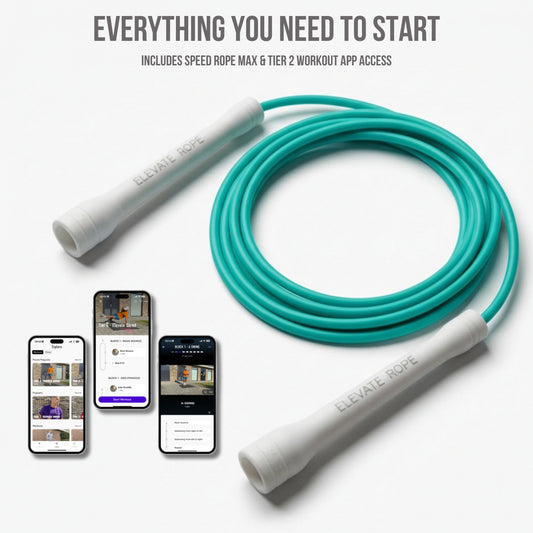
For learning timing-heavy skills like crossovers and side swings, a slightly heavier, audible rope helps — a → beaded rope gives you rhythmic feedback you can hear and feel. For raw speed work and double unders, a fast, low-drag → speed rope rotates quick enough to keep up with your wrists. For release tricks and freestyle, the extra leverage of a → long handle rope gives you the control those moves demand. If you want the whole progression in one go, a → progression bundle covers you from beginner rhythm to advanced freestyle.
One design detail genuinely matters here: a bearing-free, non-tangling rope keeps its spin consistent, which removes a huge source of frustration when you're drilling a skill hundreds of times. Inconsistent rope behaviour is one of the most common reasons beginners trip and quit — and it's just as frustrating when you're learning advanced moves.
How to Structure Your Skill Practice
Skills stick when practice is deliberate, not random. A simple structure that works: spend the first five minutes on basic jumping to warm up your wrists and rhythm, then ten minutes drilling one specific skill in short bursts with full rest between attempts, then finish with five minutes of free play where you just mess around and try linking things. That last part matters more than it looks — unstructured play is where transitions and combos are born.
Quality of attention beats quantity of time. Fifteen focused minutes of skill work will outpace an hour of distracted bouncing. And because these sessions are short, they fit into the same ten-minute windows that made jump rope sustainable for weight loss in the first place. If you want guided structure, a free app with skill-based workouts can take the guesswork out of what to drill each day.
Quick answer:Structure each skill session in three blocks — five minutes of basic warm-up jumping, ten minutes drilling one specific skill in short bursts with rest, and five minutes of free play to discover transitions. Fifteen focused minutes beats an hour of distracted jumping, and the short format slots into the same daily windows that made the habit stick during weight loss.

Frequently Asked Questions
What is the hardest advanced jump rope skill to learn?
Among common skills, the crossed double under and the mic release are generally the hardest, because they combine two demands at once — fast rope rotation plus precise arm coordination or a release-and-catch. Most jumpers need one to three months of regular practice before landing them cleanly. Freestyle combos are technically endless, so they're "hardest" only in the sense that there's always another level.
Do I need a special rope for advanced jump rope skills?
You don't strictly need one, but the right rope makes learning far faster. Beaded ropes give audible rhythm for timing skills, speed ropes rotate fast enough for double unders, and long-handle ropes offer the leverage release tricks require. A bearing-free, non-tangling design helps at every stage by keeping the spin consistent through hundreds of practice reps.
Can I keep losing weight while learning jump rope tricks?
Yes. Advanced skills like double unders and crossed double unders demand more power, coordination, and conditioning than basic bouncing, so they often burn more calories per minute and keep your fitness climbing even after your initial weight loss. The skills also keep you consistent, and consistency is what protects results long term.
How often should I practise to improve at jump rope skills?
Three to five short sessions a week is plenty for steady progress. Skill acquisition benefits from frequent, focused repetition more than from long marathon sessions, so fifteen deliberate minutes most days will move you forward faster than two long sessions a week.
What should I learn first, double unders or crossovers?
Start with double unders. They build the faster wrist rotation and tighter jump that almost every other advanced skill relies on, including the crossover variations. Once your double unders are reliable, the crossover and the combined skills come much more naturally.
Why do I keep tripping when I try advanced skills?
Usually it's one of three things: arms swinging too wide instead of wrists doing the work, a cross that isn't wide enough to clear, or an inconsistent rope that doesn't spin the same way twice. Slow down, exaggerate your movements while learning, and use a quality non-tangling rope so the equipment isn't adding errors of its own.
Your Next Step
Where you go next depends on the skill you're chasing:
Drilling timing skills (crossovers, side swings)? Reach for the feedback of a beaded rope.
Chasing speed and double unders? A low-drag speed rope keeps pace with your wrists.
Learning release tricks and freestyle? The leverage of a long handle rope gives you the control you need.
Want the whole journey covered? A progression bundle takes you from rhythm to freestyle, and ships free on orders over €50.
Whatever you pick, the goal is the same: keep the rope spinning long after the weight came off, because now you're not training for a number — you're mastering a craft.
You May Also Like
- The Complete Guide to Jump Rope for Weight Loss
- Jump Rope HIIT Workouts for Fat Loss: 5 Routines That Actually Work
- Jump Rope Transformation: Real Results From Real People
- Best Jump Rope for Weight Loss: A Complete Buyer's Guide (2026)
- Jump Rope Calories Burned: The Complete Guide
Sources
- Teixeira PJ, et al. "Exercise, physical activity, and self-determination theory: A systematic review." International Journal of Behavioral Nutrition and Physical Activity, 2012.
- Ryan RM, Deci EL. "Self-Determination Theory and the Facilitation of Intrinsic Motivation, Social Development, and Well-Being." American Psychologist, 2000.
- Trecroci A, et al. "Jump rope training: Balance and motor coordination in preadolescent soccer players." Journal of Sports Science & Medicine, 2015.
- Ozer D, et al. "The effects of rope or weighted rope jump training on strength, coordination and proprioception." Journal of Sports Medicine and Physical Fitness, 2011.