





A boxing jump rope workout has been a core part of boxing and combat sports for more than a century. From Muhammad Ali to Mike Tyson to Vasyl Lomachenko, some of the greatest fighters in history have built their footwork, rhythm, and conditioning through rope training. Today, modern fighters across boxing, Muay Thai, kickboxing, MMA, and fitness continue to rely on jump rope as a foundational skill — and for good reason.
Jump rope isn't just a warm-up. For boxers, it is a movement teacher, a conditioning tool, a footwork coach, and a mental metronome. It builds speed, rhythm, timing, balance, agility, endurance, and ring awareness — all at once, with minimal equipment and in minimal time.
This full guide is designed specifically for fighters and aspiring fighters who want to sharpen their skills, become more explosive, increase their stamina, and move with the fluency of a high-level athlete. Whether you're brand new to jump rope or deep into fight camp preparation, this guide gives you a complete roadmap.

1. Why Jump Rope Matters for Fighters
Every combat sport demands four primary attributes: movement, timing, conditioning, and coordination. Jump rope trains all four simultaneously — something no other tool can do as efficiently.
1.1 Footwork: The Foundation of Fighting
Fighters win exchanges through superior angles, balance, and mobility. Jump rope develops:
- Light, reactive footwork
- Quick weight shifts
- Strong balance control
- Smooth directional changes
- Precise rhythm in movement
When fighters skip regularly, they naturally develop a “floating” footwork style that elevates their entire fight game.
1.2 Timing & Rhythm
Jump rope forces you into a constant rhythm — a rhythm that translates directly into fighting. Good fighters punch in rhythm, defend in rhythm, and move in rhythm. Jumping rope builds the exact timing and cadence needed for striking.
1.3 Fight-Specific Conditioning
Jump rope replicates the pace changes of real combat:
- High bursts of speed
- Short resets
- Controlled steady movement
- Explosive foot placements
It trains both aerobic base and anaerobic explosiveness — essential for surviving intense exchanges while staying sharp.
1.4 Mental Focus
Rope work demands presence. You must listen to the rope, feel the timing, and stay mentally locked in. This awareness sharpens reaction time and creates a deep mind-body connection.
2. Benefits of Jump Rope for Fighters
Different fighters gain different benefits depending on their sport, but all fighters see rapid improvements when rope training is consistent.
2.1 Faster Footwork & Angles
Jump rope reinforces:
- Fast lateral movement
- Constant foot adjustments
- Smooth directional transitions
- Explosive angle changes
Many modern fighters — especially in boxing and MMA — use rope to develop micro-footwork patterns that give them a strategic advantage.
2.2 Enhanced Conditioning for 3-5 Minute Rounds
Jump rope trains both systems:
- Aerobic: steady pace, relaxed movement
- Anaerobic: sprints, double unders, high-knee bursts
This combination is ideal for fight conditioning, which blends long endurance with short explosive bursts.
2.3 Shoulder & Forearm Endurance
One of the most underrated benefits: rope work strengthens the muscles that keep your guard up. Strong shoulders = better defense and sharper punches.
2.4 Improved Coordination, Balance, and Agility
Fighters need to manage their weight distribution perfectly.
Jump rope builds:
- Balance control
- Spatial awareness
- Reactive movement
- Body control under fatigue
2.5 Better Punch Output
The rhythm from the rope carries over into combinations. Fighters who jump rope consistently punch with better flow, timing, and endurance.
3. Choosing the Right Jump Rope for Boxing & MMA
Not all ropes are equal. Each rope style builds a different ability — and choosing the right one depends on your goals.
3.1 Heavy Rope — Best for Conditioning & Fast Rounds
Speed ropes are lightweight and fast, making them ideal for:
- High-intensity conditioning
- Tempo work
- Endurance building
- Double under practice
Recommended for fighters:
Heavy Rope — ultra-fast, responsive, and ideal for fight conditioning.
3.2 Speed rope — Best for Footwork & Rhythm
Speed ropes provide audible and tactile feedback, making them ideal for technique, rhythm, and control.
Perfect for:
- Footwork training
- Beginners
- Coordination work
- Step patterns
Recommended:
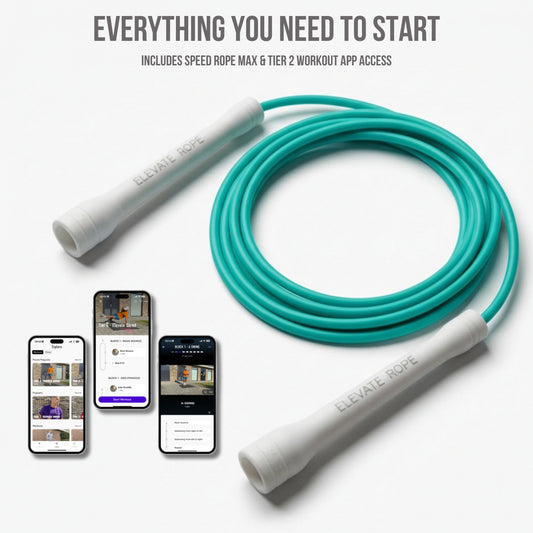
Speed Rope
3.3 Long Handle Rope — Best for Flow & Angle Work
Long handles allow for:
- Larger swing motions
- Trick transitions
- Lomachenko-style movements
- Dynamic rhythm changes
Great for advanced fighters wanting to expand mobility and flow.
Recommended:
Long Handle Rope
3.4 The Complete Fighter Setup
For fighters who want every benefit — conditioning, footwork, rhythm, flow — one bundle gives you all tools in one package.
Recommended:
Athlete MAX Bundle
4. How to Jump Rope Properly for Fight Training
Technique matters. Poor form burns extra energy and slows down your development.
4.1 Hand & Arm Position
- Keep hands close to your hips
- Elbows tucked in
- Turn the rope with your wrists, not your arms
This conserves energy and increases efficiency.
4.2 Foot Technique
- Land on the balls of your feet
- Keep jumps low (1–2 cm off the ground)
- Maintain a relaxed bounce
- Stay mobile — no stiff legs
Boxing footwork is light and effortless, and your rope work should match.
4.3 Breathing
Breathe naturally, exhaling every few turns. Fighters often unconsciously hold their breath — rope helps correct this.
4.4 Rhythm Control
This is where fighters become elite. Feel the rhythm of the rope. Find the beat. Move on time. Once timing is second nature, fighting becomes smoother and more controlled.
5. Essential Footwork Drills for Fighters
These drills teach the type of movement fighters use constantly in the ring.
5.1 Lateral Step Over
Teaches side-to-side mobility and defensive angle changes.
5.2 Forward Slip Step
Perfect for stepping into punching range explosively.
5.3 Backstep + Reset
Builds safe range control and recovery movement.
5.4 Pivot Jump
Develops rotational balance for counters and defensive pivots.
5.5 Side Swing → Step Pattern
Used by Lomachenko for misdirection and dynamic movement.
Best rope for all drills:
Beaded Rope or Long Handle Rope.
6. Jump Rope Conditioning Workouts for Fight Shape
Here are the most effective fight-specific rope workouts.
6.1 3-Minute Fighter Conditioning Round
Builds endurance and explosive transitions.
Round format:
- 30s speed
- 30s boxer skip
- 30s high knees
- 30s double unders
- 30s slow skip
- 30s all-out sprint
Best rope: Speed Rope (Ascent MAX)
6.2 Fight Camp HIIT Circuit (10 Rounds)
Perfect for fighters needing high anaerobic performance.
10 rounds:
- 45 seconds ON
- 15 seconds OFF
6.3 Footwork Integration Round
- 20s side swings
- 20s lateral steps
- 20s boxer skip
Repeat × 5
Great during footwork days or warm-ups.
7. Fighter Routines (Beginner to Elite)
7.1 Beginner Routine (10 Minutes)
- Basic bounce — 1 minute
- Boxer skip — 1 minute
- Rest — 30 seconds
Repeat 4 times
Goal: Rhythm, timing, base coordination.
7.2 Intermediate Routine (15 Minutes)
- Side swing → basic — 1 minute
- High knees — 1 minute
- Footwork pattern — 1 minute
Repeat 5 times
Goal: Add mobility and variety.
7.3 Advanced Fight Camp Routine (20–25 Minutes)
- Double unders — 30s
- Angle footsteps — 40s
- Sprint — 30s
- Crossovers — 30s
- Boxer skip — 40s
- Recovery skip — 30s
Repeat 3 rounds
Goal: Fight-ready stamina.
8. Common Jump Rope Mistakes Fighters Make
Mistake 1: Jumping Too High
Wastes energy. Stay low and springy.
Mistake 2: Incorrect Rope Choice
Speed ropes ≠ footwork practice
Beaded ropes ≠ high-speed sprints
Choose the right rope for your goal.
Mistake 3: No Round Structure
Fighting is round-based. Rope training should be too.
Mistake 4: Only Using Rope as a Warm-Up
Rope should be its own training block.
9. Fighter FAQs
How long should fighters jump rope?
Beginners: 10–15 minutes
Amateurs: 15–25 minutes
Pros: 20–40 minutes
Is jump rope better than running for fighters?
Yes — for:
- Footwork
- Coordination
- Timing
- Agility
Running is still useful but not enough alone.
Which rope is best for beginners?
Beaded Rope — it teaches perfect rhythm and control.
How do I get better footwork quickly?
Jump rope + lateral drills + pivots = fast improvement.
10. Best Ropes for Fighters (Direct Recommendations)
Best Overall for Fighters:
Best for Conditioning:
Best for Footwork & Rhythm:
Best for Angles & Mobility:
Each rope trains a different part of your fight performance. Fighters see the best results using more than one rope type.
Conclusion: Start Training Like a Fighter
If you want faster footwork, better timing, elite conditioning, and sharper movement — jump rope is the fastest way to get there. It’s simple, effective, and used by every level of fighter, from beginners to world champions.
Start with the rope that fits your goal, or commit to the full fighter setup and take your training to the next level.
Your best rounds start with the right rope.