






Every fighter eventually learns this lesson the hard way, fighter cardio is more important than you think. This is why:
Being fit doesn’t mean you’re fight-ready.
Plenty of athletes look strong in the gym —
and still gas out under pressure.
True fighter cardio isn’t about running farther or pushing harder.
It’s about controlling effort, breathing, and output — round after round.
From Mayweather’s effortless pacing to Usman’s relentless pressure to Volkanovski’s nonstop movement, elite fighters don’t just survive rounds.
They own them.

And behind that level of control lies a simple, underestimated weapon: the jump rope.
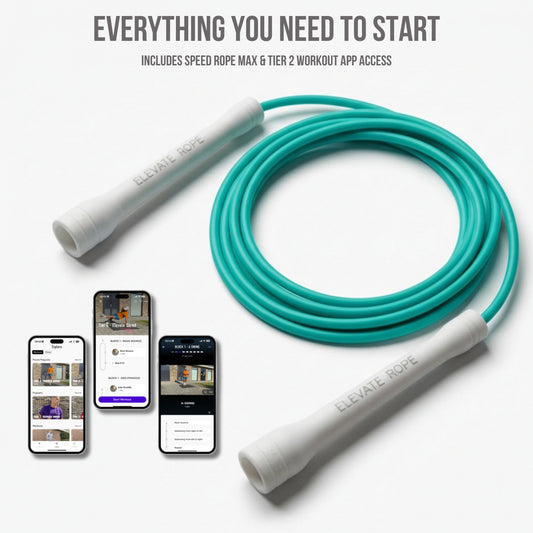
Modern fighters around the world use Elevate Rope to build the exact energy systems needed to dominate rounds without burning out.
This guide breaks down how championship cardio really works — and how Elevate Rope accelerates it.
1. What “Fight Cardio” Actually Means
Fighter cardio is not endurance.
It’s repeatability under stress.
Real fight conditioning determines:
- How long you can stay sharp
- How fast you recover between exchanges
- Whether your footwork collapses late
- If your hands stay crisp in round 3, 4, and 5
The best fighters don’t just last longer.
They stay dangerous longer.
Jump rope training is one of the most efficient ways to build this specific kind of conditioning.
2. The Three Energy Systems Every Fighter Must Train
Elite cardio comes from mastering all three systems — not overtraining one.
2.1 Aerobic Base: Your Engine
This is your foundation.
It determines:
- How fast you recover
- How calm your breathing stays
- How well you handle long rounds
Rope work builds aerobic capacity without impact fatigue, making it ideal for daily conditioning.
Steady rounds with an Elevate Speed Rope reinforce relaxed breathing and sustainable movement.
2.2 Anaerobic Power: Your Explosiveness
This is where bursts live.
It fuels:
- Flurries
- Takedown scrambles
- Explosive counters
- Sudden pressure shifts
Interval-based rope rounds train this system perfectly — short, intense foot patterns followed by brief recovery.
The Ascent MAX Bundle allows quick rope switches to overload this system without overuse injuries.
2.3 Lactate Tolerance: Staying Sharp While Tired
This is the separator.
It determines:
- Whether technique breaks down
- If your guard drops late
- How clean your decisions stay
Jump rope under fatigue forces posture, rhythm, and timing even when legs are burning — exactly like the later rounds of a fight.
3. Why Fighters Burn Out (Even When They’re “In Shape”)
Most cardio mistakes come from training the wrong way.
❌ Mistake 1: Only Running Long Distances
Builds endurance, not fight pacing.
❌ Mistake 2: Ignoring Rhythm
Fighting is rhythm disruption, not steady output.
❌ Mistake 3: No Recovery Control
If you can’t lower your heart rate, you can’t dominate rounds.
Rope work fixes all three — because it forces controlled output, precise timing, and fast recovery.

4. Jump Rope as the Ultimate Fight Conditioning Tool
Jump rope is unique because it trains:
- Cardiovascular endurance
- Footwork efficiency
- Breath control
- Mental pacing
- Coordination under fatigue
All at once.
Unlike machines, rope work punishes inefficiency instantly.
Miss timing → you feel it
Lose rhythm → you trip
Overexert → breathing spikes
That feedback loop builds fight-ready conditioning faster than almost anything else.
5. Rope Selection for Fighter Cardio
Each rope targets a different layer of conditioning.
Speed Rope — Round Control & Breathing
Best for:
- Smooth pacing
- Rhythm regulation
- Long conditioning rounds
Beaded Rope — Timing Under Fatigue
Best for:
- Structure
- Mistake correction
- Mental sharpness while tired
Long Handle Rope — Movement Conditioning
Best for:
- Larger movement patterns
- Flow states
- Energy-efficient footwork
Heavy Rope — Power Endurance
Best for:
- Shoulder stamina
- Grip endurance
- Late-round pressure
Together, they create complete fight cardio.
6. The Fighter Conditioning System (Step-By-Step)
Phase 1 — Aerobic Control
- 3–5 minute steady rope rounds
- Focus on nasal breathing
- Relaxed shoulders and posture
Phase 2 — Output Bursts
- 20–30 second high-intensity foot patterns
- 30–40 seconds active recovery
- Repeat for 4–6 rounds
Phase 3 — Fatigue Discipline
- Rope immediately after pads or bag work
- Maintain rhythm despite heavy legs
Phase 4 — Fight Simulation
Combine rope + shadowboxing:
- Rope → jab flow
- Rope → angle exits
- Rope → counter sequences
This teaches your body to perform under real fight conditions.

7. Conditioning That Transfers Directly to the Cage or Ring
The best conditioning always transfers.
Jump rope improves:
- Late-round footwork
- Defense while tired
- Calmness under pressure
- Decision-making speed
It doesn’t just make you fitter.
It makes you harder to break.

8. Fighter Conditioning FAQ
Is jump rope enough for fighter cardio?
It’s one of the most efficient tools, especially when combined with pads, bag work, and sparring.
How often should fighters jump rope?
3–6 times per week.
5–20 minutes per session.
Which bundle is best for fighters?
The Ascent MAX Bundle covers aerobic, anaerobic, and power conditioning in one system for the best fighter cardio .
Conclusion: Cardio Is Control
The fighter who controls the pace controls the fight.
Jump rope builds:
- Calm breathing
- Efficient movement
- Sustainable output
- Late-round sharpness
Elevate Rope gives fighters the tools to train conditioning with purpose, not guesswork for the best fighter cardio.
If you want fighter cardio that actually shows up on fight night:
Train your engine
Train your rhythm
Train your recovery
Because the fight isn’t won by who works hardest.
It’s won by who stays sharp the longest.
Build that edge with Elevate Rope.