





Boxing footwork drills become easier when you can feel the timing of every step. A jump rope gives immediate feedback. When your hands and feet lose rhythm, the cable catches. These seven drills build from a basic bounce to controlled direction changes.
You don't need advanced tricks or a fighter's conditioning. You need a suitable rope, enough clear space, and a progression you can repeat. Jump rope practice supports boxing footwork. It cannot replace stance work, pivots, or coaching.
Why Jump Rope Helps Beginner Boxing Footwork
Skipping builds a predictable rhythm. Each rotation gives you another chance to coordinate your hands and feet. Keep movements small rather than jumping higher to rescue a missed turn.
England Boxing's skipping guidance describes timing, endurance, and coordination as useful training qualities. Yet ring movement still depends on distance, angles, and an opponent's actions.
A 2022 boxing training study compared simulated rope jumping with plyometrics in 24 experienced junior boxers. Both groups improved some performance measures. Neither approach clearly outperformed the other. That doesn't prove skipping alone improves a beginner's fighting ability.
Practise your rope rhythm, then put the rope down. Repeat a few steps in your actual boxing stance. This connects coordination work to boxing footwork without confusing the two.
Set Up Your Jump Rope Before Training
Stand on the middle of the cord. Bring the handles upward beside your body. Armpit height offers a common starting point, not a universal measurement.
Test several slow turns before trimming an adjustable rope. Adjust patiently and avoid cutting too much cable at once. Check our jump rope length guide when sizing feels difficult.
Keep your elbows near your ribs and hands slightly forward. Use relaxed wrist rotations. Choose a non-slip surface with clearance overhead and around you.

Start slowly. Short sessions help your calves adjust to repeated landings. Stop if you feel pain.
7 Jump Rope Boxing Footwork Drills for Beginners
Learn each movement before combining them. Keep the rope turning smoothly, and rest when your timing breaks.
1. Basic Bounce
Stand tall with feet close together. Make one small jump per full rotation. Practise for 20 seconds, then rest.
Basic bounce is your reference point. Return to it whenever another drill becomes difficult.
2. Alternate-Foot Step
Lift one foot slightly as the other lands. Switch feet with each turn, like a gentle jog in place.
Keep your knees low. This step introduces controlled weight transfer without travelling across the floor.
3. Boxer Step
Shift slightly more weight onto one foot, then the other. Avoid swinging your shoulders or making large sideways hops.
Practise without the rope first. Add easy rotations once the boxer step feels steady. A smaller shift makes your boxer step easier to repeat.
4. Lateral Shift
Begin with basic bounce. Move a small distance right, return to centre, then move left.
Your hands should remain quiet. These boxing footwork drills train rope coordination, not defensive sidesteps against punches.
5. Forward-and-Back Reset
Move forward for two rope turns and backward for two turns. Keep your torso upright and steps short.
Use floor markings if needed. Control the change of direction before increasing speed.
6. Side Swing to Bounce
Swing the rope alongside your body without jumping through it. Bring the cable forward into a regular bounce.
Focus on your first clean jump after the reset. A side swing is useful for recovering rhythm.
7. Beginner Combination
Try 20 seconds of basic bounce, 20 seconds of boxer step, and 20 seconds of small lateral shifts.
Rest for one minute. Repeat if your movement stays comfortable. For more variations, see our seven boxing jump rope drills.
A 10-Minute Jump Rope Footwork Session
Use this schedule for skills, not an all-out fitness test. Pause after trips and return to clean movement.
| Time | Activity | Main focus |
| 0:00–2:00 | Basic bounce | Relaxed rhythm |
| 2:00–3:00 | Rest and boxer step without rope | Weight transfer |
| 3:00–5:00 | Alternate-foot step and boxer step | Quiet landings |
| 5:00–6:00 | Rest | Reset posture |
| 6:00–8:00 | Lateral and forward-back steps | Direction control |
| 8:00–10:00 | Easy combination | Smooth transitions |
Afterward, practise one minute of shadowboxing. Maintain your proper stance rather than copying your narrow skipping position.
Increase difficulty only when your technique holds together. The CDC activity recommendations describe general aerobic targets, not a required skipping quota.
Common Boxing Footwork Drill Mistakes
Jumping too high: Reduce the jump and slow the cable. Extra height usually makes landing rhythm harder to control.
Swinging wide arms: Bring your hands closer to your hips. Let the wrists guide each rotation.
Losing boxing stance: Rope footwork and ring footwork use different positions. Practise stance resets separately.
Treating every round as conditioning: Rest before technique falls apart. Consistent clean repetitions matter more than exhaustion.
If possible, film ten seconds from the front. Notice one error, make one correction, and try again.
Beaded Rope vs. Speed Rope for Beginner Boxers
A beaded rope provides noticeable feedback through the handles. It may help you feel when the cable approaches your feet.
A speed rope usually feels lighter and allows quicker rotations. Neither guarantees better boxing footwork.
| Training goal | Beaded rope | Speed rope |
| Learning basic bounce | Clearer tactile feedback | Less noticeable for some beginners |
| Boxer step practice | Suitable | Suitable |
| Faster rotations | More drag | Often preferred |
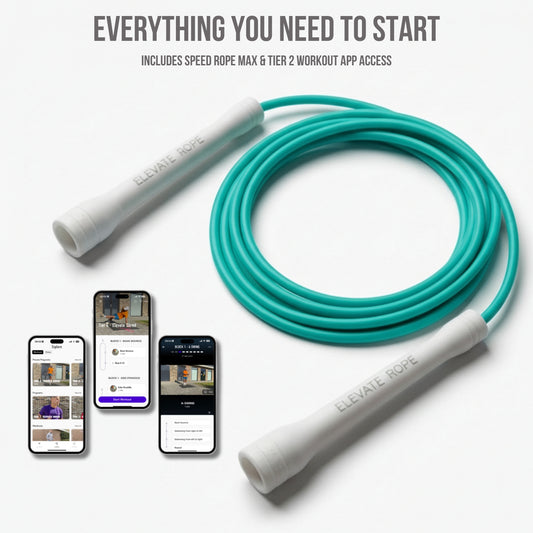
Try the Elevate Beaded Rope if timing feels difficult. The Elevate Speed Rope MAX offers another handling option. The Ascent MAX Bundle includes different rope types for varied sessions.
You don't need every rope to begin. Keep the equipment simple and practise one clean step first.

Your Next Step: Make One Drill Feel Easy
Choose basic bounce and boxer step for your next session. Give each a few calm attempts. Then put the rope aside and practise boxing footwork in stance.
Your goal isn't to become the best skipper in the gym. It's to build a repeatable movement habit that supports your boxing training.
Together We Elevate.
Watch Geraldo Alken's jump rope footwork tutorial for boxer step variations and controlled boxing patterns.
Frequently Asked Questions
Which jump rope boxing footwork drills should beginners learn first?
Start with basic bounce, alternate-foot step, and boxer step. Practise each without rushing before adding lateral movement or combinations. A jump rope helps reveal timing mistakes, but it doesn't teach defensive positioning. Connect each drill with simple boxing stance practice after skipping.
How long should I practise jump rope for boxing?
Begin with short intervals that let you maintain good technique. Our ten-minute routine includes rest rather than ten continuous minutes of jumping. Reduce the work time if your calves feel sore or your timing deteriorates. Increase the challenge gradually as your coordination improves.
Can jump rope improve boxing footwork by itself?
Jump rope can help you practise rhythm, controlled weight transfer, and repeated stepping. However, boxing footwork also requires ring awareness, distance control, and sound positioning. These skills need separate coaching and shadowboxing. Think of skipping as useful supporting practice, not a complete boxing training system.
Is a beaded rope or speed rope better for beginners?
A beaded rope may make rotation easier to feel, especially when you're still learning timing. A speed rope offers a lighter, quicker feel once your rhythm becomes consistent. Neither is essential if you already own a suitable rope. Correct length and comfortable practice matter more than buying multiple products.
What should I do when my boxer step keeps catching the rope?
Slow the rope and practise weight transfer without equipment first. Keep your elbows near your sides and avoid jumping higher to escape the cable. Return to basic bounce between attempts. If the problem continues, check rope length before increasing your speed or trying more complicated footwork drills.
About Elevate Rope
Elevate Rope helps people build fitness and confidence through approachable jump rope practice. Founded by Geraldo Alken, the brand has served more than 50,000 customers. The Elevate Code encourages small commitments and consistent action.