





INTRODUCTION
You don't have a productivity problem, a motivation problem, or a willpower problem — you have a nervous system problem, and jump rope mental health benefits are the fastest fix almost nobody talks about.
If you've been waking up tired, scrolling before your feet hit the floor, staring at your screen with a brain that won't focus, snapping at people you love, or lying in bed at midnight while your thoughts run laps — you're not broken. You're dysregulated. And almost everything modern life sells you as a solution (more coffee, more meditation apps, more discipline, more therapy podcasts) treats the symptoms while ignoring the actual mechanism.
This guide is about that mechanism. And about a strange, almost embarrassingly simple tool that addresses it directly: a jump rope.
Jump rope for mental health isn't a wellness trend. It's not a TikTok hack. It's a 10-minute daily intervention that does something most "self-care" advice can't — it physically resets the systems in your body that govern stress, mood, focus and emotional regulation. The research backing rhythmic exercise for anxiety, depression and cognitive function is substantial, growing, and largely ignored by the wellness industry because you can't sell a subscription to a piece of rope.
This is the complete guide. We'll cover what's actually happening in your nervous system when stress takes over, why rhythmic movement specifically (not just any cardio) rewires the stress response, what jump rope does that running, cycling and gym workouts don't, and exactly how to use it as a mental health tool — even if you've never picked one up before.
By the end, you'll understand why 10 minutes of jump rope for mental health beats an hour of doomscrolling, a third cup of coffee, or another wellness app you'll abandon by Friday.
Let's start with what's actually going wrong.
SECTION 1: The Real Reason You Feel Like This
Before we talk about jump rope for mental health, we have to talk about what mental health actually means at the body level. Because almost everyone gets this wrong.
When you feel anxious, scattered, exhausted, irritable or low — those aren't separate problems. They're signs of one underlying issue: your autonomic nervous system is stuck in the wrong gear.
Your autonomic nervous system has two main modes. The sympathetic branch is your gas pedal — fight, flight, focus, action. The parasympathetic branch is your brake — rest, digest, repair, calm. In a healthy nervous system, you shift between these fluidly throughout the day. Sympathetic activation in the morning to wake up. Parasympathetic dominance in the evening to wind down. Brief sympathetic spikes when you need to perform, followed by quick returns to baseline.
Modern life breaks this system. Constant notifications, financial pressure, news cycles, social media, poor sleep, sedentary work, blue light, ultra-processed food, and the relentless cognitive load of being a human in 2026 keep your sympathetic nervous system mildly switched on — all day, every day. You never fully downshift. You never fully recover. You're not in fight-or-flight, exactly. You're in something subtler and more corrosive: chronic low-grade activation.
This is what burnout actually is. This is what "high-functioning anxiety" actually is. This is why you can't focus, can't sleep deeply, can't enjoy your weekends, can't stop snacking, and feel vaguely awful for reasons you can't name.
The fix isn't more rest. Rest doesn't work when your nervous system has forgotten how to downshift. The fix is teaching your body, through movement, how to surge and recover — how to flex the gas pedal and the brake. This is where jump rope for mental health enters the picture, and why it works better than passive interventions like meditation alone.
Rhythmic, full-body exercise is one of the most efficient ways to discharge accumulated sympathetic activation and restore parasympathetic tone. The science here isn't new — but the application to mental health is finally catching up.

SECTION 2: Why Rhythm Specifically (Not Just Any Cardio)
Here's where things get interesting. If exercise alone were enough, gym memberships would have solved the anxiety epidemic by now. They haven't. Walking helps, but mildly. Running works for some people, breaks others. Weightlifting builds resilience but doesn't reliably calm a racing mind.
What the research keeps pointing to — across studies on trauma, ADHD, depression, anxiety and addiction recovery — is that rhythmic, bilateral, sustained movement has a uniquely regulating effect on the nervous system. Walking, drumming, dancing, swimming and yes, jump rope for mental health all share this quality. They put your body into a steady, predictable cadence that the brain reads as safety.
There's a name for this in trauma therapy: bilateral stimulation. The same principle behind EMDR (eye movement desensitization and reprocessing), used to treat PTSD. Alternating left-right input — whether through eye movements, tapping, walking, or jumping — appears to help the brain process and discharge stress in a way that non-rhythmic activity doesn't replicate. You can read more about how rhythmic movement affects the nervous system in resources from the American Psychological Association and clinical work on rhythmic exercise.
Jump rope is rhythmic bilateral movement at its purest. Every rotation is a tiny metronome. Your feet alternate or land together in a steady beat. Your wrists flick in time. Your breath synchronizes. Within 30–60 seconds, your brain locks into the cadence and something shifts — the mental chatter quiets, the body warms, the breath deepens, and you're no longer thinking about your inbox. You're in the rhythm.
This is why jump rope for mental health works where many other workouts don't. It's not just cardio. It's a rhythm reset.
SECTION 3: What Happens in Your Brain When You Skip
Let's get specific. When you jump rope for 10 minutes, here's what actually changes inside your skull and bloodstream:
Cortisol drops. Cortisol is your primary stress hormone. Chronic elevation is associated with anxiety, weight gain, sleep problems and immune suppression. Moderate-intensity rhythmic exercise has been shown to lower cortisol levels for hours afterward — one of the most direct interventions available for chronic stress.
BDNF rises. Brain-derived neurotrophic factor is sometimes called "fertilizer for the brain." It supports the growth of new neurons, strengthens existing connections, and is critical for learning, memory and mood regulation. Exercise — especially rhythmic, aerobic exercise — is one of the most reliable ways to increase BDNF. Research from institutions like the National Institutes of Health has consistently linked BDNF increases to reduced depression and anxiety symptoms.
Endocannabinoids release. That "runner's high" feeling? It's not from endorphins, as we used to think. It's largely driven by endocannabinoids — your body's own cannabis-like compounds. They produce a calm, slightly euphoric, anxiety-free state. Rhythmic moderate cardio reliably triggers this release within 10–20 minutes.
Vagal tone improves. Your vagus nerve runs from your brainstem through your chest and gut, and it's the primary signal pathway for parasympathetic activation. Strong vagal tone (often measured as heart rate variability, or HRV) is associated with emotional resilience, better digestion, deeper sleep and reduced inflammation. Rhythmic aerobic exercise strengthens vagal tone over time, which is one of the deepest mechanisms behind why jump rope for mental health works.
Prefrontal cortex re-engages. When you're anxious, blood flow shifts away from your prefrontal cortex (the rational, planning, focusing part of your brain) and toward the amygdala (threat detection). After 10–15 minutes of rhythmic exercise, prefrontal activity rebounds. This is why you can think clearly after a workout when you couldn't beforehand.
Ten minutes. One rope. All of that happens in your body, every time.
SECTION 4: Jump Rope vs. Running, Walking and the Gym
People often ask: if rhythmic exercise is the key, can't I just run? Or walk? Or do anything?
You can. But jump rope for mental health has specific advantages that make it the most efficient mental wellness tool we've found.
It's faster. Ten minutes of jump rope delivers cardiovascular load equivalent to roughly 30 minutes of jogging. For someone struggling with motivation, energy or time, that ratio matters enormously. Anxiety doesn't make you want to lace up for a 45-minute run. It might let you grab a rope for 10.
It's location-independent. You can skip in your kitchen, on a balcony, in a hotel room, in a backyard, in a 2x2 meter space. Running requires going outside (weather, judgment, gear). The gym requires getting there. Jump rope removes every friction point between "I should move" and "I'm moving."
It demands presence. This is the underrated piece. Walking, you can ruminate. Running, you can spiral. Cycling, you can stress about work. Jump rope requires just enough coordination that your prefrontal cortex has to engage with the present moment. Trip on the rope and you have to restart. That demand for presence is what makes jump rope for mental health feel like moving meditation.
It's bilateral and full-body. Both arms, both legs, your core, your breath, all working in coordinated rhythm. Few exercises match this for nervous system regulation.
It's cheap and durable. A good rope costs less than two months of a meditation app subscription, and lasts years. There's no enrollment, no streak to maintain, no algorithm.
For people who hate running, can't get to the gym, find yoga too slow, or have given up on workout routines five times this year — jump rope for mental health is often the missing link. Not because it's magic, but because it removes every obstacle that kept the other interventions from sticking.

SECTION 5: The 10-Minute Daily Protocol
Here's the actual prescription. This is the simplest version of jump rope for mental health, designed to be sustainable from day one. You don't need to be fit. You don't need to be coordinated. You need 10 minutes and a rope.
Minutes 1–2: Warm up. Slow basic bounces, or even just skipping without the rope going overhead. Get your breath moving and your ankles loose.
Minutes 3–8: Steady rhythm. Find a comfortable basic bounce cadence — feet together, light landings, wrists doing the work. If you trip on the rope, restart calmly. The restart is part of the practice. Don't sprint. The goal is sustained rhythm, not maximum effort.
Minutes 9–10: Cool down and downshift. Slow your pace. Breathe through your nose if you can. Notice how your body feels different than it did 10 minutes ago. This downshift moment is the parasympathetic activation — the brake pedal engaging. Don't skip it.
That's it. Ten minutes. Done before your coffee is cold.
If you want to deepen the practice, layer this on:
- Morning skipping sets your nervous system tone for the day. Most people benefit from doing this within an hour of waking.
- Midday reset (especially for desk workers) breaks the cumulative sympathetic load of screen work.
- Evening skipping before 7pm can improve sleep quality, though some people find it too activating before bed — experiment.
Build consistency before you build intensity. Daily 10 minutes beats sporadic 30 minutes for nervous system regulation. We covered this exact 14-day starter routine in our beginner's mental reset article, which walks you through a full two-week build.
SECTION 6: Who Benefits Most (And Specific Use Cases)
Jump rope for mental health is broadly useful, but certain people respond especially well.
Desk workers and remote employees sitting 8+ hours a day with chronic sympathetic activation from screen work. The midday 5–10 minute reset is often the single most effective intervention for desk job burnout. We go deep on this in our desk job burnout article.
People with ADHD often find that rhythmic exercise calms the dopamine dysregulation that drives restlessness and focus issues. Jump rope works particularly well because the demand for coordination is just engaging enough to satisfy the ADHD brain's need for stimulation, while the rhythm provides the regulating effect. Our jump rope for ADHD piece covers this in detail.
People with anxiety — both generalized and situational — benefit enormously from the cortisol-lowering, vagal-tone-improving effects. The 10-minute morning routine has become a daily anchor for many people managing chronic anxiety. See our deeper exploration of cardio for anxiety for the workout comparison.
Burnout recovery. When you're depleted, the idea of a "real workout" feels impossible. Ten minutes of rhythmic skipping is one of the few movement interventions that's gentle enough to do on a burnout day but powerful enough to actually shift your state.
Highly stressed professionals dealing with constant decision fatigue and emotional load find that the presence-demand of jump rope for mental health acts as a forced mental break in a way passive activities can't replicate.
If any of those sound like you, this is your tool.
SECTION 7: Common Objections and Honest Answers
"My knees can't handle it." This is the most common objection, and it's mostly wrong. Done with proper form (light landings, on the balls of your feet, on a forgiving surface), jump rope is actually lower-impact than running. We unpack the research and proper technique in our is jump rope bad for your knees article. That said, if you have existing serious knee injuries, talk to a physiotherapist first.
"I'm too uncoordinated." Almost everyone trips a lot in the first week. By day 7, most people can do 30–60 seconds of continuous skipping. By day 14, several minutes. Coordination is built quickly. The restart is part of the process — not a failure.
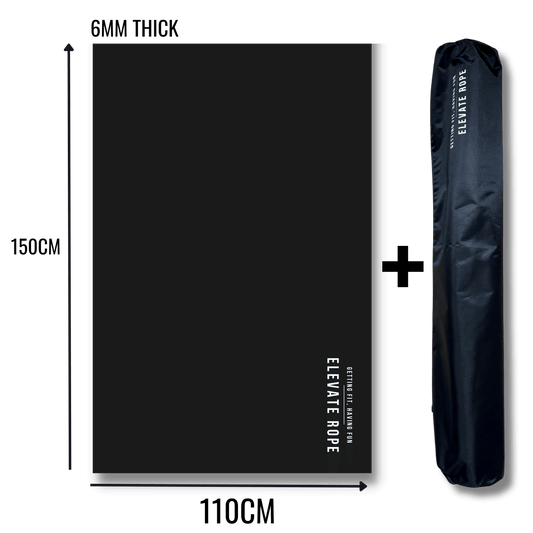
"I don't have space." You need a 2x2 meter area with a ceiling above your head height plus 30cm. A kitchen, hallway, balcony or backyard works. Apartment dwellers worry about downstairs neighbors — a yoga mat plus light landings solves most noise complaints. A heavier rope (which doesn't require high jumps) helps too.
"Won't I just get bored?" Possibly, but boredom is part of the point. Most modern mental health issues are downstream of overstimulation, not understimulation. The rhythmic monotony is precisely what calms your nervous system. That said, once basic bounces feel easy, you can progress to skill work — boxer steps, alternating feet, eventually double-unders. We cover the progression path in our skill progression article.
"Is 10 minutes really enough?" For nervous system regulation, yes. Multiple studies on exercise and mental health show that even 10 minutes of moderate cardio produces measurable mood and cortisol changes. More isn't necessarily better for mental health — consistency matters more than duration. The Mayo Clinic's overview of exercise for mental health reinforces this point.

SECTION 8: What to Look For in a Rope (Briefly)
Equipment matters more than most beginners realize. A bad rope makes jump rope for mental health frustrating; a good rope makes it click.
For mental wellness use specifically — meaning you're prioritizing rhythm, feedback and consistency over speed — we recommend beaded ropes. The beads provide:
- Auditory feedback (the click-click of beads on the floor) that reinforces the rhythmic, meditative quality
- Tactile feedback through the wrists, helping you find and hold a steady cadence
- Visual feedback as the rope arcs around you
- Forgiveness — beaded ropes are heavier and more stable than thin speed cables, so they're far easier to learn on
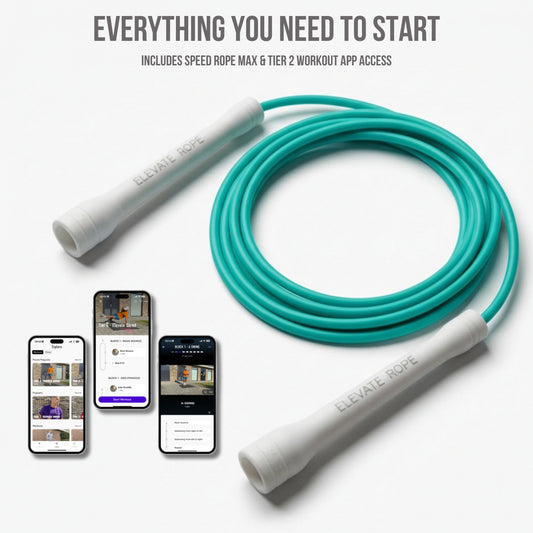
Speed ropes (thin cables) are excellent for advanced skill work but tend to feel "twitchy" for beginners and provide less of the sensory grounding that makes skipping feel like meditation.
We go deeper into this in our beaded vs speed rope comparison and our best jump rope for stress guide. For most readers using jump rope for mental health, the Elevate Beaded Rope is the right starting point — built specifically with rhythm-first, beginner-friendly feedback in mind.
SECTION 9: Building the Habit (Where Most People Fail)
Here's the honest part: most people who read an article like this never start. Of those who start, most quit within two weeks. Habits are hard. We're not going to pretend otherwise.
The way to make jump rope for mental health stick:
Stack it onto an existing habit. Right after morning coffee. Right before your shower. Right after walking the dog. Don't try to build a new habit from scratch; attach it to one you already have.
Make the rope visible. Hang it on a doorknob, drape it over your desk chair, leave it next to your bed. Out of sight is out of mind, especially for ADHD brains.
Lower the bar absurdly low. On bad days, two minutes counts. One minute counts. Picking up the rope and putting it back down counts as a win in week one. Consistency beats intensity. Always.
Track the streak loosely. A simple X on a calendar or a habit tracker app. Not for guilt — for momentum. Visual evidence of consistency reinforces the identity shift from "person trying to skip" to "person who skips."
Find a community. Jump rope is having a moment. Online communities, local meetups, and events like Jump Rope Revolution in Amsterdam are full of people using rope as more than fitness. Being part of something — even loosely — multiplies adherence.
The Elevate Family — our community of 1,200+ reviewed customers and ropers across Europe — is one such network. People skipping for fitness, for skill, for community, and increasingly, for mental health.
SECTION 10: When Jump Rope Isn't Enough
Let's be honest. Jump rope for mental health is powerful, but it's not a substitute for professional care if you need it.
If you're experiencing severe or persistent depression, panic disorder, suicidal thoughts, trauma symptoms, or any mental health condition that disrupts your daily functioning — please talk to a qualified professional. Therapy, medication, and clinical support exist because some things need more than rope and rhythm.
What jump rope can do is be an extraordinarily effective complement to other care. It can support therapy. It can amplify the effects of medication. It can be the daily practice that makes everything else work better. But it shouldn't be your only line of defense if you're in real difficulty.
If you're not sure, talking to your GP or a mental health professional is always the right first step. Resources like the WHO mental health page offer good starting points for understanding when to seek support.
For the millions of people dealing with sub-clinical chronic stress, mild-to-moderate anxiety, focus issues, burnout symptoms, and the general feeling of "I'm not okay but I'm not in crisis" — jump rope for mental health is often exactly the intervention that's been missing.

SECTION 11: The Bigger Picture
We started this guide with the observation that you don't have a productivity problem — you have a nervous system problem. We'll end it with a related point.
You also don't have a willpower problem. The reason meditation apps stop working after two weeks, the reason gym memberships go unused, the reason therapy podcasts feel inspiring on Sunday and useless on Wednesday, isn't because you lack discipline. It's because most wellness solutions ask your overloaded, dysregulated nervous system to do more — more focus, more sitting still, more reflection, more effort.
Jump rope for mental health works in the opposite direction. It gives your nervous system less to think about and more to discharge. It uses rhythm, the oldest regulating force humans have, to do the work for you. You don't have to want to feel better. You just have to skip for 10 minutes, and your body does the rest.
That's the real reason a piece of rope can change your mental health. Not because it's a magic tool, but because it bypasses the part of you that's tired of trying.
Pick it up. Skip for 10 minutes. See what changes by week two.
SECTION 12: FAQ
Q: How long until I feel a difference? Most people feel an immediate post-session calm after the first day. Cumulative effects on mood, sleep and anxiety typically show up within 10–14 days of daily 10-minute sessions. By week four, jump rope for mental health often becomes one of the most reliable mood-regulating tools in your daily routine.
Q: Do I need to be fit to start? No. The 10-minute beginner protocol is designed for total beginners. You'll restart often in the first week, and that's part of the process. By week two, continuous skipping for 30–60 seconds is normal.
Q: Can I do this if I'm overweight or out of shape? Yes, with a few notes. Start with shorter sessions (3–5 minutes), use a heavier rope that doesn't require high jumps, land softly, and use a forgiving surface. Consult a doctor if you have cardiovascular concerns. Many people find that the low time commitment makes jump rope for mental health one of the few forms of cardio they can actually sustain.
Q: Is it safe for people with anxiety or panic disorder? For most people, yes — and often very helpful. However, intense cardio can occasionally mimic the physical sensations of panic (racing heart, sweating) which some panic-prone people find triggering. Start gentle, go slow, and stop if it feels destabilizing. Talk to a therapist if unsure.
Q: What's the best rope for mental health use? A beaded rope. Beaded ropes provide the sensory feedback (sound, weight, rhythm) that makes skipping feel meditative rather than mechanical. We recommend the Elevate Beaded Rope for this specific use case. See our beaded vs speed rope article for the full comparison.
Q: Can children benefit from jump rope for mental health? Yes, particularly children with ADHD, anxiety or sensory regulation challenges. The rhythmic, bilateral nature of skipping is calming for many young nervous systems. Sessions can be shorter (3–5 minutes) and framed as play.
Q: How is this different from running for mental health? Running works for some people but breaks others — it's high-impact, weather-dependent, and many find it boring or ruminative. Jump rope is faster, location-independent, more rhythmically engaging, and demands the presence that running often doesn't. See our jump rope vs running for stress relief comparison for the full breakdown.
TRUST SIGNALS / CTA SECTION
⭐ Trusted by 1,200+ reviewers across Europe 🚚 Free shipping on orders over €50 (EU, UK, Australia, USA, Canada — worldwide shipping available elsewhere) 💜 Join the Elevate Family
Ready to try jump rope for mental health for yourself? Start with the Elevate Beaded Rope — the same rhythm-first design we recommend throughout this guide.
🌐 EXTERNAL LINKS (authoritative sources)
- American Psychological Association — exercise and stress: https://www.apa.org/topics/exercise-fitness/stress
- National Institutes of Health — BDNF and exercise: https://www.ncbi.nlm.nih.gov/pmc/articles/PMC3375451/
- Mayo Clinic — depression and exercise: https://www.mayoclinic.org/diseases-conditions/depression/in-depth/depression-and-exercise/art-20046495
- World Health Organization — mental health: https://www.who.int/health-topics/mental-health