





You want to work out in a small space. You also want to live in your home. And right now, those two goals feel mutually exclusive.
The fitness industry loves showing workouts filmed in massive lofts with floor-to-ceiling windows—spaces most of us will never have. Meanwhile, you're calculating whether you can do a burpee without kicking your coffee table through the television.
This isn't a motivation problem. It's a geometry problem. And geometry problems have solutions.
Workouts aren't a compromise—they're a constraint that forces better choices. The most effective home fitness routines don't require much room. They require the right movements, the right equipment (or none at all), and the right mindset about what "enough space" actually means.
What you'll learn:
- The minimum space you actually need for an effective workout
- Which exercises work in tight quarters and which don't
- Equipment that maximises results while minimising footprint
- How to structure a complete small space routine in under four square metres
- The workout method that delivers gym-level cardio in the space between your bed and your wall
How Much Space Do You Actually Need?
Most people overestimate the room required for workouts. The fitness content you see online creates a distorted sense of what's necessary—those pristine studios with yoga mats surrounded by empty hardwood aren't realistic, and they're not required.
Here's the actual minimum for different workout types:
For bodyweight exercises like squats, lunges, and push-ups, you need roughly the area of a yoga mat: about 180cm by 60cm. That's less than 1.1 square metres.
For standing cardio movements—high knees, jumping jacks, shadowboxing—you need space to extend your arms without hitting walls or furniture. That's typically a circle with a radius of about one metre, or roughly three square metres total.
For jump rope, you need approximately two metres of ceiling clearance and a floor area of about two by three metres. Most bedrooms, living rooms, and even large hallways meet these requirements.
The point isn't that you need all of these spaces simultaneously. It's that effective workouts can happen in areas you probably already have available—you just haven't thought of them as workout spaces yet.
Answer Block: Minimum Workout Space Requirements
Short answer: An effective workout requires roughly 1-4 square metres depending on the exercise type. Bodyweight floor exercises need about 1 square metre (yoga mat size). Standing cardio needs 2-3 square metres. Jump rope needs 2m x 3m floor space with 2m ceiling clearance. Most bedrooms and living rooms exceed these minimums.
Why it matters: constraints are often perceived barriers rather than actual ones. Understanding true requirements reveals that most apartments have sufficient workout space hiding in plain sight.
Best approach: Audit your space with a measuring tape before assuming you can't work out at home. Check ceiling height, furniture clearance, and floor dimensions in each room.

The Apartment Workout Problem Nobody Talks About
Floor space is only half the equation. The other half is neighbours.
Anyone who's lived in an apartment knows the unwritten rule: no jumping after 9pm. Maybe no jumping ever, depending on your downstairs neighbour's tolerance and your building's construction quality.
This eliminates most high-intensity workouts from consideration. Burpees, jump squats, box jumps, mountain climbers performed at speed—all of these create impact noise that travels through floors and ceilings. You can do them, but not without social consequences.
The result is a frustrating trade-off. The exercises that work best in small spaces tend to be the ones that create the most noise. The quiet exercises—planks, slow squats, yoga flows—don't deliver the cardiovascular intensity most people want from a workout.
This is why jump rope deserves special attention for training in apartments. Counterintuitively, proper rope jumping technique produces less impact than running, jumping jacks, or burpees. The movement involves small, controlled hops of only 2-3 centimetres off the ground—not the explosive leaps that shake floors. With a mat underneath for additional sound dampening, most people can jump rope in apartments without complaints.
Equipment That Works in Small Spaces (And Equipment That Doesn't)
Not all fitness equipment respects your square footage. Some of it will dominate your living room, collect dust, and eventually become an expensive clothes rack. Here's an honest assessment of what actually fits this lifestyle.
Works well in small spaces:
Resistance bands store in a drawer and provide progressive resistance for strength training. They're silent, versatile, and take up essentially zero floor space when not in use.
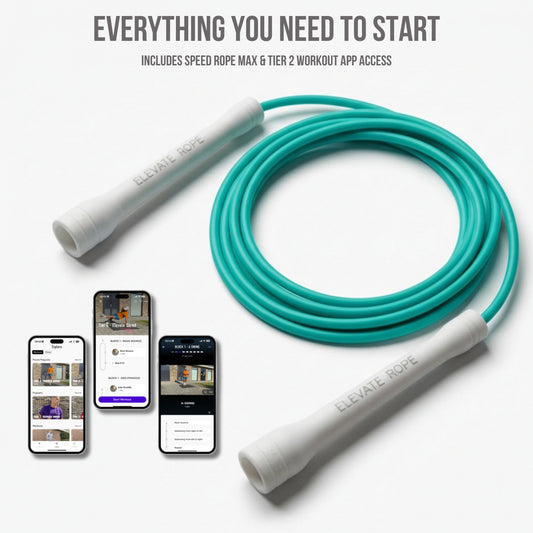
A jump rope stores in a drawer, hangs on a hook, or fits in a small bag. It provides intense cardiovascular training in minimal floor area and packs away instantly—perfect for little space living.
A single kettlebell or pair of dumbbells can support hundreds of exercises. They store under a bed or in a closet and have no ongoing footprint.
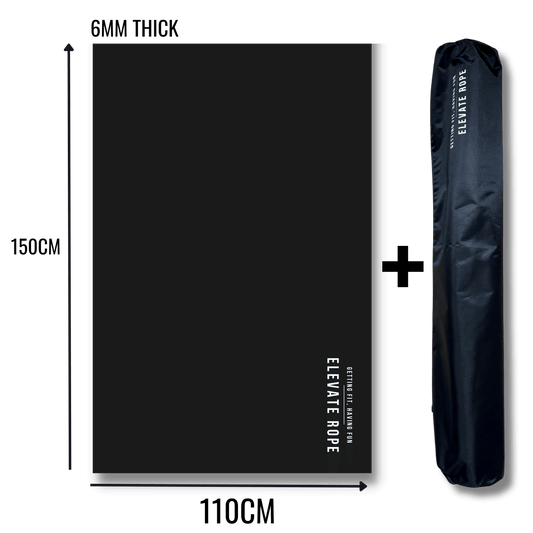
A yoga mat defines your workout area and provides cushioning for floor exercises. When rolled, it stands in a corner or slides behind furniture.
Doesn't work in small spaces:
Treadmills consume 1-2 square metres permanently, even when folded. The "folding" models still require floor space and wall clearance.
Stationary bikes and rowing machines face the same problem—they need dedicated floor area whether you're using them or not.
Multi-station home gyms are designed for garages and basements, not apartments. They require assembly, consume entire rooms, and can't be moved easily.
The principle is simple: workouts work best with equipment that disappears when you're done. If it requires permanent floor space, it's probably wrong for an apartment.

A Complete Workout Routine
Here's a routine that delivers full-body conditioning in roughly three square metres of floor space. No impact noise. No equipment beyond a rope and a mat.
Warm-up (3 minutes)
March in place for 60 seconds, gradually increasing knee height. Follow with arm circles—20 forward, 20 backward. Finish with 10 slow bodyweight squats to mobilise hips and knees.
Cardio block (10 minutes)
Jump rope at a moderate pace for 30 seconds, then rest for 30 seconds. Repeat for 10 rounds. If you're new to jumping, reduce work intervals to 20 seconds and increase rest to 40 seconds. The goal is continuous movement during work intervals, not maximum speed.
Strength block (10 minutes)
Perform each exercise for 45 seconds, then rest for 15 seconds before moving to the next. Complete two rounds of the following circuit: push-ups (modify on knees if needed), bodyweight squats, plank hold, reverse lunges (alternating legs), and glute bridges.
Cool-down (2 minutes)
Standing forward fold for 30 seconds. Quad stretch (holding wall or furniture for balance) for 30 seconds each leg. Chest stretch in doorway for 30 seconds.
Time: 25 minutes. Total space required: approximately 2m x 2m. equipment: one jump rope, one mat.
This routine works because every movement stays within a contained footprint. There's no lateral jumping, no explosive movements that shake floors, and no transitions requiring you to move around the room.
Making the Most of Your Available Space
Require thinking vertically, not just horizontally. Your apartment has more usable exercise space than the floor plan suggests.
Doorways provide anchor points for resistance bands and stretching. A closed door with a band looped over the top creates a cable machine substitute for lat pulldowns and tricep extensions.
Walls support exercises that don't need floor space at all. Wall sits, wall push-ups, and calf raises against a wall deliver effective training in the footprint of your own body.
Furniture isn't just an obstacle—it's equipment. A sturdy chair supports tricep dips, elevated push-ups, and step-ups. A couch provides an unstable surface for single-leg squats and a platform for incline or decline push-ups.
Hallways often have more ceiling clearance than living areas and fewer neighbours directly below. If your bedroom sits above another apartment but your hallway sits above a common area, the hallway might be your best workout zone.
The shift is mental as much as physical. Once you start seeing your apartment as a gym with furniture rather than a home that happens to have floor space, the possibilities expand dramatically.
The Psychology of Tiny Workout Spaces
Working out in a tiny space requires a different relationship with your environment than training in a dedicated gym. The mental adjustments matter as much as the physical ones.
Accept that your workout area will overlap with your living area. This isn't a design flaw—it's the reality of fitness. The goal isn't to create a separate "gym space" in your home. It's to develop routines that integrate seamlessly with your existing environment.
Embrace the constraint. Smaller space workouts force efficiency. You can't wander between machines or spend ten minutes adjusting equipment. The limitations create focus, and focus creates results.
Use the proximity to your advantage. The shorter the distance between where you are and where you work out, the more likely you are to actually do it. A rope hanging on your bedroom door handle is more accessible than any gym membership ever could be.
Redefine "good enough." A twenty-minute routine in your living room beats an hour-long workout you skip because getting to the gym felt like too much. For most people, they're the only workouts that actually happen consistently.

Frequently Asked Questions
Can I get a real workout in a small apartment?
Yes. Effective cardiovascular and strength training requires minimal space—often less than 4 square metres. The limiting factor is usually perceived constraints rather than actual ones. Bodyweight exercises, resistance bands, and jump rope all deliver gym-quality workouts in compact footprints.
What's the best exercise for small spaces?
Jump rope offers the highest cardiovascular benefit per square metre. It requires roughly 2m x 3m of floor space, stores in a drawer, and delivers intense cardio in short sessions. For strength training, resistance bands and bodyweight movements provide effective options without permanent equipment footprint.
How do I work out without disturbing neighbours below me?
Choose low-impact movements: jump rope with proper technique (small hops, soft landings), strength exercises, and controlled bodyweight movements. Avoid explosive jumps, running in place, and burpees. A thick exercise mat adds sound dampening. Some apartment dwellers find early morning or early evening windows when neighbours are less likely to be disturbed.
What equipment should I buy for a small apartment?
Start with a jump rope and a yoga mat—both store completely flat and support a complete fitness routine. Add resistance bands for strength training variety. If budget allows, a single kettlebell or adjustable dumbbell set provides additional options. Avoid anything that requires permanent floor space.
Is it worth working out if I only have a few minutes and limited space?
Absolutely. Research shows that short, intense workouts produce measurable cardiovascular and strength benefits. Ten minutes of jump rope equals thirty minutes of jogging for cardiovascular improvement. Workouts with minimal time investment are infinitely more effective than ambitious plans that never happen.
How do I stay motivated when my workout space is also my living space?
Reduce friction by keeping equipment visible and accessible—a rope on a door handle, a mat rolled in the corner. Create a mental trigger by pairing your workout with an existing habit (after morning coffee, before shower). Focus on consistency over duration: five minutes daily builds more habit strength than hour-long sessions twice a week.
Stop Waiting for More Space
The apartment you have right now contains enough room for effective workouts. Not theoretical workouts. Not compromised workouts. Real workouts that build cardiovascular fitness, strength, and consistency.
The obstacle was never square footage. It was the belief that fitness requires dedicated space, expensive equipment, and significant time. None of that is true. What fitness actually requires is movement—and movement happens wherever you are.
A jump rope, a mat, and the floor space between your bed and your wall. That's enough. It's been enough this whole time.
If you're ready to start, our complete guide to jump rope for home cardio walks through everything from sizing your rope to building your first routine. For beginners working in tight spaces, the Elevate Dignity Beaded Rope offers auditory feedback that helps you find rhythm without needing to watch your feet—useful when your workout doubles as your living room.
Sources
Space requirements for exercise movements reference ergonomic and biomechanical standards for human movement patterns. The cardiovascular equivalence between ten minutes of jump rope and thirty minutes of jogging references research by John A. Baker at Arizona State University, published in The Research Quarterly. Impact comparisons between jump rope and other plyometric movements draw from studies on ground reaction forces during various exercise modalities. Habit formation principles reference behavioural research on environmental design and friction reduction as drivers of consistent exercise behaviour.