





Fitness for busy parents starts with a smaller promise, not an extra hour. Between work, childcare, meals, and bedtime, exercise can feel impossible to schedule. But a short session still counts. Ten minutes can become a realistic place to start.
Jump rope is one option for fitness for busy parents because it packs away easily and supports varied effort. You can practise during a break, use simple intervals, or invite older children into supervised rope games. You do not need to jump nonstop.
This guide covers the 10-minute approach, parental guilt, a practical weekly schedule, and a four-week progression. The goal is not perfect attendance. It is becoming someone who returns to movement when family life gets complicated.
What you'll learn
- Why short workouts count, even when the week is packed
- How to find realistic 10-minute exercise windows
- How to include children without making every session chaotic
- A precise jump rope workout with warm-up, strength, and recovery
- A four-week plan that leaves room for missed days
Fitness for Busy Parents: Why Short Workouts Matter
A traditional gym session can involve far more than the workout itself. You travel, change, train, shower, and travel back. For some households, that turns exercise into a major scheduling event.
A 10-minute home workout removes much of that setup. The difference is practical. When you have a clear floor and a rope ready, you can begin without arranging another journey.
The 45-minute myth
An exercise session does not need to last 45 minutes before it matters. The CDC's adult activity guidelines say that activity can be broken into smaller chunks. Some movement is better than none.
The same guidelines recommend 150 minutes of moderate activity weekly, or 75 minutes of vigorous activity. They also recommend strength work on two days. Three 10-minute sessions are a starting point, not a replacement for those goals.
That distinction matters for busy parents. A manageable routine can help you begin. You can build more movement through walks, active play, or extra workouts as your week allows.
What 10 minutes of jump rope can do
Energy use depends on your weight, pace, and actual jumping time. Harvard Health's activity chart shows why faster and slower skipping produce different estimates.
It does not prove that every 10-minute rope session equals 30 minutes of jogging. Intervals include rest, so a beginner's session may involve only a few minutes of jumping. Treat calorie figures as estimates, not guarantees.
The stronger promise is simpler. Ten minutes gives you time to practise coordination and add activity to your day. For a deeper explanation, read The 10-Minute Rule.
Short answer: Small workouts count, and they are easier to fit into a crowded week.
Why it matters: You can begin before your schedule offers a perfect hour.
Best next step: Choose three realistic 10-minute windows and treat them as an initial practice plan.
Fitness for Busy Parents Without the Guilt
Parental guilt has a particular shape. You finally get a quiet moment, then wonder whether you should spend it on chores or your children instead. Exercise can feel like another demand.
A BMC Public Health study of working parents identified guilt, family responsibilities, and scheduling as barriers. Parents also described helpful approaches: being active with children, finding support, and prioritising manageable time.
Those findings do not prove exercise automatically makes every parent more patient. They do show why the solution must fit family responsibilities rather than ignore them.
Approach 1: Move with your children
Family fitness can look like play. Children do not need to copy an adult interval session. Instead, turn the rope into a game that matches their age and coordination.

Try these supervised activities:
- Snake: Move a rope gently along the ground while children step or hop over it.
- Count the jumps: Celebrate five controlled hops rather than racing for a record.
- Follow the leader: Alternate simple movements, such as marching, side steps, and rope-free bounces.
- Take turns: Older children practise while the rest of the family watches from a safe distance.
Keep the rope low, avoid wrapping it around anyone, and supervise play. Younger children can enjoy stepping games without swinging a full rope. The child's readiness matters more than a fixed birthday.
The advantage for busy parents is shared time. You can enjoy movement and help children associate activity with play.
Approach 2: Use a quiet 10-minute window
Nap time or a lunch break can work. So can the gap before everyone wakes. Those windows are examples, not obligations. Some parents have no predictable quiet time at all.
Keep your child's supervision needs covered. Avoid skipping close to sleeping children or in a crowded room. If you cannot safely use a rope, walk in place or choose a short bodyweight routine.
This is still fitness for busy parents. The activity can change without the commitment disappearing.
A Weekly Schedule for Busy Parents That Actually Fits
A good schedule allows different days to look different. Start with Monday, Wednesday, and Friday. Move those sessions whenever family life changes.
The following times are examples. Use the slots you genuinely control rather than copying a timetable that does not match your home.
| Day | Working outside home | Working remotely | Parent at home |
| Monday | Before the school run, 6:15 a.m. | Lunch break, 12:30 p.m. | During a supported quiet window, 10 a.m. |
| Tuesday | Rest or family walk | Rest or family walk | Rest or family walk |
| Wednesday | After bedtime, 8:30 p.m. | Before first meeting, 8:45 a.m. | Afternoon quiet time, 2 p.m. |
| Thursday | Rest or easy movement | Rest or easy movement | Rest or easy movement |
| Friday | Before the household wakes | End of workday, 5:15 p.m. | Morning play break |
| Saturday | Optional family rope games, 10–20 minutes | Optional family rope games | Optional family rope games |
| Sunday | Walk, recover, or rest | Walk, recover, or rest | Walk, recover, or rest |
Three 10-minute solo sessions add up to 30 minutes. The Saturday family activity is optional. You can also accumulate activity through walks and everyday movement.
Build around routines, not perfect clock times
Attach your workout to a cue you already recognise. It could follow school drop-off or come before your evening shower. A familiar cue reduces the number of decisions you need to make.
Busy parents often face cancelled plans. If Wednesday disappears, move your session to Thursday. You have not failed; you have adjusted.
Short answer: Choose three windows that already exist, even if they move each week.
Why it matters: A flexible plan can survive normal family interruptions.
Best next step: Put the first session on your calendar and prepare your rope beforehand.
Why Jump Rope Works for Busy Parents
Jump rope has practical strengths. It is portable, relatively easy to store, and adaptable to short intervals. It also asks you to coordinate your feet and hands.
But it is not automatically the best option for every household. Noise, available space, injury history, and children's ages all affect the decision.
Compare realistic home fitness options
| Activity | Short-session option | Setup | Child-friendly approach | Main consideration |
| Jump rope | 10-minute intervals | Clear space and size rope | Supervised rope games | Needs safe clearance and suitable surface |
| Walking or running | 10-minute walk or jog | Shoes and route | Walk together or use suitable stroller | Weather and route may matter |
| Bodyweight HIIT | 10-minute circuit | Small open space | Simple movements together | Intensity needs adjustment |
| Yoga or mobility | 10-minute routine | Mat optional | Gentle stretches together | Different cardio demand |
| Stationary cycling | 10-minute ride | Bike ready | Children nearby, away from machinery | Equipment takes floor space |
The right choice is the one you can repeat safely. A walk can be just as useful when skipping is not practical. You can alternate activities instead of making one tool responsible for everything.
The cost of equipment you do not use
Imagine a €50 monthly gym membership. Over 12 months, that is €600 before transport or extras. That is a calculation, not a claim about every gym's price.
A rope usually needs much less storage space than a bike or treadmill. But the purchase only helps if you use it. Start with equipment matching your current ability.
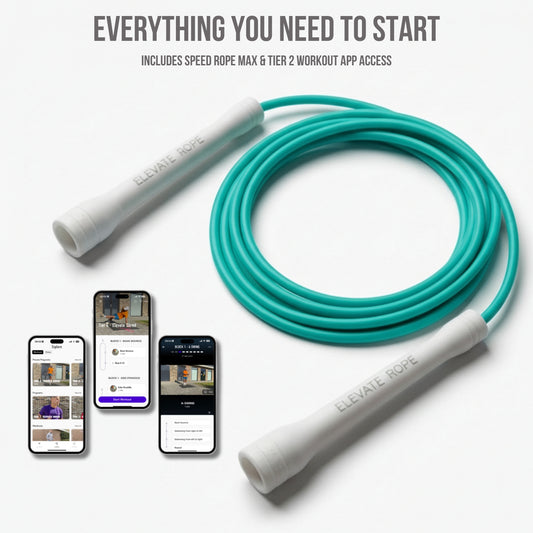
For first-time jumpers, Elevate beaded ropes offer noticeable tactile feedback. The beads help you sense the rotation while learning rhythm.
The Ascent MAX Bundle offers beaded, speed, and heavy rope options. You do not need all three to begin. A single beginner-friendly rope is enough for the first sessions.
For a broader activity comparison, explore our complete home cardio guide.
A 10-Minute Jump Rope Workout for Nap Time
This jump rope workout fits into ten minutes, including recovery. It mixes simple rope intervals with bodyweight movements. You do not need advanced tricks or nonstop jumping.
Clear an area with overhead clearance first. Choose a level, non-slip surface. Returning after pregnancy, injury, or long inactivity? Adjust the impact and seek professional guidance when needed.
Minutes 0–2: Warm up
March in place for 30 seconds. Move your ankles and shoulders gently for 30 seconds. Practise small rope-free bounces for 30 seconds. Finish with 30 seconds of easy rope turns or marching.
Keep breathing comfortably. The goal is preparation, not fatigue.
Minutes 2–7: Six controlled intervals
Complete six rounds of:
- 30 seconds: Easy basic jumps.
- 20 seconds: Rest or march in place.
Six 50-second rounds total five minutes exactly. Beginners can swap to 20 seconds of jumping and 30 seconds of recovery.
If you trip, reset the rope and continue calmly. Technique matters more than the number of turns.
Minutes 7–9: Bodyweight strength
Use two minutes for controlled movements:
- 30 seconds of wall or modified push-ups
- 30 seconds of alternating lunges or sit-to-stands
- 30 seconds of an easy plank, adjusted to ability
- 30 seconds of standing recovery or gentle squats
These movements add strength practice. They do not replace all weekly strength training.
Minutes 9–10: Cool down
Walk slowly and loosen your calves and shoulders. Let your breathing settle. Your workout is complete.
You might burn more or fewer calories depending on effort and rest. Track completed sessions or improved timing instead of promising a fixed calorie number.
This is a realistic home workout for busy parents because the clock includes everything. You are not expected to complete an invisible extra warm-up afterward.
Short answer: Prepare for two minutes, jump and recover for five, strengthen for two, and cool down for one.
Why it matters: A defined finish line removes guesswork when time is limited.
Best next step: Try this session once, then decide whether the effort felt manageable.
A Four-Week Exercise Habit Plan for Busy Parents
The first month is not an endurance test. It is about repeating a small action within real family life. Three sessions per week make a manageable starting framework.
Week 1: Show up
Aim for three short sessions. Use the full 10-minute structure, but shorten the jumping portions when needed. You can practise basic turns without clearing the rope every time.
A session still counts when you spend time learning. Notice what stopped you, then make that part easier next time.
Week 2: Extend the intervals
Keep the same three workout windows. If 20 seconds of jumping feels controlled, try 30. If 30 already feels comfortable, increase gradually.
Do not increase the interval length just because the calendar says Week 2. Repeat the earlier pattern when you need more practice.
Week 3: Add family fitness
Introduce one optional weekend activity with your children. Try Snake, counting jumps, or taking turns. Keep it playful, supervised, and separate from adult intensity targets.
Your solo sessions can stay the same. Busy parents benefit from routines that expand only when the family has room.
Week 4: Protect the routine
Return for three sessions again. Include the family activity if it suits your week. That may total 30 to 50 minutes of planned movement, depending on the optional play session.
Four weeks can establish a useful pattern, but habit formation takes different amounts of time. You do not need an unbroken streak to make progress.
Which rope should you start with?
A beaded rope can help you hear and feel the rotation. That feedback is useful for basic timing and controlled single jumps. It does not guarantee a faster learning curve for every person.
Start with your current goal. Keep the rope properly sized and your jumps low. You can learn the beginner technique before adding speed.
If a day goes wrong, return at the next reasonable opportunity. That is the exercise habit worth building.

Next Steps: Start Training This Week
You do not need an entirely new schedule. Find one ten-minute window and decide what you will do during it. Keep the setup simple enough to repeat.
If you are new, begin with an approachable beaded rope. If you want several training options later, explore the Ascent MAX equipment. If a rope does not fit your home today, start with walking or bodyweight movement.
Fitness for busy parents is not a contest to see who sacrifices the most time. It is a way to protect a small amount of time for your health.
Start with three manageable sessions this week. Add more activity when you can. Together We Elevate.
Watch Geraldo Alken demonstrate a beginner jump rope session with recovery and mobility work. Follow the pace that fits your ability.
Frequently Asked Questions
How can busy parents find time to exercise?
Look for an existing window rather than creating a perfect hour. You might use a lunch break, quiet morning, or time after bedtime. Start with a 10-minute workout and keep the plan flexible. Busy parents can also count walks and active play toward weekly movement. Repeat what fits your household.
Is a 10-minute workout enough for busy parents?
Ten minutes is a useful starting point, especially when you would otherwise miss movement entirely. It does not automatically meet weekly exercise guidelines. Adults generally need more total aerobic activity and regular strength work. Use brief workouts to build confidence, then add sessions, walking, or other activity when time allows.
Can I do a jump rope workout with my kids?
Yes, when the activity matches their abilities and you supervise the space. Younger children can step over a rope lying on the ground. Older children may enjoy basic jumps and counting games. Keep everyone clear of swinging ropes, avoid wrapping ropes around bodies, and stop when play becomes unsafe.
What is the best exercise for busy parents at home?
The best option fits your space, preferences, and current fitness. A jump rope workout is portable and easy to structure into intervals. Walking, yoga, and bodyweight routines also work. Choose something you can repeat without complex preparation. If impact feels uncomfortable, use a lower-impact activity instead of forcing skipping.
How do I stop feeling guilty about working out as a parent?
Treat movement as part of your health rather than a reward for finishing every chore. Choose a brief session during a supported break or include children in play. Talk with your partner or household about shared time. A small, realistic plan can protect family responsibilities while giving you room to move.
Which jump rope is best for beginners who are parents?
A beaded rope is a practical starting choice because its segments provide noticeable feedback during rotation. That can help you practise basic timing. Check the rope length and your training surface first. You do not need a heavy rope or an advanced bundle to begin. One controllable rope is enough for early sessions.
About Elevate Rope
Elevate Rope helps people develop movement skills and repeatable routines. Founder Geraldo Alken began jumping rope during his own fitness journey and built a community around growth. Our approach is simple: small promises kept can support lasting self-trust. Together We Elevate.