





Jumping rope outside is harder on the rope than anything you do indoors. The ground is rougher, the weather gets into the cable, and the surface is rarely flat. Asphalt and paving wear a cable fastest. Short packed grass is the kindest outdoor ground and the worst for timing.
Jumping rope outside is worth it anyway. More space, better air, and nobody underneath you. Just go in knowing what the ground is doing.
The five surfaces you will actually meet
Asphalt. The roughest common surface and the fastest way to destroy a cable. It is slightly softer underfoot than concrete, which helps your joints, and considerably more abrasive, which does not help the rope. Car parks and side streets are asphalt.
Paving and concrete slabs. Smoother than asphalt, so less abrasive. The problem is the joints between slabs. An uneven edge catches a cable and frays it in one place, fast.

Sports courts. Tennis, basketball, netball. Usually the best outdoor surface you can find. Painted acrylic over asphalt is smooth, flat, firm and predictable. If there is a court near you, jump there.
Short packed grass. Kindest on your body and on the cable. Also the surface where your timing goes worst, because the ground is uneven and the cable disappears into it. You lose the feedback that tells you where the rope is.
Sand and gravel. Do not. Sand is abrasive and unstable, and gravel will take chunks out of a cable on the first session.
What the weather does
This is the part that gets left out of outdoor advice, and it matters more than the surface for most people.
Heat. PVC softens as it warms. A hot cable stretches slightly, which changes the effective length and the feel of the turn. Direct sun over a whole season also hardens PVC permanently, and a hardened cable cracks rather than bending. Keep the rope in the shade between sets and do not store it in a car.
Cold. Cold PVC is stiffer and less forgiving. It holds any coil it was stored in, so let the rope hang for a few minutes before you start rather than fighting a spiral for the first two minutes.
Wet. Water on the ground is a grip problem before it is a rope problem. Wet paving and wet painted courts are slippery, and a landing that slides sideways is how ankles turn. Wet grass gets moisture into the cable and shortens its life.
What changes about your technique when jumping rope outside
Two things, and neither is complicated.
Keep the hop lower than you would indoors. Outdoor ground is colder and harder and less even. A lower hop is a softer landing and gives the uneven surface less to catch.
Shorten the rope if you are on rough ground. A long cable drags along the surface for more of each rotation. On asphalt that is the difference between a cable lasting months and lasting weeks. Stand on the middle of the cable and pull the handles up along your chest. The handle tops should land between the armpit and the shoulder for most people.
Ours shorten with a snaplock and household scissors, and the beaded ropes with washers. No metal in the rope, so there is nothing to cut through. That is genuinely useful outdoors, because you can size a rope in a park with something from a kitchen drawer.
A note for Australia and New Zealand
Your outdoor season starts as the northern one ends, and it is the harsher one for equipment.
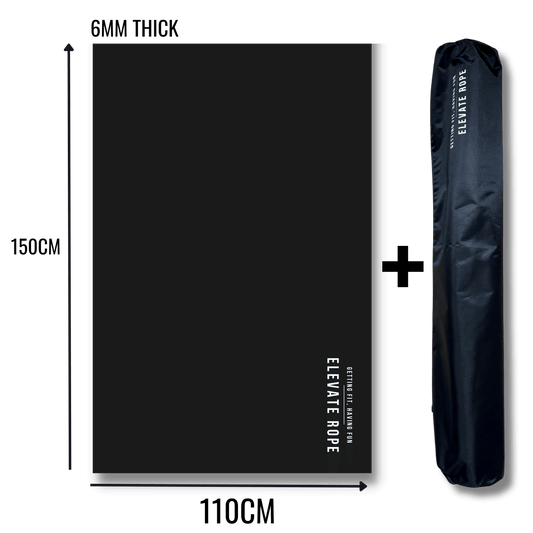
Long daylight hours plus high UV plus hot paving is the worst combination there is for PVC. Expect a shorter cable life than an indoor jumper gets and treat that as normal rather than as a fault. Keep the rope out of direct sun between sets, store it indoors, and if you train on a driveway through summer, a rollable mat is doing two jobs at once.
We have a separate piece on picking a rope in Australia that goes further into this.
Which rope to take outside
On rough ground, the beaded rope is the one that lasts.
The 2.5cm PVC beads sit in the contact position instead of the cord, so the beads take the abrasion rather than the 3.5mm polycord underneath. They wear flat eventually and you replace beads rather than the whole rope. Most of the market runs 3mm cord under the beads and we run 3.5mm, which is there for sturdiness and for the feel through your hands and arms.
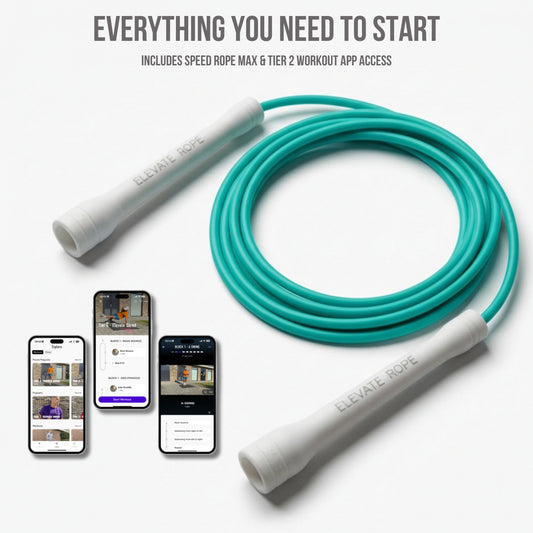
A thin speed cable is the wrong tool for asphalt. There is very little material between the grit and the core, and 5mm PVC over a nylon core will still thin out fast on a surface that rough. It is the right rope for a court or a mat.
The long handle rope is not the one to learn outdoors on. The 20cm handles and 4mm cable are built for reach in freestyle, and outdoors on uneven ground is not where you want to be finding that out. It is not a first rope.
The short version
Find a court if you can. Take a beaded rope to asphalt. Shorten the cable before you complain about it. Keep the rope out of the sun. Bring a mat if the ground is hard and you
Geraldo Alken is the founder and CEO of Elevate Rope. He designs jump ropes and works daily with jumpers from beginner to professional.