





Jump rope care comes down to three habits. Wipe the cable down when it picks up grit. Coil it instead of folding it. And learn to spot the point where the cable is done. That's most of it. An Elevate rope has no bearings and no metal. Nothing to oil, nothing to rust.
That last point is why this guide is shorter than you might expect. Most equipment guides spend half their length on servicing. A rope built without bearings has no service parts at all. So the work moves to three places. What you wipe off it. How you leave it between sessions. And when you accept the cable has had enough.
What jump rope care actually involves
Four things wear a rope out. Grit that gets ground into the cable surface. Heat and cold that the cable sits in for months. Shapes you leave it in, which it keeps. Abrasion at the one point that hits the floor every turn.
None of those are dramatic. All four are slow. Each is avoidable with about a minute of attention per session. The sections below take them one at a time. They link out to longer pieces if you want the detail.
A bearing-free rope has no service parts
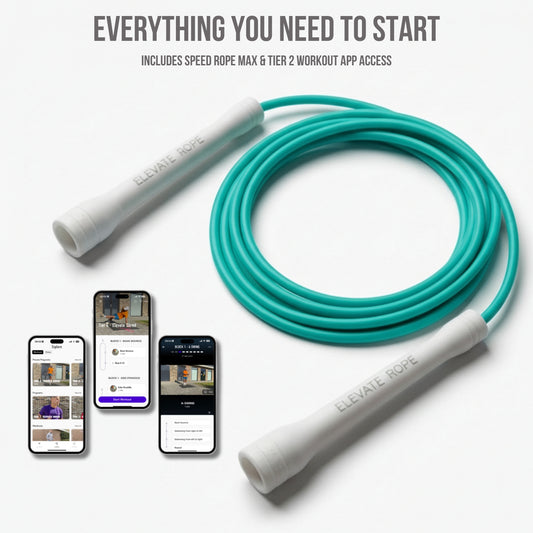
We build the speed ropes with a 5mm PVC cable over a nylon core, deliberately without swivel bearings. That choice was made for how the rope feels, not for maintenance. Maintenance is where it pays off twice. Bearings spin the rope faster than your body is actually moving, which breaks the rhythm. They also collect dust, need oil, and eventually seize.
Our ropes have none of that. Several reviewers have picked out exactly this point, that there are no bearings to oil. If you're coming from a bearing rope and wondering about the servicing schedule, there isn't one. Ropes that do have bearings are a different story. We wrote that up separately in jump rope bearing maintenance.
There's no metal anywhere in the cable either. That matters for two reasons. Sweat won't rust anything. And you can cut the rope to your length with household scissors rather than a tool.
Cleaning, and what the cable will take
Sweat, chalk, gym dust and outdoor grit all end up on the cable. Left there, the grit behaves like fine sandpaper. It works on the cable every time the rope hits the floor. Getting it off is a cloth, warm water and a mild soap. Nothing stronger.
The handles are the part people get wrong. They're lightweight and built to survive being smashed into the ground during freestyle. But they are not made to be soaked. Wipe them, don't dunk them. Full method, including beaded ropes, is in how to clean a jump rope without wrecking the cable.
Storage decides what shape the cable keeps

Here is the consequence of building without a swivel. A bearing rope will spin its way out of a mild twist. Ours won't, because nothing in the handle rotates independently of the cable. Whatever shape you leave the rope in overnight is roughly the shape you pick up tomorrow.
So coil it in loose loops, hand-span sized. Never fold it in half and stuff it in a bag. A jump rope travel bag helps, because it gives the coil something to hold its shape against. We go through the methods in how to store a jump rope so it does not tangle.
A cable that's already set into a kink is usually recoverable. Three methods work reliably, and we wrote them up in how to straighten a PVC jump rope cord.
Knowing when the cable is done
Every rope has a strike point, the section that meets the floor on each turn. That's where the cable thins first. Once it thins past a certain point it stops holding its shape in the air. The rope then feels vague long before it ever breaks. Most people notice the change in feel before they notice anything on the cable itself.
We don't publish a lifespan in months. The honest answer depends on your surface and your hours. What we can tell you is what to look for and what to do next. That's in how long does a jump rope last. It also covers the awkward part, which is that there's no spare cable to buy. The cable is cut to fit rather than fitted as a part.
Handles are different. They carry a lifetime warranty. If you want a fresh set rather than a whole rope, the replacement short handles exist for that. There's a full walkthrough in replacing your jump rope handles. Beads have their own piece in jumping rope beads replacement.
Why cables kink, fray and snap
Three different failures, three different causes. Kinks come from storage. Fraying comes from abrasion, which mostly means your floor. Snapping is usually the end of a fray nobody looked at.
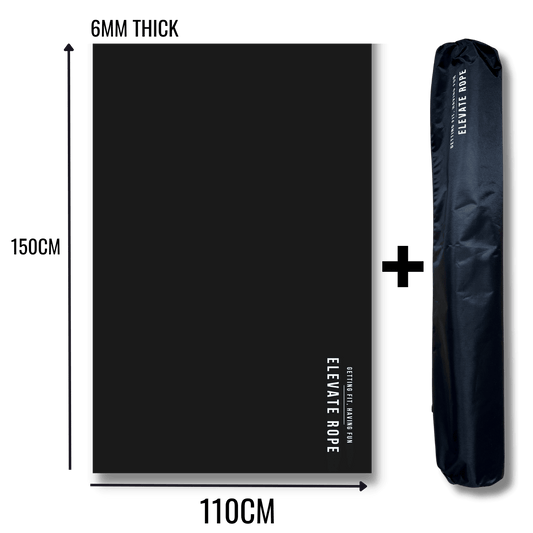
Surface is the single biggest variable in all of this. Concrete eats cable and beads faster than anything else people train on. Heavy users have told us as much. An Elevate jump rope mat is the cheap fix. We covered floors properly in the jump rope surface guide. The mechanics of each failure are in why jump rope cables kink, fray and snap.
Cable thickness on a beaded rope
Beaded ropes wear differently from speed ropes. The beads take the floor impact instead of the cord. Ours are 2.5cm PVC beads running on a 3.5mm polycord, against a 3mm industry standard. That extra half millimetre is there for sturdiness. It also changes the feedback you get through your hands and arms mid-air.
Thickness changes how a beaded rope ages too, which is why it gets its own article. See 3.5mm polycord vs 3mm for what the difference does in practice.
The rest of the kit
Heavy ropes need one extra habit. A 10mm PVC cable is doing interval work rather than continuous cardio. So it sits unused for longer stretches than a speed rope does. Long storage is exactly when a cable sets into a shape. Coil the heavy ropes the same way you coil everything else, even when they're going away for a fortnight.
Beyond that, a bag and a mat are the only two things that meaningfully extend what you own. Both live in accessories, and neither is complicated.
One more thing worth knowing. Every rope carries a 90-day guarantee, and the handles carry a lifetime warranty. Neither covers a cable you've worn out, and neither is meant to. Wear is the one thing this routine actually changes.
A short jump rope care checklist
- Wipe the cable after outdoor or chalky sessions.
- Coil in loose loops, hand-span sized. Never fold.
- Keep it out of the cold and out of direct sun.
- Check the strike point once a month for thinning.
- Train on a mat if your floor is concrete.
- Replace handles under warranty rather than buying a whole rope.
The five articles in this series go deeper on each of those. In order: cleaning, storage, lifespan and replacement, polycord thickness, and how cables fail.
Geraldo Alken is the founder and CEO of Elevate Rope. He designs jump ropes and works daily with jumpers from beginner to professional.