




To run a jump rope session for a group, give every person about two metres by two metres of floor, size the ropes before anyone starts jumping, and keep the first ten minutes rope-free. Those three decisions fix most of what goes wrong in a group class.
I design jump ropes for a living and I spend a lot of time around coaches who have just tried to put twenty people on ropes at once. The session usually falls apart in the same places, and almost never because of the jumping. It falls apart because the ropes were the wrong length, because two people were standing too close, or because the group spent the first five minutes untangling knots instead of moving.
This is the main guide for the group side of jump rope. The detail sits in four companion pieces: running a PE lesson, what a club or gym should stock, sharing one rope between several people, and buying ropes for a group.
Why group sessions fall apart
One person with a rope is a simple problem. Twenty people with ropes is a logistics problem wearing a training session as a disguise.
Three things cause most of it. The ropes are all one length, so the tall people clip the floor and the short people catch their feet. The group is packed in tight, so everyone shortens their swing to avoid hitting a neighbour, which wrecks the rhythm. And nobody warmed up to the movement, so the beginners trip on the third jump, feel clumsy, and quietly stop trying.
None of that is a fitness problem. All of it is fixable before the session starts.
Space: two metres by two metres per person
A rope needs roughly a two metre by two metre square per jumper. That is the figure we use for a single person training at home and it holds for a group, with one change: in a group you need the gaps between squares as well, because a rope that catches a neighbour ends the session for both of them.
Practical layouts:
- Up to 10 people. One line, everyone facing you, about three metres between people. You can see every pair of hands.
- 10 to 20 people. Two lines, offset so nobody is directly behind anyone, with a corridor down the middle for you to walk.
- 20 to 30 people. Split the group. Half on ropes, half doing something else, and swap. This is better than cramming, and it gives you a reason to keep the non-jumping half busy.
Headroom matters as much as floor space. The rope passes over the head, so a low ceiling, a beam or a light fitting will catch it. Walk the space with a rope yourself before the group arrives. It takes two minutes and it saves a broken light.
Size the ropes before anyone arrives
This is the single biggest time saver. A group that sizes ropes at the start of the session loses ten to fifteen minutes and some of its patience.
Our speed and heavy ropes use a snaplock inside the handle, so you can shorten a rope without cutting it. That matters enormously for a group, because a cut is permanent and a snaplock is not. The beaded ropes use a washer system instead, so they want a bit more thought before you commit to a length.
If the ropes belong to the club rather than the individual, size them to the taller end of the group and leave the excess coiled in the handle. Shorter jumpers can take up the slack in a few seconds. The full method is in sharing one jump rope between several people, and the basic single-person method is in how to adjust your jump rope in 3 easy steps.
One practical note on scissors. Because our cables are PVC over a nylon core with no metal running through them, household scissors are enough to cut one. That is convenient for a person sizing their own rope and it is a trap for a coach, because a cable cut for a 1.60m jumper is no use to a 1.90m one. Cut nothing that the club owns until you are sure.
The first ten minutes, without a rope
Beginners trip because their hands and feet are not yet agreeing with each other, not because they are unfit. So start without the rope.
- Two minutes of small bounces on the spot, no rope, landing softly on the balls of the feet.
- Two minutes of the hand action alone, both handles in one hand, turning the rope at the side of the body so they hear the rhythm.
- Two minutes putting the two together at walking pace, one jump per turn.
By minute seven most of the group can do ten unbroken jumps, and the ones who cannot are at least failing in a way they understand. If you want the full breakdown for younger groups, it is in how to teach kids to jump rope.
Running a session when the levels are mixed
Every group has three levels in it, so plan for three rather than pretending there is one.
Give the whole group the same work interval and let the task change by level. On a 30 second interval: the newest people practise single bounces with a reset whenever they trip, the middle group holds an unbroken 30 seconds, and the experienced ones work on something harder such as side swings or double unders. Same clock, same rest, three different jobs. Nobody is waiting and nobody is drowning.
The sound helps here more than people expect. A beaded rope makes a clear, regular click on the floor, and in a group that click is a shared metronome. Several of our customers mention that the sound is what let them find the beat. In a class it also tells you, without looking up, who has lost their rhythm.
Surface, noise and the neighbours
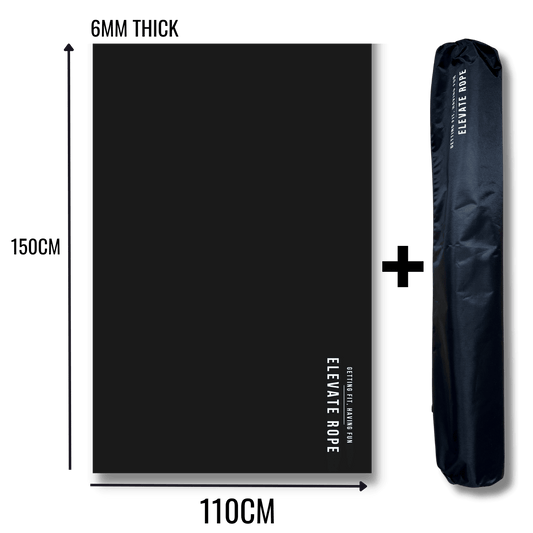
Hard floors are fine for the jumper and hard on the rope. A PVC cable dragged across concrete at speed wears at the point where it strikes, which is why club ropes die faster than home ropes. Sports hall floors, rubber gym flooring and a dedicated mat all extend cable life considerably. There is a fuller treatment in what surface should you jump rope on.
Noise is a real constraint in shared buildings. Twenty people landing in unison is loud in a way one person is not. If you are above another tenant, stagger the group so they are not all landing on the same beat, and keep the heavy work to the start of the evening.
What to carry as spares
Ropes get stepped on, trodden into grit and occasionally cut too short by someone who was sure about their height. Carry spares, and carry them in more than one length.
A reasonable kit for a group of twenty: one rope per person, two or three spare ropes already sized long, and a bag. Our handles are warrantied for life, so in practice the thing you replace is the cable, not the handle. What to stock and in what mix is covered in how many jump ropes a club or gym should stock, and the buying side is in buying jump ropes for a group.
A 30 minute session that works for a mixed group
- 0 to 10 minutes. Rope-free build-up as above, then ten unbroken jumps each.
- 10 to 22 minutes. Eight rounds of 30 seconds work, 30 seconds rest, with the three-level task split. Walk the corridor and fix one thing per person.
- 22 to 27 minutes. One skill. Pick a single thing, such as the side swing, and let the group fail at it cheerfully for five minutes.
- 27 to 30 minutes. Coil the ropes properly, count them back in, and note anything that needs replacing before the next session.
Counting the ropes back in sounds fussy. Do it anyway. A club that loses two ropes a month is buying a whole set twice a year without noticing.
Questions coaches ask
Can a group share ropes between sessions? Yes, and it works far better if the ropes are adjusted rather than cut. See sharing one jump rope between several people.
Which rope type suits a beginner group? A beaded rope gives clearer feedback about where the rope is, which is why it tends to suit people who are learning. A speed rope suits groups that already have the basic timing. You can see the full range in the jump rope collection.
How much floor does a class of twenty need? Twenty squares of roughly two by two metres, plus the gaps, so a standard sports hall is comfortable and a studio usually means splitting the group.
Geraldo Alken is the founder and CEO of Elevate Rope. He designs jump ropes and works daily with jumpers from beginner to professional.