







Why do I hate cardio so much? If you've ever asked yourself that question while staring at a treadmill, dreading a jog, or talking yourself out of another gym session, you're not broken. You're not lazy. And you're definitely not alone. Research suggests that 50% of people who start an exercise program drop out within six months, and traditional cardio is usually the first thing to go. The problem isn't you. The problem is what you've been told cardio has to look like.
What you'll learn in this article:
- The 5 real psychological reasons most people hate cardio
- Why your brain is wired to resist monotonous exercise
- What "skill-based cardio" is and why it changes everything
- How to find cardio you'll actually want to do consistently
It's Not Laziness. It's Psychology.
Let's get something out of the way first: hating cardio doesn't mean you hate moving. It usually means you hate a very specific type of moving, one that involves repetitive motion, no clear progress markers, and a clock that seems to slow down the harder you try.
There's actual science behind this. According to Self-Determination Theory, one of the most extensively studied frameworks in exercise psychology, people stick with physical activity long-term when three core needs are met: autonomy (choosing what you do), competence (feeling like you're getting better), and relatedness (connection to others or a community). Traditional cardio, think treadmills, ellipticals, and long slow jogs, tends to fail on all three.
You didn't choose the treadmill because you love it, You chose it because someone told you it's what you're supposed to do and You can't really "get better" at walking on a moving belt. And unless you enjoy making awkward eye contact with the person on the next machine, the social element is basically zero.
No wonder you hate it.

The 5 Real Reasons You Hate Cardio
1. It's Monotonous and Your Brain Knows It
Your brain craves novelty. Neurological research shows that dopamine, the neurotransmitter responsible for motivation and reward, is triggered by new challenges and skill acquisition, not by repetitive movements. Running on a treadmill provides almost zero novelty after the first session. This is why people describe cardio as "boring" more than "hard." It's not that your body can't handle it. It's that your brain doesn't want to.
2. There's No Sense of Progress
With strength training, you can track weight increases week to week. With yoga, you can watch your flexibility improve. With traditional cardio? You ran 5k last Tuesday. You ran 5k again today. It felt exactly the same. Maybe slightly worse.
Humans are wired for progress. When you can't see it or feel it, motivation evaporates. And most cardio formats simply don't offer visible, tangible skill milestones that make you think, "I couldn't do that last week, and now I can."
3. It Takes Too Long
The standard advice is 30 to 60 minutes of moderate cardio, three to five times per week. For a busy person, that's not a workout, it's a part-time job. Factor in commute time, changing clothes, warming up, and showering afterward, and a "30-minute jog" easily becomes a 75-minute time commitment.
When the time cost feels disproportionate to the results, your brain rationalizes skipping it. This isn't weakness. It's cost-benefit analysis.
4. It Hurts (And Not in a Good Way)
Running is the default cardio recommendation, but it comes with a steep physical cost. Research from the British Journal of Sports Medicine estimates that up to 50% of regular runners experience at least one injury per year. Shin splints, knee pain, hip issues, plantar fasciitis. These aren't badges of honor. They're barriers that make people quit entirely.
If every time you do cardio your knees hurt for two days afterward, of course you hate it. That's not a motivation problem. That's a feedback problem. Your body is telling you to find a different approach.
5. It Feels Like Punishment
This might be the biggest one. Somewhere along the way, cardio became the thing you "have to do" to offset the pizza you ate on Friday. It became the penalty for enjoying your life. And when exercise exists in the punishment category of your brain, you will always find a reason to avoid it.
The fitness industry hasn't helped here. "Earn your calories." "No pain, no gain." "Burn it off." This language frames movement as debt repayment, not as something you might actually enjoy. And you can't build a consistent habit on something you associate with guilt and suffering.
Short answer:You don't actually hate cardio. You hate boring, monotonous, time-consuming cardio that offers no skill progression and makes your joints hurt. That's a reasonable response, not a character flaw.
Why it matters:Believing you "hate all cardio" closes you off to options that might genuinely work for you. The issue is the format, not the category.
Best next step:Keep reading. The solution is simpler than you think.

The Fix: Skill-Based Cardio
Here's what changes everything: cardio that teaches you something.
A systematic review published in the International Journal of Behavioral Nutrition and Physical Activity found that intrinsic motivation, driven by enjoyment, skill improvement, and personal accomplishment, is the strongest predictor of long-term exercise adherence. Not willpower. Not discipline. Not a motivational poster on your wall. Enjoyment and the feeling that you're getting better at something.
Skill-based cardio flips the traditional model. Instead of doing the same repetitive motion until the timer runs out, you're learning, progressing, and actively engaging your brain alongside your body. The clock moves faster because your brain has something to focus on besides discomfort.
What Makes Cardio Skill-Based?
Not every form of cardio qualifies. Skill-based cardio has specific characteristics that make it sustainable where traditional cardio fails:
| Traditional Cardio | Skill-Based Cardio |
| Repetitive, unchanging movement | Progressive techniques to learn and master |
| Progress measured only in time or distance | Progress measured in new skills unlocked |
| Brain disengaged, watching the clock | Brain engaged, focused on coordination |
| Feels the same at month 6 as day 1 | Feels different every week as you improve |
| Motivation requires willpower | Motivation comes from the activity itself |
Examples of skill-based cardio include martial arts, dance, rock climbing, swimming drills, and jump rope. Each one gives your brain a reason to stay engaged beyond just "surviving the session."
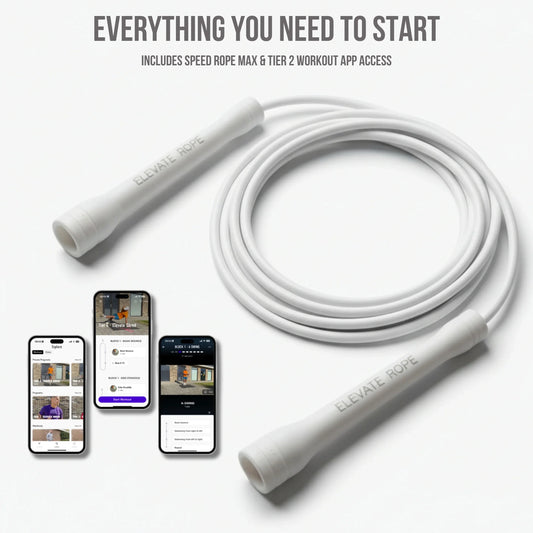
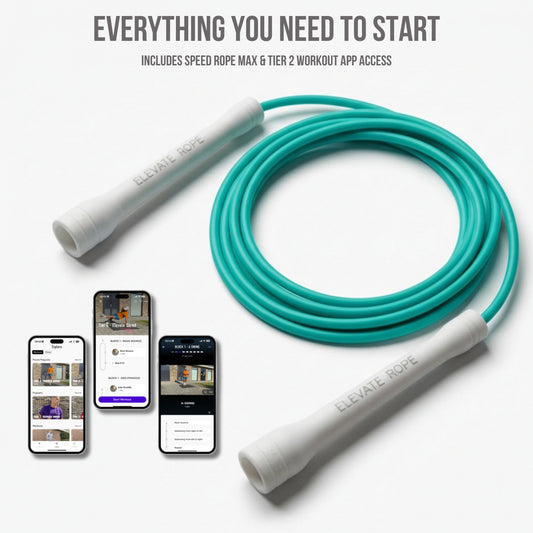
Jump rope, in particular, checks every box that traditional cardio misses. There's a built-in skill ladder, basic bounce, alternating feet, boxer step, crossovers, double unders, that gives you something new to work toward every session. Research published in the European Journal of Applied Physiology found that just 10 minutes of jump rope provides cardiovascular benefits comparable to 30 minutes of jogging. So you get better results in less time, while your brain stays engaged instead of checking out.
That's not a marginal improvement. That's a fundamentally different relationship with cardio.
Short answer:Skill-based cardio, where you're learning and progressing instead of just enduring, creates intrinsic motivation that willpower alone can't match.
Why it matters:When cardio is something you're getting better at, you look forward to it instead of dreading it. That changes everything about consistency.
Best next step:Try one skill-based cardio format for two weeks. If you want the most time-efficient option, this guide compares every home cardio alternative side by side.

How to Start When You Still Hate Cardio
Knowing the science is one thing. Actually starting is another. Here's a practical framework for people who hate cardio but know they need it:
Start with 10 minutes. Not 30. Not 60. Ten. Research supports that short, intense sessions deliver real cardiovascular benefits, and they're psychologically easier to commit to. When 10 minutes feels easy, you'll naturally extend your sessions.
Pick something with a learning curve. If you can "master" it in one session, your brain will get bored by session three. Choose a format where there's always a next skill to unlock.
Remove every possible barrier. The more friction between you and your workout, the more likely you are to skip it. Equipment that requires a gym or 20 minutes of setup is equipment you'll eventually stop using. The best home cardio options work in small spaces with minimal gear.
Stop treating it as punishment. If your only reason for doing cardio is to "burn off" food, you're building the habit on guilt. Find the version where the activity itself is the reward.
Give it a real trial. Two weeks. Not two days. Your brain needs enough exposure to experience the reward loop of skill improvement. Most people who try skill-based formats like jump rope report a shift in attitude within the first 7 to 14 days.
Frequently Asked Questions
Why do I hate cardio but like lifting weights?
Lifting has built-in progress markers: more weight, more reps, visible muscle definition. Traditional cardio lacks these feedback loops. The fix isn't to avoid cardio entirely, it's to choose formats that offer similar tangible progression, like skill-based activities where you improve week to week.
Is it normal to hate cardio?
Completely. With 50% of people dropping exercise within six months and 67% of gym members rarely using their memberships, disliking traditional cardio is the norm, not the exception.
Can I just skip cardio and only do strength training?
Strength training provides some cardiovascular benefit, but it doesn't fully replace dedicated cardio for heart health and metabolic efficiency. The better question: can you find cardio you don't hate? Almost always yes.
What is the best cardio for someone who hates cardio?
Skill-based options that keep your brain engaged: jump rope, dance, martial arts, rock climbing, or swimming drills. Jump rope offers the best time efficiency, with 10 minutes matching 30 minutes of jogging, plus a progressive skill system that prevents boredom.
How do I force myself to do cardio?
You don't. Forcing yourself is the problem. Research consistently shows intrinsic motivation (enjoyment and skill improvement) outperforms willpower for long-term adherence. Invest energy into finding a format you'll willingly repeat instead.
Is 10 minutes of cardio enough?
For many formats, yes. Ten minutes of high-intensity, skill-based cardio like jump rope provides measurable cardiovascular benefits. It's a valid starting point that most people naturally extend as fitness and enjoyment increase. Here's what you can achieve in 10 minutes.
The Real Problem Was Never Cardio
You don't hate cardio. You hate the version of cardio that was handed to you as the only option. The moment you give yourself permission to find a different approach, everything shifts.
The goal isn't to suffer through 30 minutes on a machine three times a week. The goal is to find movement that raises your heart rate, builds a skill, and makes you want to show up tomorrow. When cardio becomes something you're getting better at instead of something you're getting through, consistency stops being a struggle.
If you're exploring options, start with a side-by-side comparison of the best home cardio alternatives to find what fits your space, budget, and personality. Or, if the idea of skill-based cardio with a jump rope resonated, here's how to start as a complete beginner.
Either way, stop blaming yourself for hating something that wasn't designed for you in the first place.
Sources:
- Attrition and Adherence Rates of Sustained vs. Intermittent Exercise Interventions, PMC (NIH)
- Exercise, Physical Activity, and Self-Determination Theory: A Systematic Review, International Journal of Behavioral Nutrition and Physical Activity
- The Emerging Neuroscience of Intrinsic Motivation: A New Frontier in Self-Determination Research, PMC (NIH)
- Running Injuries: A Review of the Epidemiological Literature, British Journal of Sports Medicine
- Calories Burned in 30 Minutes for People of Three Different Weights, Harvard Health Publishing
You May Also Like
- Best Home Cardio Alternatives in 2026: The Complete Guide (Pillar Page)
- I Hate Running But Need Cardio: 7 Alternatives That Actually Work
- The Best Home Cardio Workout When You Have No Equipment (And No Motivation)
- The 10-Minute Workout: What You Can Actually Achieve in 10 Minutes
- How to Start Jump Rope as a Complete Beginner