





Freestyle skipping in Australia brings fitness, creativity, and rhythm together. You can learn new movements, build coordination, and create routines that reflect your style.
Unlike regular cardio, freestyle skipping gives you something new to practise. Every side swing, crossover, and footwork pattern becomes another skill to master.
The best part? You don't need advanced experience to begin.
A suitable rope, a safe training space, and regular practice are enough. Start with simple skipping tricks before building longer combinations.
In this guide, you'll discover:
- Seven beginner-friendly skipping tricks
- The best ropes for freestyle training
- How to build smooth jump rope combos
- A simple 15-minute practice routine
- Australian clubs, competitions, and learning resources
Ready to find your flow? Let's get started.
What Is Freestyle Skipping?
Freestyle skipping combines traditional rope jumping with footwork, tricks, and creative transitions.
Instead of counting jumps, you explore different ways to move with the rope.
A routine might include basic bounces, crossovers, side swings, and rhythmic steps. Advanced athletes also perform releases, multiple rotations, and power moves.
Some people enjoy freestyle skipping for fitness. Others practise for performances or competitions.
You can develop your own style at any experience level.
Skipping Rope vs Jump Rope in Australia
Australians commonly use the term skipping rope. International fitness communities often prefer jump rope.
Both names describe the same activity.
You'll also encounter terms such as freestyle jump rope, rope skipping, and jump rope tricks.
Is Freestyle Skipping a Competitive Sport?
Yes. Freestyle skipping is an established competitive discipline.
Athletes perform technical routines that showcase coordination, difficulty, and execution.
The International Jump Rope Union supports international competitions and sport development.
Australia also has organised skipping clubs and competitive programmes.
Visit Skipping Australia to explore the national sport.
Why Try Freestyle Skipping in Australia?
Freestyle skipping suits many training environments. You can practise at home, in a gym, or outdoors.
It also offers more variety than repeating the same cardio routine.
1. Train Almost Anywhere
A rope fits easily into a backpack.
You can take it to a suitable park, training studio, or backyard.
Choose a flat surface with enough overhead clearance. Remove nearby obstacles before starting.
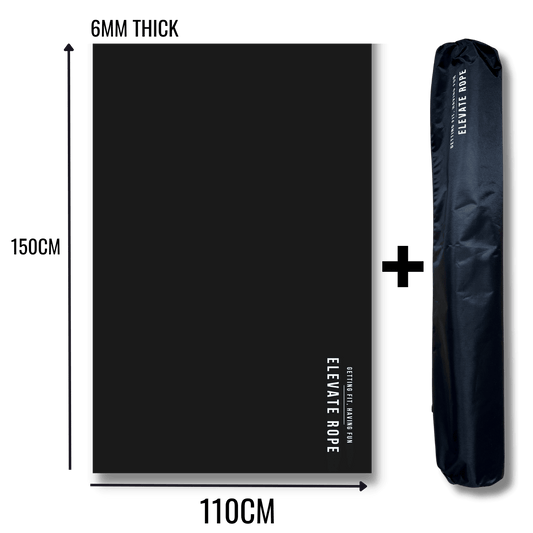
Wooden sports floors and rubber exercise surfaces are useful training options.
2. Make Cardio More Enjoyable
Traditional workouts often focus on time or repetitions.
Freestyle skipping adds skill development.
One session might focus on boxer steps. Another could introduce crossovers or new skipping tricks.
This variety can make your training more engaging.
3. Improve Coordination and Rhythm
Skipping requires precise timing between your hands and feet.
Different tricks challenge that timing in new ways.
With practice, you'll become more familiar with the rope's movement.
4. Develop Your Own Style
Freestyle isn't limited to one technique.
Some athletes enjoy fast footwork. Others prefer smooth transitions or routines performed to music.
Experiment with different movements to discover what feels natural.
You May Also Like: How to Jump Rope for Beginners: 7 Steps to Your First 100 Jumps
Best Ropes for Freestyle Skipping
Your equipment influences your timing, control, and training experience.
For many beginners, a beaded skipping rope is a practical starting choice.
Its beads add weight and provide noticeable feedback during rotation.
Why Choose a Beaded Skipping Rope?
A beaded skipping rope has individual plastic beads threaded onto a cord.

The extra weight helps you feel the rope's position.
This feedback can be useful when learning unfamiliar skipping tricks.
Key advantages include:
- Clear feedback: Feel the rope move through each rotation.
- Visible movement: Coloured beads help you follow its path.
- Rhythm control: The beads create noticeable movement cues.
- Versatility: Practise footwork, side swings, and crossovers.
- Adjustability: Many designs allow you to change the rope length.
A beaded skipping rope also works for more technical movements.
You won't necessarily need a different rope after learning the basics.
Beaded vs Speed vs PVC Ropes
| Rope type | Best suited for | Main advantage |
| Beaded rope | Freestyle and beginner tricks | Noticeable movement feedback |
| Speed rope | Fast rotations and conditioning | Lightweight, fast rope movement |
| PVC rope | General fitness and basic skipping | Flexible design |
These categories can overlap. Some speed ropes also use PVC.
Choose according to the rope's design and your training goals.
Which Rope Should Beginners Buy?
Start with equipment that helps you control the rope comfortably.
A properly adjusted beaded skipping rope can make early practice more manageable.
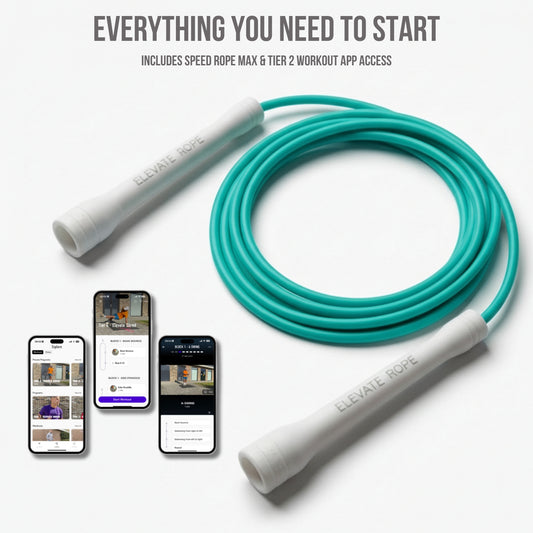
Elevate Rope offers adjustable beaded ropes for freestyle, footwork, and general training.
Explore Elevate Beaded Skipping Ropes →
Not sure what to choose?
Read our Guide to Choosing the Right Jump Rope.
7 Freestyle Skipping Tricks for Beginners
You don't need complicated combinations to start.
Focus on these seven skipping tricks before attempting advanced freestyle movements.
Each skill introduces a different element of rope control.
1. Basic Bounce
The basic bounce is your foundation.
Jump lightly with both feet while the rope passes underneath once.
How to practise:
- Stand tall with relaxed shoulders.
- Keep your elbows close to your sides.
- Rotate the rope mainly through your wrists.
- Jump just high enough to clear it.
- Maintain a comfortable rhythm.
Beginner goal: Complete 20 consecutive jumps.
Avoid jumping higher than necessary. Small movements help you maintain control.
2. Alternate Foot Step
This movement resembles jogging lightly in place.
Instead of landing on both feet, alternate your supporting foot.
Begin slowly and keep your arms relaxed.
Beginner goal: Complete 20 alternating steps.
The alternate foot step introduces new rhythm patterns to freestyle skipping.
3. Boxer Step
The boxer step involves shifting your weight between your feet.
Start with a gentle side-to-side movement.
Keep your jumps small and your upper body relaxed.
Beginner goal: Maintain a boxer step for 20 seconds.
This movement is useful for connecting different skipping tricks.
4. Side Swing
The side swing is a popular freestyle transition.
Instead of passing under your feet, the rope rotates beside your body.
How to practise:
- Move your hands towards one side.
- Swing the rope beside your body.
- Maintain a controlled rotation.
- Return your hands to their normal position.
- Resume jumping.
Beginner goal: Complete one side swing followed by a basic bounce.
Practise the rope movement without jumping if needed.
5. Basic Crossover
A crossover involves crossing your arms during a jump.
The rope passes underneath your feet while your arms remain crossed.
Start by learning the arm position without jumping.
Once the movement feels comfortable, add a slow rope rotation.
Beginner goal: Complete one clean crossover.
Crossovers are important skipping tricks because they lead to many variations.
6. Skier Step
The skier step adds side-to-side movement.
Jump slightly left, then right, while maintaining your rope rotation.
Keep your feet relatively close together.
Beginner goal: Complete 10 alternating skier jumps.
This movement develops directional control.
7. Bell Step
The bell step follows a similar pattern.
This time, move forwards and backwards instead of sideways.
Maintain a steady rhythm throughout.
Beginner goal: Complete 10 controlled bell steps.
Once these movements feel comfortable, begin connecting them.
Beginner Checklist
Before attempting longer combinations, practise until you can:
- Perform a consistent basic bounce
- Alternate your feet smoothly
- Complete a boxer step
- Control a side swing
- Land a basic crossover
- Perform skier steps
- Move forwards and backwards with bell steps
There's no need to master all seven skipping tricks in one workout.
Progress comes from regular practice.
How to Build Your First Freestyle Skipping Combo
Learning individual movements is only the beginning.
Freestyle skipping becomes more creative when you connect them.
Start with a few familiar skills.
Your First Three-Move Combo
Try this sequence:
Basic bounce → Side swing → Basic bounce
Repeat it until the transitions feel smooth.
Next, introduce a boxer step.
Basic bounce → Boxer step → Side swing → Basic bounce
Keep your pace comfortable.
Your First Six-Part Routine
Ready for a longer combination?
- Four basic bounces
- Four alternate foot steps
- Four boxer steps
- One side swing
- Four basic bounces
- One crossover
Practise the sequence slowly.
If you trip, reset and try again.
Smooth transitions matter more than speed.
How to Improve Your Combos
Focus on three things.
Control your hands. Avoid unnecessary arm movement.
Practise transitions separately. Work on difficult connections before repeating the whole routine.
Maintain your rhythm. A steady pace helps different movements flow together.
You can gradually add more skipping tricks as your confidence develops.
Intermediate and Advanced Freestyle Skipping
Once your fundamentals improve, explore more challenging movements.
These skills require additional timing, coordination, and practice.
Double Unders
A double under involves two rope rotations during one jump.
It requires faster wrist movement and precise timing.
Develop consistent single jumps before attempting repeated double unders.
EB Cross
The EB cross places one arm behind your back.
Your other arm crosses in front of your body.
This creates a different rope pathway from a standard crossover.
Practise the arm positions before attempting the complete trick.
Rope Releases
A release involves letting go of a handle during the rope's movement.
You then catch it to continue your routine.
Start with stationary release drills. Use a clear space without nearby obstacles.
Power Tricks
Advanced athletes may combine rope movements with floor skills or acrobatic elements.
These techniques demand additional preparation.
Build your foundation before attempting high-difficulty power moves. Seek qualified coaching for complex skills.
For examples of competitive trick categories, explore Skipping Australia's Freestyle Skills Resources.
How to Build Flow and Rhythm
Freestyle skipping isn't only about technical difficulty.
The transitions between movements also matter.
A smooth routine can be engaging without advanced tricks.
Practise With Music
Choose a song with a steady beat.
Match your basic bounce to the rhythm.
Then experiment with boxer steps, side swings, and crossovers.
Different tempos create different training challenges.
Film Your Practice
A short recording can reveal technical mistakes.
Check your hand position, posture, rope rotation, and footwork.
Reviewing your movement also helps you recognise progress.
Create Your Own Style
You don't need to copy every routine you see online.
Build around the movements you enjoy.
Love footwork? Explore new patterns.
Prefer technical skills? Spend more time learning crossovers.
Enjoy music? Create combinations that follow the beat.
Your routine should reflect your interests.
A 15-Minute Freestyle Skipping Workout
Use this simple routine to practise your new skills.
| Time | Exercise | Focus |
| 0–3 minutes | Warm-up | Prepare for movement |
| 3–5 minutes | Basic bounce | Timing |
| 5–7 minutes | Alternate foot and boxer step | Footwork |
| 7–9 minutes | Side swings | Rope control |
| 9–11 minutes | Crossovers | Technique |
| 11–13 minutes | Beginner combo | Transitions |
| 13–15 minutes | Easy movement and cool-down | Recovery |
Take breaks when needed.
Beginners should start with shorter jumping intervals and increase gradually. Skipping involves repetitive impact, so recovery matters.
How Often Should You Practise?
Two or three short weekly sessions can be a manageable starting point.
Your ideal frequency depends on fitness, technique, and recovery.
Track one small goal per session.
Perhaps you'll complete five more basic jumps. Maybe you'll land a clean crossover.
These improvements build confidence over time.
Freestyle Skipping Clubs in Australia
Learning with other skippers can make training more enjoyable.
Australia has established clubs and organised competitions.
You can also find tutorials and skill demonstrations online.
Find Australian Skipping Clubs
Skipping Australia's Associations and Clubs directory lists skipping organisations across the country.
Check the directory for clubs near your location.
Contact each club before visiting. Training schedules, memberships, and programmes may change.
Explore Competitive Skipping
Interested in competitive freestyle skipping?
The Skipping Australia Competitions page provides information about Australian events.
You can also study the International Jump Rope Union Competition Rules.
These explain the structure of organised jump rope competitions.
See Australian Athletes in Action
In April 2025, ABC News covered Canberra athletes preparing for the World Jump Rope Championships.
The story highlights the training involved in competitive skipping.
Watching experienced athletes can provide ideas for your own practice.
Where to Buy a Beaded Skipping Rope in Australia
Choosing equipment doesn't have to be complicated.
Focus on rope length, comfort, construction, and training goals.
What to Look For
Adjustable length: A properly sized rope supports better control.
Noticeable feedback: A beaded skipping rope helps you feel each rotation.
Comfortable handles: Choose handles that allow relaxed wrist movement.
Suitable construction: Consider your training surface and frequency.
Learning support: Tutorials can help you progress through new skipping tricks.
Explore Elevate Rope
Elevate Rope offers beaded ropes designed for freestyle practice and general jump rope training.
An adjustable beaded skipping rope can support your first basic jumps and more technical combinations.
The brand also provides training resources for people developing their skills.
Check current Australian delivery options and applicable charges at checkout.
How Long Should Your Rope Be?
Your ideal rope length depends on height and technique.

As a beginner, try this method:
- Stand on the rope's midpoint.
- Pull both handles upwards.
- Check whether they reach around armpit height.
- Try several basic jumps.
- Adjust the length gradually.
A suitable fit should let you rotate the rope comfortably.
For more details, read our Jump Rope Sizing Guide.
Frequently Asked Questions
What is freestyle skipping?
Freestyle skipping combines rope jumping with tricks, footwork, and creative combinations. You can practise recreationally or train for competitions.
Is freestyle skipping good for beginners?
Yes. Start with basic jumps, side swings, and beginner footwork. Add more technical movements after developing control.
Which rope is best for learning skipping tricks?
A beaded skipping rope is a useful choice for many beginners. Its weight provides noticeable feedback during rotation.
Can adults learn freestyle skipping?
Absolutely. Adults can learn skipping tricks at their own pace. Begin with short sessions and manageable movements.
Can I practise at home?
Yes, provided you have enough clearance and a suitable surface. Keep furniture and other obstacles away from your training space.
How long does it take to learn skipping tricks?
Progress varies with practice frequency and previous experience. Start with easy movements before attempting difficult combinations.
Are there freestyle skipping competitions in Australia?
Yes. Skipping Australia supports organised rope skipping competitions. Check its official website for current events.
Can I use a speed rope for freestyle?
Yes. Some athletes prefer speed or PVC ropes. A beaded skipping rope may offer more feedback when learning new movements.
How often should beginners practise?
Start with short sessions that allow comfortable recovery. Increase your workload gradually as your technique improves.
You May Also Like: More Jump Rope Guides
Want to continue learning?
Explore these Elevate Rope articles.
1. How to Jump Rope for Beginners: 7 Steps to Your First 100 Jumps
Build your foundation with practical advice on posture, timing, and technique.
Read the Beginner Jump Rope Guide →
2. How to Choose the Right Jump Rope
Learn how different rope designs affect your training.
This guide covers rope materials, sizing, and beginner equipment choices.
Read the Jump Rope Buying Guide →
3. Jump Rope Length for Height: How to Size Your Rope
Rope sizing affects timing, comfort, and control.
Discover how to measure and adjust your skipping rope.
4. Best Jump Rope for Beginners in 2026
Compare beginner-friendly ropes and understand the features that matter.
Read the Beginner Rope Comparison →
Useful External Resources
These independent websites provide helpful information about rope skipping.
Skipping Australia
Explore the national skipping organisation, clubs, and competitions.
Australian Freestyle Skills
Find skill categories, combinations, and examples of competitive movements.
Australian Skipping Clubs
Discover associations and clubs in different states.
International Jump Rope Union
Learn more about international competitive rope skipping.
ABC News: Australian Rope Skipping Athletes
Read about Canberra athletes preparing for an international championship.
Conclusion: Start Your Freestyle Skipping Journey
Freestyle skipping in Australia offers a creative approach to fitness and movement.
You don't need to learn everything at once.
Start with a basic bounce.
Develop your footwork.
Learn a side swing.
Practise your first crossover.
Then connect those movements into a routine you enjoy.
Every session gives you an opportunity to improve.
Progress doesn't begin with a perfect performance. It begins when you show up and practise.
Ready to build your skills?
Explore Elevate Beaded Skipping Ropes →
Start skipping. Find your rhythm. Keep elevating.