






The best calorie burning exercises are not what most people think. If you've treated running as the gold standard of fat-burning cardio, this article will change your approach. Running has been sold for decades as the simplest, most accessible way to torch calories. It's free, it needs no equipment, and almost everyone has done it at some point. But here's the uncomfortable truth. Running is nowhere near the top of the list for calorie efficiency.
This isn't an argument against running. If you love it, keep going. But if you don't love it, you have options. Maybe your knees protest or the treadmill makes you want to fall asleep standing up. Maybe you've been grinding through jog after jog without the results you expected. You deserve to know that smarter, more efficient options exist. These options torch more calories, take less time, and are easier on your joints.
Here are five of the best calorie burning exercises that genuinely outperform running. And yes, number three will surprise you.
What You'll Learn
In this article, you'll discover five science-backed workouts that outperform running on a calorie-per-minute basis. You'll see how the numbers compare head-to-head and why time efficiency matters as much as raw output. You'll also learn which option is the most practical to start today. No gym membership or expensive equipment required.
Why Running Isn't the Best Calorie Burning Exercise It Claims to Be
Running burns roughly 10–12 calories per minute for the average person at a moderate pace. That equals around 300–360 calories in a 30-minute jog. Respectable. But when you compare it with genuinely high-intensity alternatives, it looks far less impressive.
The problem isn't that running is ineffective. It's that most people compare running to walking, casual cycling, or doing nothing. When you compare it against the best calorie burning exercises available, the gap becomes hard to ignore. Consider the time required and the injury risk. Research estimates 40–50% of regular runners suffer an overuse injury each year. Add the psychological grind of another grey morning jog. Suddenly, the case for switching things up becomes very compelling.
There's also the EPOC factor — Excess Post-exercise Oxygen Consumption, commonly called the "afterburn effect." High-intensity exercise keeps your metabolism elevated for hours after you finish. Steady-state running at a moderate pace produces minimal afterburn. Several of the best calorie burning exercises below produce a significant one. That means you keep burning calories long after you've stopped moving.
Short answer: Running burns around 10–12 calories per minute. The best calorie burning exercises on this list far exceed that — some at nearly double the rate.
Why it matters: Calories burned per minute determines how long you need to exercise to create a meaningful deficit. More efficient exercise means shorter sessions for the same result.
Best next step: Pick one option from the list below and try it for two weeks. Compare how you feel — and what the scale does — against your current routine.
5 Best Calorie Burning Exercises That Beat Running
1. Rowing
Rowing is one of the best calorie burning exercises on the planet — and arguably the most underrated. While treadmills dominate gym floors, rowing machines sit quietly in the corner gathering dust. That's a genuine shame, because rowing engages approximately 86% of your muscles in a single fluid movement. Your legs drive, your core stabilises, your arms pull. Everything works at once.
The numbers reflect this. A 75kg (165lb) person rowing at a vigorous pace burns about 316 calories in 30 minutes. Pushing the intensity higher increases that figure significantly. More importantly, full-body muscle engagement keeps your metabolism elevated post-workout as your body repairs and recovers. This is the afterburn effect that steady running largely fails to produce.
Rowing is also joint-friendly. Unlike running, there's no impact to absorb. You can row hard, recover, and go again the next day without your knees filing a formal complaint. If you have access to a rowing machine, it deserves to be your first stop — not the treadmill.
2. HIIT (High-Intensity Interval Training)
HIIT is not a single exercise. It's a protocol that turns almost any movement into a serious calorie-torching session. You work at near-maximum effort for a short burst, typically 20–40 seconds. Then you rest briefly and repeat. The result burns roughly 13–15 calories per minute. Crucially, it keeps your metabolism elevated for up to 48 hours afterward because of significant EPOC.
A well-designed HIIT session of just 20 minutes can outperform an hour of steady-state running for total calorie burn. This becomes even clearer when you factor in the post-workout afterburn. Research from the American College of Sports Medicine shows HIIT produces superior fat loss outcomes. It beats moderate-intensity continuous exercise in a fraction of the time.
The practical upside: you need almost no equipment, minimal space, and a very short window of time. The downside: HIIT is genuinely uncomfortable in the moment. That's by design. But it's over quickly, and the results consistently justify the discomfort.
3. Jump Rope — The Best Calorie Burning Exercise You're Not Doing
Here it is. This is the exercise most people associate with primary school playgrounds and Rocky training montages. It's quietly one of the most efficient calorie burners that science has on record.
Moderate-intensity jump rope burns about 13 calories per minute according to the Compendium of Physical Activities. That comes from Arizona State University's Healthy Lifestyles Research Center. At higher intensities, this rises to 15–20 calories per minute. Over 30 minutes, a 68kg (150lb) person burns around 375–420 calories. That comfortably outpaces running's 300–360 calories at a comparable effort level.
The genuinely jaw-dropping data comes from a study by John A. Baker at Arizona State University. His research split 92 male students into two groups. One group jogged for 30 minutes daily. The other skipped rope for just 10 minutes daily. After six weeks, both groups showed identical improvements in cardiovascular fitness. Ten minutes of jump rope equalled 30 minutes of jogging. Not similar — equal.
This is why jump rope is used by elite boxers, professional footballers, and Olympic athletes as a go-to conditioning tool. It's not nostalgia. It's efficiency. You recruit more muscle groups than running, including arms, shoulders, and core. You also improve coordination and build rhythm in a space the size of a large bath mat. No treadmill. No gym. No commute.
For beginners, the Elevate Rope beaded rope collection is the ideal starting point. The weighted beads slow the rotation slightly and give you clear auditory feedback on your rhythm. They make it significantly easier to find your timing while you build confidence. Once comfortable, the speed rope range opens up a new level of intensity and burn.
Short answer: Jump rope is one of the best calorie burning exercises available. It can reach up to 20 calories per minute at high intensity. Ten minutes can deliver the cardiovascular benefit of a 30-minute jog.
Why it matters: If time is your biggest barrier to consistent exercise, jump rope removes it entirely. Ten minutes is genuinely worth showing up for.
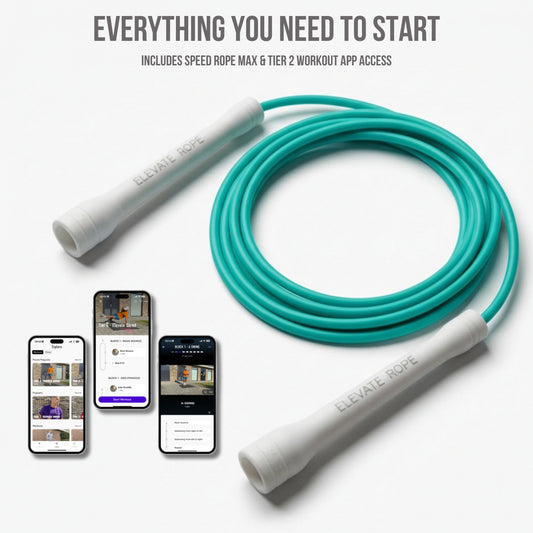
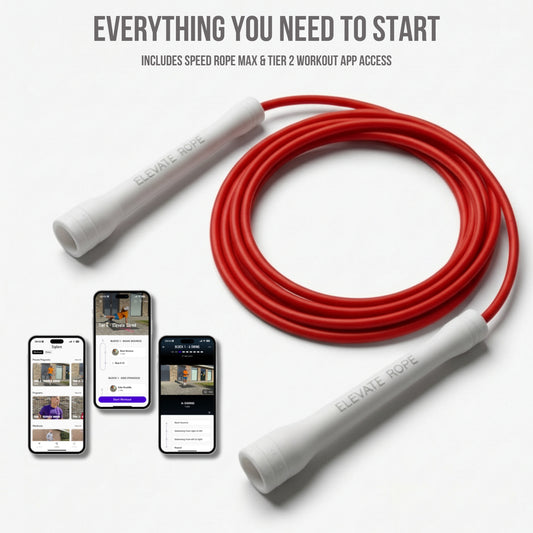
Best next step: → Try the Elevate Rope starter bundle to begin. It includes everything you need plus access to the free app with 100+ guided workouts.

4. Burpees
Burpees are brutal, effective, and equipment-free. That puts them firmly among the best calorie burning exercises for anyone without a gym. A single burpee takes you from standing to the floor and back up in one explosive movement. It recruits nearly every major muscle group in the process. The reason everyone groans when a trainer calls them out is exactly what makes them so effective.
Research from the University of Wisconsin found intense burpee-style exercise burned an average of 20.2 calories per minute. Average heart rates reached 93% of maximum during a 20-minute session. That is extraordinary output. The catch is that most people can't sustain burpees for 20 minutes because fatigue is significant. Even 5–10 minutes in a session produces a serious calorie spike and meaningful afterburn.
Burpees are completely equipment-free and need only enough floor space to lie down. Travelling, working from a hotel room, or having no gym nearby makes no difference. Burpees remain one of the most honest tests of current fitness. They are also one of the fastest ways to improve it.
5. Cycling (High-Intensity)
Gentle cycling around a park won't cut it here. High-intensity cycling absolutely does. That might mean an indoor spin class or a serious road session. It can also mean interval sprints on a stationary bike. Vigorous cycling burns 500–600 calories per hour and generates meaningful afterburn. This is especially true when you build in intervals.
The joint advantage is significant. Cycling is the lowest-impact option on this list. Your bodyweight is supported by the saddle. That means knees, hips, and ankles absorb virtually no impact. For anyone managing joint issues, returning from injury, or protecting mobility, cycling is powerful. High-intensity cycling offers serious calorie output without the structural wear of running.
The metabolic benefits extend post-workout too. Studies show that intense cycling intervals keep your metabolic rate elevated for up to 48 hours. That means the calories you burn during a session are only part of the total picture.
How the Best Calorie Burning Exercises Compare: The Numbers
| Exercise | Approx. Cal/Min | 30-Min Total (75kg person) | Afterburn Effect |
| Running (moderate) | 10–12 | 300–360 kcal | Low |
| Rowing (vigorous) | 10–14 | 316–420 kcal | Moderate |
| HIIT | 13–15 | 390–450 kcal (+afterburn) | High (up to 48hrs) |
| Jump Rope | 13–20 | 375–600 kcal | High |
| Burpees | Up to 20 | Variable (intensity-dependent) | High |
| Cycling (high-intensity) | 10–16 | 300–480 kcal (+afterburn) | High |
One thing these numbers don't capture is sustainability. The options that deliver real results long-term are the ones you'll actually do consistently. Burpees burn ferociously for 10 minutes, but very few people sustain them for 30. Jump rope sits in a rare sweet spot with extremely high calorie output and scalable intensity. Critically, it becomes genuinely enjoyable once you find your rhythm.
If you're exploring jump rope specifically for weight loss, the complete guide to jump rope calories burned breaks down the numbers in more detail. It explains how your weight, speed, and rope type all affect your burn rate.
Why Jump Rope Stands Apart From the Rest
All five best calorie burning exercises on this list outperform running. But only one of them costs under €50 and fits in a jacket pocket. It needs no equipment beyond itself and delivers a full session in 10 minutes. It also improves your coordination, timing, and athleticism simultaneously.
Jump rope also rewards skill in a way other high-output cardio options don't. As your footwork sharpens and timing tightens, the workout changes. It doesn't get easier. It gets richer. You can add double-unders, crossovers, speed intervals, and weighted ropes. The TITAN 7MM weighted rope is designed for athletes who've outgrown standard speed ropes. It adds upper body and shoulder load to an already demanding session.
This matters for long-term weight loss. The biggest predictor of results isn't which exercise you choose. It's whether you keep doing it. Jump rope is a rare option that keeps people genuinely engaged. There's always a new skill to develop and always a next level to reach.
If you want to see how jump rope stacks up directly against running, jump rope vs running for weight loss covers the full head-to-head. It includes calorie data, injury risk, and practical guidance.
Short answer: Among all the best calorie burning exercises, jump rope offers a uniquely strong combination of benefits. It delivers efficiency, accessibility, time savings, and long-term enjoyment.
Why it matters: Consistency is everything in weight loss. An exercise you look forward to will always outperform one you dread — regardless of the raw numbers.
Best next step: → Start with the beaded rope if you're a complete beginner. Or go straight to a bundle for a full progression kit from day one.
Frequently Asked Questions
What are the best calorie burning exercises per minute?
Burpees and high-intensity jump rope top the charts for calories burned per minute. Both can reach up to 20 calories per minute. Burpees are extremely demanding and hard to sustain. Jump rope at high intensity offers a more consistent rate of 13–20 calories per minute. That makes it the more practical long-term choice.
Is jump rope one of the best calorie burning exercises?
Yes — it's arguably the most underrated option on this list. At moderate intensity, jump rope burns about 13 calories per minute versus running's 10–12. At higher intensities, that gap widens further. A landmark Arizona State University study found 10 minutes of daily skipping matched 30 minutes of daily jogging. It produced the same cardiovascular improvements and was significantly more time-efficient.
How long do I need to jump rope to match a 30-minute run?
Approximately 10–15 minutes of moderate-to-high intensity jump rope matches the calorie burn of a 30-minute jog for most people. The Arizona State University research confirms the 10-minute equivalence for cardiovascular benefit. As one of the best calorie burning exercises available, jump rope consistently delivers more output in less time.
Are these best calorie burning exercises suitable for beginners?
Yes, though the entry point matters. HIIT and burpees can be scaled to any fitness level by adjusting intensity and rest. Jump rope is highly accessible for beginners, especially with a beaded rope. It gives clearer timing feedback and slightly slower rotation to build rhythm. Rowing is also beginner-friendly and easy to learn with basic form guidance.
Which of these best calorie burning exercises is easiest on the joints?
High-intensity cycling is the lowest-impact option on this list. Rowing is also very joint-friendly. Jump rope done correctly on a soft surface is surprisingly kind to joints. Use proper landing technique with balls of the feet and a slight knee bend. It becomes significantly less impactful than running while delivering comparable or greater calorie output.
Can I lose weight by replacing running with jump rope?
Absolutely. Jump rope is one of the best calorie burning exercises for weight loss. It burns comparable or greater calories than running in less time. It's also far easier to maintain consistently. The complete guide to jump rope for weight loss outlines exactly how to build an effective programme.

Do the best calorie burning exercises keep burning calories after you stop?
Yes — this is the EPOC effect, or "afterburn." High-intensity workouts like HIIT, jump rope, burpees, and vigorous cycling keep your metabolism elevated for hours. Sometimes this lasts up to 48 hours after the session ends. Moderate steady-state running produces a minimal afterburn by comparison.
How do I start with jump rope if I've never done it before?
Begin with a beaded rope, which is slower and easier to control than a speed rope. Adjust the length so the handles reach your armpits when you stand on the middle of the rope. Start with 30-second intervals and 30 seconds of rest, building from there. The free Elevate Rope app includes beginner-friendly workouts to take the guesswork out entirely.
Where to Go From Here
Running is not your only option — and not even your most efficient option. The five best calorie burning exercises above all outperform a moderate jog, several of them dramatically. The question now is which one fits your life.
If you want the highest calorie burn in the shortest time, jump rope is your answer. It requires no gym and uses a tool that fits in your pocket. Start with a beaded rope if you're new. Or explore the full bundle range to build a proper progression kit from the start.
If you want to understand why most people fail to see results even when they're training hard, why you're not losing weight: the exercise consistency problem nobody talks about is worth reading next. It addresses the real reason most routines fail before they begin.
For the full science on jump rope and weight loss in one place, read the complete guide to jump rope for weight loss. It is your pillar resource, covering everything from calorie burn to workout structure. It also helps you choose the right rope for your goals.
Sources
- Baker, J.A. (1968). Comparison of Rope Skipping and Jogging as Methods of Improving Cardiovascular Efficiency of College Men. Research Quarterly. American Association for Health, Physical Education and Recreation, 39(2), 240–243.
- Ainsworth, B.E., et al. The Compendium of Physical Activities Tracking Guide. Healthy Lifestyles Research Center, College of Nursing & Health Innovation, Arizona State University.
- Ainsworth, B.E., et al. (2011). 2011 Compendium of Physical Activities: A Second Update of Codes and MET Values. Medicine & Science in Sports & Exercise, 43(8), 1575–1581.
- Hazell, T.J., et al. (2012). Running sprint interval training induces fat loss in women. Applied Physiology, Nutrition, and Metabolism, 37(5), 951–958.
- Boutcher, S.H. (2011). High-Intensity Intermittent Exercise and Fat Loss. Journal of Obesity, 2011, 868305.
- LaForgia, J., Withers, R.T., & Gore, C.J. (2006). Effects of exercise intensity and duration on the excess post-exercise oxygen consumption. Journal of Sports Sciences, 24(12), 1247–1264.
You May Also Like
- The Complete Guide to Jump Rope for Weight Loss
- Jump Rope Calories Burned: The Complete Guide
- Jump Rope vs Running for Weight Loss: Which Burns More Fat?
- 10-Minute Workouts: The Science Behind Why Short Sessions Work Better
- The Science of Exercise You Actually Enjoy: Why Fun Beats Discipline
- Cardio at Home: The Ultimate No-Gym Workout Guide for Weight Loss