





Jump rope bearings are a moving part, so yes, they need looking after. Grit works into them from floors and pavements, and depending on the design they can need a drop of oil or a replacement when they seize. A bearing-free handle has no such part, so maintenance drops to two things: wipe the cable, and check where it enters the handle.
By Geraldo Alken, founder and CEO of Elevate Rope. Published 24 August 2026.
What goes wrong with bearings over time
A bearing works by keeping friction low between two surfaces that turn against each other. Anything that gets in between those surfaces raises the friction back up. Dust off a gym floor, sand off a patio, salt off a winter pavement, sweat running down the handle. None of it is dramatic on day one. Over months it shows up as a rope that turns unevenly, or a handle that makes a grinding noise, or a spin that dies faster than it used to.
Some bearings are sealed and cannot be serviced at all, which means when they go, the handle goes with them. Others take a drop of light oil. Either way it is a part with a service life, and it is the part most likely to end the rope.
What we do instead
We build our handles without bearings. That was a decision about feel first, because a bearing lets the cable outrun your hands and that breaks the rhythm you are trying to hold. The reasoning is set out in full in bearing vs bearing-free jump ropes.
The maintenance side came free with it. One of our customers put it better than our own copy ever did: no bearings to oil. There is nothing in the handle to service, nothing to grit up, nothing to replace when it seizes.
The two minute routine for a bearing-free rope
- Wipe the cable after outdoor sessions. A dry cloth is enough. Grit sitting on PVC acts like sandpaper against the floor on the next session.
- Check the last 5cm before the handle. That is where a cable wears through, because it is the part that takes the bend on every rotation. If you can see the nylon core through the PVC, size the cable down or replace it.
- Store it loosely coiled. Not folded, not knotted around the handles. The nylon core inside our cables is there to stop kinking, but a rope stored in a tight fold for six months will still argue with you.
- Leave the handles alone. No oil, no grease, no disassembly. If you get water inside them, open the snaplock and let them dry.
What actually wears out first
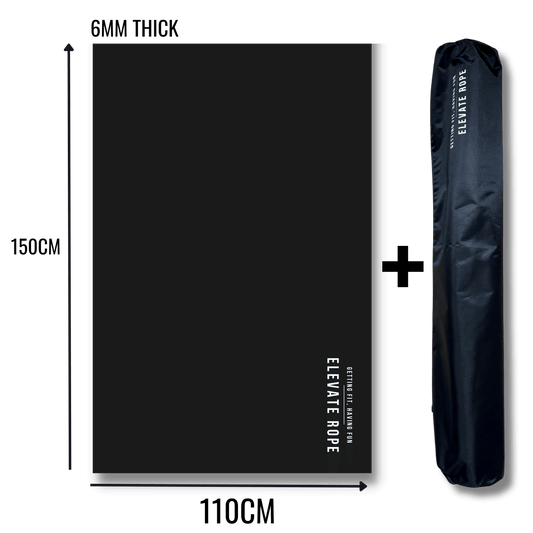
On a bearing-free rope it is the cable, not the handle, and usually at one specific spot. If you jump on concrete, the underside of the arc takes the damage. Beaded ropes show it differently: the beads wear flat on the side that hits the floor. Several customers who train outdoors have told us they bought a mat once they noticed it, which is the right call for both the rope and your shins.
Handles are the part we warranty for life. The cable is a consumable, the same way a running shoe outsole is. That split is deliberate: cables are cheap and easy to swap, handles should never be the reason you replace a rope.

Replacing a cable without tools
Because there is no metal in our cables, replacing or shortening one takes household scissors and the snaplock inside the handle. Cut, feed, lock, jump. The beaded ropes use a washer system instead of a snaplock, same idea, same lack of tools.
If you are not sure what length to cut to, work through the sizing guide first. Cutting is a one way operation.
Storage, travel and the thing everybody does wrong
The most common damage we see is not wear. It is a rope that lived at the bottom of a gym bag under a pair of shoes for a month. PVC takes a set when it is compressed in a fold. Coil it, drop it in a pouch, and it will outlast the fold-and-forget version by a wide margin. A rope bag is a small thing that solves it permanently.
Common questions
Do Elevate ropes need oil?
No. There is no bearing in the handle, so there is nothing to oil. Adding oil to a snaplock will only attract dust.
How often should I replace the cable?
When you can see the nylon core through the PVC, or when a beaded rope has flat spots that change how it turns. There is no fixed interval, it depends entirely on your surface. Concrete is hard on cables, a mat or wooden floor is easy on them.
Can I wash a jump rope?
Wipe it with a damp cloth and dry it. Do not soak the handles, and do not put it anywhere warm to speed up drying.
What is covered by the warranty?
The handles carry a lifetime warranty and every rope comes with a 90 day guarantee. Details are on the product pages in the rope range.
About the author
Geraldo Alken is the founder and CEO of Elevate Rope. He designs jump ropes and works every day with jumpers, from complete beginners to professionals.