





If you lift heavy, chances are your search for back pain relief started when your back spoke up at some point. Not as a sharp injury. Not as something “broken.” But as a constant tightness, stiffness, or dull ache that shows up after training—or the morning after.
This kind of back pain is incredibly common among gym-goers. And most of the time, it’s not a medical issue. It’s a system issue.
Strong muscles. Heavy loads. Long sessions. But poor posture outside the gym, fatigue-driven form breakdown, incomplete recovery, and low-quality fuel.
The problem isn’t that you’re lifting. The problem is that your body is being asked to handle more stress than it can organize.
This guide is for lifters who want to keep training, not shut it down. We’ll break down why non-clinical back pain is so common in strength training, and how a combined approach of jump rope conditioning and clean, anti-inflammatory nutrition can help restore posture, improve fatigue resistance, and support long-term back resilience—without adding more spinal load.
No rehab fluff. No “just stop lifting” advice. Just a smarter system for training hard and staying pain-free.

Why So Many Lifters Struggle With Back Pain (Even When They’re Strong)
Back pain in lifters is confusing because it feels contradictory.
You’re strong. You train regularly. You know how to brace. And yet—your back still feels beat up.
For many lifters searching for back pain relief, this contradiction is the most frustrating part.
The reason is simple: strength alone doesn’t protect the spine.
Most gym-goers train muscles, but the spine doesn’t just need strength. It needs organization.
It needs posture, timing, coordination, and the ability to stay stable under fatigue—not just under load.
Heavy lifting places repeated compressive and shear forces on the spine. That’s not inherently bad. In fact, it’s part of adaptation. But when those forces aren’t balanced by conditioning, recovery, and movement quality, the stress accumulates faster than the body can adapt.
That’s when pain shows up—and when most lifters start looking for back pain relief instead of better support.
For most lifters, this pain isn’t the result of a single bad rep or a serious injury. It’s the result of small breakdowns adding up:
- Technique slipping late in a session
- Core engagement fading under fatigue
- Posture collapsing during long hours of sitting
- Recovery being under-fueled or under-slept
Over time, the back becomes the place where all that unorganized stress lands.
This is why lifters often say:
“My form feels fine at the start, but my back tightens later.”
“I’m strong, but I feel fragile.”
“Nothing is injured, but something doesn’t feel right.”
The back isn’t weak.
It’s overloaded and under-supported.
Understanding this distinction is critical, because it changes the solution.
If back pain were simply about weakness, you’d fix it with more deadlifts and more core work. But effective back pain relief for lifters requires a broader system—one that supports the spine both inside and outside the gym.
That’s where most advice falls short. And it’s exactly what we’ll break down next.
The Real Causes of Non-Clinical Back Pain in Weightlifters
For most lifters, back pain doesn’t come from a single mistake.
It comes from patterns—repeated, subtle issues that compound over time.
Understanding these causes matters, because if you misidentify the problem, you’ll chase the wrong fix. Stretching more won’t help if the issue is fatigue. Strengthening more won’t help if the issue is posture. And resting more won’t help if inflammation is constantly being reintroduced—especially when the goal is long-term back pain relief, not temporary relief.
Let’s break down the most common contributors.
Poor Lifting Mechanics Under Fatigue
Most lifters don’t lose form on their first set.
They lose it on their last few reps, when fatigue quietly takes over.
As fatigue builds:
- Core bracing becomes delayed
- Hip hinge patterns soften
- The spine absorbs load meant for the hips and legs
Even small deviations—slight rounding, rushed reps, incomplete resets—add up when repeated week after week.
Your back isn’t failing because you’re weak.
It’s taking over when the rest of the system taps out.
This is why pain often shows up after training or the next morning—not during the lift itself.
Posture Outside the Gym Matters More Than You Think
You might train one hour a day.
You live in your posture for the other twenty-three.
Long hours of sitting, driving, phone use, and screen time slowly pull the body into positions that undo what you’re trying to build in the gym:
- Anterior pelvic tilt
- Rounded shoulders
- Reduced thoracic mobility
When you return to lifting, your body doesn’t reset automatically. You’re loading a system that’s already slightly out of position.
Over time, the spine becomes the compensation point.
You’re not “lifting wrong.”
You’re lifting on top of a posture that hasn’t been addressed.
Muscle Imbalances & Weak Supporting Systems
Heavy lifting prioritizes prime movers: glutes, quads, hamstrings, lats.
But the spine depends just as much on smaller stabilizers and timing muscles.
When those supporting systems lag behind:
- The back works harder to create stability
- Movement becomes rigid instead of coordinated
- Efficiency drops, stress rises
This isn’t about having a “weak core.”
It’s about having a core that doesn’t stay organized when breathing increases, heart rate rises, and fatigue sets in.
The spine doesn’t like chaos. And under fatigue, chaos shows up fast.
Inadequate Recovery & Chronic Inflammation Load
Recovery isn’t just sleep and rest days.
It’s also what you feed your body between sessions.
Poor recovery habits—especially inconsistent nutrition—create a low-grade inflammatory state that keeps tissues irritated and slow to adapt.
Common contributors include:
- Under-eating while training hard
- High reliance on ultra-processed foods
- Inadequate hydration and electrolytes
- Poor sleep quality
When inflammation stays elevated, even normal training stress feels excessive. Tightness lingers longer. Stiffness shows up sooner. And the back, once again, becomes the warning light.
Pain isn’t always a sign of damage.
Often, it’s a sign that recovery can’t keep up with demand.
When you zoom out, a clear pattern emerges:
Back pain in lifters is rarely about one thing going wrong.
It’s about multiple small gaps lining up at the same time—fatigue, posture, imbalances, and recovery all pulling in the wrong direction.
That’s why isolated fixes rarely work.
And it’s why most traditional advice misses the mark.
Next, we’ll look at why the standard back pain playbook fails lifters—and what’s missing from the conversation.

Why Traditional Back Pain Advice Fails Lifters
If you’ve ever searched for back pain relief, you’ve probably seen the same recommendations over and over again.
“Stop lifting.”
“Stretch more.”
“Strengthen your core.”
“Rest until it goes away.”
While none of these are wrong in isolation, they miss the reality of how lifters actually train—and why back pain relief often feels temporary at best.
Most back pain advice is designed for the general population—people who don’t load their bodies regularly, don’t train under fatigue, and don’t push performance boundaries. When that advice is applied to strength athletes, it falls apart.
Here’s why.
First, telling lifters to stop lifting ignores the fact that load tolerance is built, not avoided. Removing all stress might calm symptoms temporarily, but it rarely leads to lasting back pain relief. When lifting resumes, the same patterns reappear—often faster than before.
Second, passive stretching treats tightness as the problem, rather than a response. Tight muscles are often trying to create stability when the system feels unstable. Stretching them without restoring control can make the back feel looser—but not safer.
Third, “just strengthen your core” oversimplifies the issue. Many lifters already have strong cores in controlled environments. The real breakdown happens when breathing speeds up, heart rate rises, and fatigue disrupts timing. Strength without coordination doesn’t hold under pressure, which is why core work alone rarely delivers meaningful back pain relief for lifters.
Finally, rest alone doesn’t address why the pain showed up in the first place. If posture, recovery habits, and fatigue management remain unchanged, the same stress patterns will return as soon as training intensity increases—putting lifters right back where they started.
This is why so many lifters feel stuck in a loop:
Train hard
Feel tight or sore
Back off briefly
Start again
Pain returns
The missing piece isn’t another exercise or stretch.
It’s a system that helps the body stay organized while tired, between sessions, and outside the gym—something most generic back pain relief advice fails to address.
That’s where conditioning, rhythm, and low-impact movement enter the picture—and why they matter far more than most people realize.
The Missing Piece: Conditioning, Rhythm & Low-Impact Movement
Most lifters think of conditioning as something separate from strength.
Cardio for health. Lifting for performance.
But when it comes to back pain, conditioning isn’t optional—it’s foundational.
The spine relies on rhythm and timing just as much as it relies on strength. When breathing is controlled, posture stays upright, and movement flows, the back stays supported. When conditioning is poor, fatigue arrives early, coordination drops, and the spine takes on more stress than it should.
This is where many lifters unknowingly fall short.
Heavy training develops force.
Conditioning determines whether that force can be sustained without breakdown.
Low-impact, rhythmic movement plays a unique role here. It challenges posture and coordination without adding heavy compressive load to the spine. Instead of testing how much weight you can move, it tests how well your body stays organized as fatigue builds.
This kind of movement trains:
- Upright posture under increased heart rate
- Core engagement tied to breathing, not bracing alone
- Smooth coordination between hips, core, and upper body
Unlike traditional steady-state cardio, rhythmic conditioning forces constant micro-adjustments. You can’t zone out. Your body has to stay present and aligned.
For lifters dealing with persistent back tightness or discomfort, this matters. It creates a way to build fatigue resistance and movement quality without beating the spine down further.
And once that foundation is in place, strength training has something stable to sit on.
Next, we’ll look at a conditioning tool that does exactly this—challenging posture, rhythm, and coordination while keeping spinal load low—and why it’s particularly effective for lifters.

How Jump Rope Supports Back Pain Relief for Lifters
Jump rope has been part of serious training for decades, but not because it burns calories.
It’s used because it teaches the body to stay organized under fatigue.
For lifters dealing with back pain, that organization gap is often the missing link to lasting back pain relief.
Unlike heavy barbell work, jump rope applies very little compressive load to the spine. Yet it demands constant posture control, timing, and coordination. That combination makes it uniquely effective for reinforcing the systems that protect the back—without adding more stress to it.
Here’s how it works.
Improves Posture & Core Timing
Jump rope punishes poor posture immediately.
If you slump, overreach, or lose alignment, your rhythm breaks.
To keep the rope moving smoothly, your body naturally stacks:
- Head over shoulders
- Shoulders over hips
- Core engaged reflexively, not forced
This trains automatic posture, not conscious bracing. Over time, that carries over into lifting, where posture needs to hold even as breathing and fatigue increase.
The result isn’t a tighter back—it’s a more supported one, which is essential for sustainable back pain relief in lifters who train hard.
Trains Fatigue Resistance Without Heavy Spinal Load
Many lifters can maintain good form when fresh.
The problem starts when the heart rate rises and breathing becomes heavy.
Jump rope exposes this gap quickly. As fatigue builds, the body must choose between collapsing or staying controlled. Repeated exposure teaches the nervous system to maintain coordination even when tired.
Because the load is light, the spine isn’t being hammered in the process. You’re building fatigue resistance, not wear and tear—an important distinction for lifters whose goal is back pain relief, not just symptom management.
This is especially relevant for lifters whose back pain shows up late in sessions or during high-volume weeks.
Restores Rhythm Between Hips, Core & Upper Body
Efficient movement is rhythmic, not rigid.
Jump rope forces the hips, core, and upper body to work together in a continuous cycle. There’s no pausing, no grinding through reps. Every jump requires timing, balance, and smooth transitions.
When that rhythm improves:
- Movement becomes more efficient
- The back stops acting as a stabilizer of last resort
- Stress is distributed more evenly through the system
For lifters, this means better control during dynamic lifts, smoother setups, and less compensatory tension in the lower back—all of which contribute directly to long-term back pain relief.
Jump rope doesn’t replace strength training.
It supports it—by giving your spine a system that can handle fatigue, posture demands, and coordination long before heavy loads are involved.
Next, we’ll look at the other half of the equation: nutrition, and why what you eat plays a bigger role in back pain relief than most lifters realize.
Clean Eating & Inflammation: The Nutrition Side of Back Pain Relief
Training stress doesn’t end when the workout does.
What you eat determines whether that stress turns into adaptation—or lingers as stiffness, soreness, and pain.
For lifters dealing with back discomfort, nutrition often gets overlooked because it feels indirect. But non-clinical back pain is frequently tied to chronic, low-grade inflammation, not structural damage. And inflammation is heavily influenced by daily food choices.
This doesn’t mean you need a restrictive or extreme diet. It means you need to support recovery as aggressively as you train.
When nutrition is inconsistent or underpowered:
- Tissue repair slows down
- Muscles stay tight longer
- Small irritations never fully resolve
Over time, the back becomes the place where that recovery debt shows up—making true back pain relief difficult, even when training volume seems reasonable.
Foods That Support Recovery & Tissue Health
A recovery-supportive diet focuses on reducing unnecessary inflammation while providing the raw materials your body needs to adapt. Chronic inflammation is widely recognized as a contributor to persistent musculoskeletal discomfort, including non-specific back pain, as outlined by Harvard Health on inflammation and diet.
Key principles include:
- Adequate protein intake to support tissue repair, which is essential for muscular and connective tissue recovery
- Omega-3–rich foods (fatty fish, flax, walnuts) to help regulate inflammation, supported by evidence summarized by Harvard Health on omega-3 fatty acids
- Micronutrient-dense whole foods that support joint, muscle, and nervous system health
- Proper hydration and electrolytes, especially for lifters training hard or sweating heavily
This isn’t about “eating clean” for aesthetics. It’s about creating an internal environment where your back can recover between sessions instead of constantly playing catch-up.
Foods That Can Increase Inflammation (When Overused)
Certain foods aren’t inherently bad—but when they dominate the diet, they can raise baseline inflammation and slow recovery.
Common culprits include:
- Highly processed foods eaten frequently
- Excessive added sugars
- Regular alcohol intake
- Severe calorie restriction during intense training blocks
When recovery resources are low, even well-designed training starts to feel harsher. Tightness becomes persistent. Stiffness carries over from one session to the next. And pain feels harder to shake.
The goal isn’t perfection.
It’s consistency.
Just like jump rope supports posture and coordination without overloading the spine, clean, recovery-focused nutrition supports adaptation without adding stress.
Together, they form a system that helps the body handle training demands instead of accumulating damage.
Next, we’ll connect these two pieces—movement and nutrition—into a simple, sustainable framework for long-term back resilience.
The Combined System: Jump Rope + Clean Nutrition for Back Resilience
Back pain relief doesn’t come from a single intervention.
It comes from alignment between stress and support.
Jump rope and clean nutrition work together because they address two sides of the same problem.
Jump rope improves how your body handles stress.
Clean nutrition improves how your body recovers from it.
On their own, each helps. Together, they create resilience.
Jump rope restores posture, rhythm, and coordination under fatigue. It teaches your body to stay upright, controlled, and efficient when breathing is heavy and the nervous system is taxed. That directly reduces the chances of form breakdown and compensatory tension in the back during lifting.
Clean nutrition lowers the background noise. It reduces unnecessary inflammation, supports tissue repair, and ensures that the stress from training actually turns into adaptation instead of lingering soreness or stiffness.
Think of it as a loop:
- Training creates stress
- Jump rope organizes movement under fatigue
- Nutrition accelerates recovery
- Recovery improves training tolerance
- Better tolerance reduces pain
When any part of this loop is missing, the system leaks. Stress accumulates faster than the body can adapt, and the back becomes the bottleneck.
What makes this approach sustainable is that neither element is extreme. Jump rope doesn’t beat up the spine. Clean eating doesn’t require rigid restriction. Both are low-friction habits that fit around heavy training instead of competing with it.
This is why many lifters notice that when they add structured conditioning and improve their food quality, their back doesn’t just hurt less—it feels more dependable.
Not invincible.
But supported.
In the next section, we’ll make this practical by laying out beginner-friendly jump rope guidelines specifically for lifters dealing with back pain, so you know exactly how to apply this without aggravating symptoms.

Beginner Jump Rope Guidelines for Lifters With Back Pain
If you’re new to jump rope—or returning after dealing with back discomfort—the goal isn’t intensity.
It’s control.
For lifters seeking sustainable back pain relief, jump rope should make your body feel more organized after the session, not more beaten down. That means starting conservatively and prioritizing quality over volume.
Here’s how to approach it safely and effectively.
Start with short, low-impact rounds. One to three minutes at a time is plenty in the beginning. The objective is to maintain smooth rhythm and upright posture, not to push your lungs to the limit. As soon as posture starts to collapse or timing breaks down, the set is over—especially if back pain relief is the priority.
Focus on posture first. Keep your head tall, ribs stacked over hips, and shoulders relaxed. Excessive tension in the upper body often travels down to the lower back, so think “light and springy,” not rigid or forced. This posture-first approach is foundational for long-term back pain relief in lifters.
Choose a flat, forgiving surface. Rubber gym flooring, wood, or smooth concrete is preferable to uneven pavement. Proper footwear with a bit of cushioning helps reduce unnecessary impact, especially when your back is already sensitive and you’re working toward consistent back pain relief.
Keep the jumps low and quiet. You’re not trying to jump high. Minimal ground contact and soft landings reduce impact while reinforcing rhythm and control through the ankles, knees, and hips—without adding stress to the spine.
Pay attention to breathing. Nasal breathing or slow, controlled exhales help prevent excessive bracing and tension. If you’re holding your breath, you’re likely overworking your back, which works against effective back pain relief.
In terms of frequency, two to four short sessions per week is more than enough at the start. Jump rope works best as a support tool, not a replacement for your main training—especially when the goal is to support lifting while improving back pain relief.
Most importantly, treat it as practice, not punishment.
If you finish a session feeling taller, looser, and more coordinated, you’re doing it right.
In the next section, we’ll cover common mistakes lifters make when trying to fix back pain—mistakes that often undo otherwise good training habits and slow real back pain relief.
Common Mistakes Lifters Make When Trying to Fix Back Pain
When back pain shows up, most lifters don’t do nothing.
They usually do too much of the wrong thing.
Good intentions often lead to habits that feel productive but quietly make the problem harder to solve. Avoiding these mistakes can save months of frustration.
One of the most common errors is chasing pain relief instead of addressing the cause. Foam rolling, stretching, and massage can feel great in the moment, but when they’re used as the primary solution, they turn into temporary relief instead of long-term change. Pain comes back because the underlying stress patterns never change.
Another mistake is adding more intensity too quickly. Once the back starts to feel better, many lifters jump straight back into heavy volume or maximal loads. The system hasn’t rebuilt its tolerance yet, so symptoms return—often worse than before. Progress needs to be gradual, even when confidence comes back fast.
Many lifters also fall into the trap of over-bracing. Constantly locking the core down during every movement creates rigidity, not stability. The back ends up working harder to compensate for restricted breathing and poor rhythm, especially under fatigue.
Nutrition mistakes play a role as well. Under-eating while training hard is a common pattern, particularly during fat-loss phases. Recovery slows, inflammation stays elevated, and the back never quite feels “normal” again, even when training volume seems reasonable.
Finally, there’s the mistake of expecting a single fix. Back pain relief isn’t about one exercise, one stretch, or one diet tweak. It’s about aligning training stress, conditioning, posture, and recovery so the system supports itself.
Avoid these pitfalls, and progress becomes far more predictable.
Next, we’ll cover when back pain should be taken seriously and when it’s time to seek professional help—so you know the difference between manageable training-related discomfort and something that needs further evaluation.
When to Seek Professional Help (And When You Don’t Need To)
Not all back pain should be handled alone.
And just as importantly—not all back pain needs medical intervention.
Understanding this distinction is an important part of long-term back pain relief, because it helps you move forward with confidence instead of fear.
Most gym-related back pain is non-clinical. It comes from fatigue, posture, recovery gaps, and accumulated stress—not from structural damage. This type of discomfort often improves when training is better supported by conditioning, movement quality, and nutrition, which is why many lifters experience meaningful back pain relief without medical intervention.
However, there are situations where professional evaluation is the right move.
You should seek medical or physical therapy guidance if you experience:
- Sharp or sudden pain that doesn’t improve with rest
- Pain that radiates down the leg, especially with numbness or tingling
- Loss of strength, coordination, or bladder or bowel control
- Pain following a fall, accident, or traumatic event
- Symptoms that worsen consistently despite reduced training load
These are red flags and should never be ignored.
On the other hand, stiffness, tightness, dull aches, or discomfort that appears under fatigue and eases with movement are often signs that the body needs better support, not complete shutdown. In these cases, intelligent training adjustments can be a powerful driver of back pain relief.
The goal isn’t to push through pain blindly.
It’s to listen accurately.
Many lifters make the mistake of either catastrophizing normal training discomfort or dismissing warning signs entirely. Both extremes slow progress and often delay effective back pain relief.
If you’re unsure, getting clarity from a qualified professional can be empowering—not limiting. It can rule out serious issues and give you the confidence to focus on rebuilding capacity instead of worrying about damage.
Back resilience is built through intelligent training, not avoidance.
And knowing when to ask for help is part of training intelligently—and part of achieving sustainable back pain relief.
In the final section, we’ll zoom out and look at how all of this fits into a long-term, sustainable training lifestyle—one that keeps you lifting hard without constantly negotiating with back pain.

Building a Back-Resilient Training Lifestyle (Long-Term View)
Back pain relief isn’t a phase.
It’s not something you “fix” once and move on from.
For lifters who want to train for years—not just months—back resilience has to be built into the lifestyle, not patched in when things go wrong.
That means shifting the goal from pain avoidance to capacity building.
A resilient back is supported by systems that work together:
- Strength training that respects fatigue
- Conditioning that reinforces posture and rhythm
- Nutrition that supports recovery instead of undermining it
- Habits outside the gym that don’t undo your work inside it
None of these require extreme measures. They require consistency.
Jump rope fits into this long-term view because it doesn’t compete with heavy lifting. It complements it. It keeps the body coordinated, upright, and efficient as training demands increase. Clean, recovery-focused eating ensures that the stress you introduce actually leads to adaptation.
Over time, this approach changes how training feels.
Sessions become smoother.
Recovery feels more predictable.
The back stops being something you constantly manage—and starts being something you trust.
That’s the real goal.
Not lifting pain-free for a week.
But building a system that allows you to train hard, recover well, and stay in the game for the long run.
When your training supports your spine instead of constantly testing it, strength stops feeling fragile—and starts feeling sustainable.
A Simple Way to Start Rebuilding Back Resilience
If your back pain has made training feel fragile, the answer isn’t to train less—it’s to train smarter. For lifters chasing real back pain relief, this shift in approach is often the turning point.
You don’t need to overhaul your program overnight. Small, consistent changes make the biggest difference when it comes to sustainable back pain relief:
- Add low-impact conditioning that reinforces posture and rhythm
- Support recovery with cleaner, more intentional nutrition
- Pay attention to fatigue before it turns into compensation
Jump rope works best when it’s treated as a support tool, not a punishment. Short sessions. Clean movement. Consistent exposure. Paired with better recovery habits, it gives your body a way to handle stress instead of absorbing it through the lower back—an essential component of long-term back pain relief.
If you’re looking for a simple, spine-friendly way to improve conditioning without adding more load, start with rhythm, posture, and recovery first. Strength lasts longer when the system around it is built to support it, and back pain relief becomes a byproduct of smarter training—not something you constantly have to chase.
Choosing the Right Jump Rope for Back-Friendly Conditioning
Not all jump ropes feel the same—and when you’re using jump rope to support posture, rhythm, and recovery, the right rope matters.
A well-balanced rope makes it easier to stay upright, maintain smooth timing, and reduce unnecessary tension through the shoulders and lower back. Lightweight, poorly constructed ropes often force rushed movement and excess effort, which defeats the purpose of low-impact conditioning.
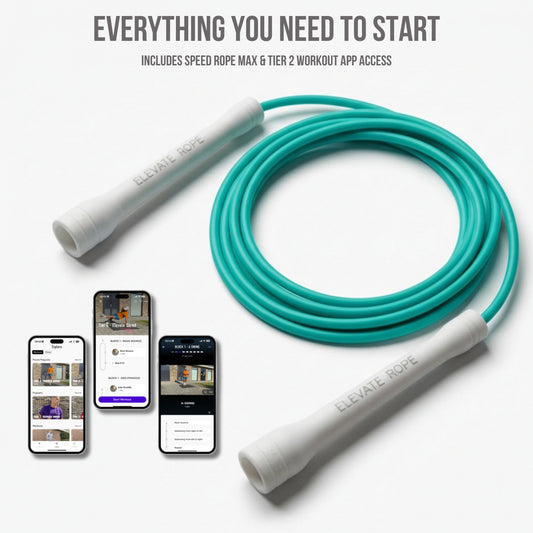
If you’re looking for jump ropes designed specifically for control, durability, and smooth rhythm, you can explore the full Elevate Rope collection here:
Whether you’re new to jump rope or adding it as a support tool alongside heavy lifting, starting with quality equipment helps reinforce clean movement patterns from the first session.