





A family jump rope set is one of the few household purchases that pays for itself within a single month. Most parents looking for a way to move more with their kids end up cycling through gym memberships, after-school sport clubs, and the occasional Saturday park visit, and they rarely add up the cost of all of it. The maths is brutal: a single child in a sport club in the EU averages around €40 to €60 per month, plus kit, plus the time cost of driving and waiting. A family jump rope set replaces that with ten minutes a day in your kitchen.
This guide walks through exactly what a family kit needs to include, why a one-size-fits-all rope is the only sensible approach for a household with mixed ages, and the cost comparison that explains why parents are quietly switching away from sport clubs. By the end you will know precisely which kit fits your family, what to expect from the first week, and how the 10-minute daily reset becomes the default routine rather than another good intention.
What you will learn in this guide:
What a complete family jump rope set actually needs to include
The real 12-month cost of sport clubs vs a single household kit
Why one adjustable rope covers ages 4 through to adult
The 10-minute daily reset structure that fits inside any schedule
How to set up the indoor space so children stick with it
Which kit to buy for one child, two children, or the whole family
The free app feature that replaces a €120 per year competitor subscription
What a Family Jump Rope Set Should Actually Include
Most products sold as a family jump rope set are just three identical ropes in a box, which solves almost nothing. A real family kit needs to handle three problems at once: mixed heights inside the household, mixed skill levels, and the surface the family will jump on. Get any one of these wrong and the kit ends up in a cupboard within a fortnight.
The first requirement is at least one fully adjustable beaded rope. The → Dignity Beaded Rope ships at three metres and shortens by removing beads, which means a four-year-old at one metre and a 1.85-metre parent use the same rope. The audible tick of the beads on every rotation also teaches rhythm to anyone in the household who has never jumped before, which is the entire point of starting with a beaded rope.
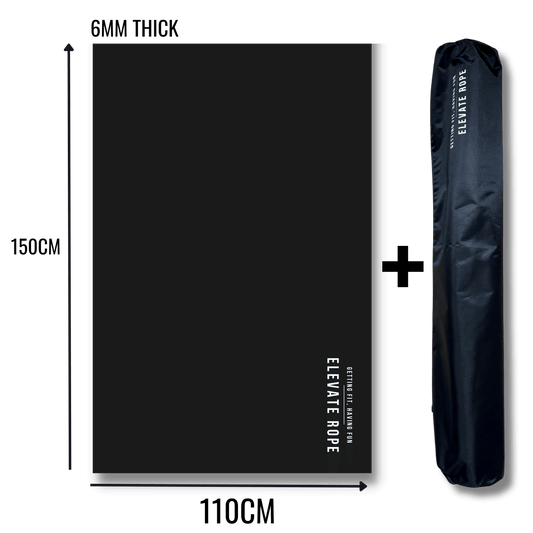
The second requirement is a faster rope for the family member who progresses fastest, usually a parent or an older child. The → Royal Blue Speed Rope handles double-unders and faster cardio intervals once the basics are in place. The third requirement is a mat. Indoor sessions on hardwood, tile, or laminate eat both the rope and the floor without one. A → Jump Rope Mat defines the jumping space, cushions joints for daily impact, and stops younger children drifting across the room mid-set.
The All-in-One Solution
The → Ascent Bundle packages all three of these into a single purchase: the beaded rope for beginners, the speed rope for progression, and a heavier rope for strength work. For a household with two or more active jumpers, this is the cleaner long-term decision because each family member can grab their own without sharing or re-adjusting. Add the jump rope mat alongside and the kit is complete.

The Real Cost: Family Kit vs One Year of Sport Clubs
This is the section most parents skip past and then regret. The honest cost comparison between a one-off family kit and the rolling monthly cost of organised activities is not close. The table below uses EU averages and assumes a household with two children doing one activity each.
| Cost component | Sport clubs (2 children, 12 months) | Family jump rope set (one purchase) |
| Monthly fees | €40–€60 per child x 2 = €80–€120/month | €0 ongoing |
| 12-month subtotal | €960–€1,440 | One-off kit cost |
| Kit and equipment | €60–€150 per child per season | Included in the set |
| Transport time | 2–3 hours per week driving and waiting | Zero, sessions happen at home |
| App or coaching access | Often extra: €5–€15 per month | Free Elevate App, over 100 workouts |
| Adults included? | No, parents pay separately for their own fitness | Yes, one adjustable rope covers the whole family |
| Year-one total range | €1,080–€1,830 plus time | Single bundle price, reusable for years |
The numbers above assume both children stay enrolled the full year, which most do not. The dropout rate for children's sport clubs in the first six months is well-documented across European studies, which means a large share of those monthly fees buy participation that never materialises. A household kit, by contrast, is always there. There is no minimum attendance, no peak-hour booking, no transport, and no second-child surcharge.
Short answer: A family jump rope set replaces around €1,000 to €1,800 per year in sport club fees and equipment for a household with two children, with no transport time and no separate cost for the parents.
Why it matters: The biggest barrier to family fitness is not motivation, it is logistics. A kit at home removes the schedule, the drive, and the per-child cost structure that quietly drains the household budget.
Best next step: Start with the → Ascent Bundle plus a jump rope mat. One purchase covers the whole household for years.

Why One Adjustable Rope Covers the Whole Family
The single biggest reason a family jump rope set works where other home-fitness setups fail is sizing. A treadmill suits one body. Resistance bands need different tensions for different ages. Even bicycles have to be bought per child and replaced every couple of years. A beaded rope is the rare piece of fitness equipment where one unit genuinely serves a four-year-old and a 1.9-metre adult, because the cord adjusts in five minutes by removing or adding beads.
This matters more than it sounds. It means a parent and child can take turns on the same rope, which removes the "I want a go" friction that derails most home workouts with kids. It means a younger sibling can grow into the rope rather than needing a new one. It means a household visitor can join in without a sizing problem. And it means the rope you buy when your child is six is the same rope they use at sixteen, because the cord is replaceable and the handles are built for years of daily use.
The Free App Advantage
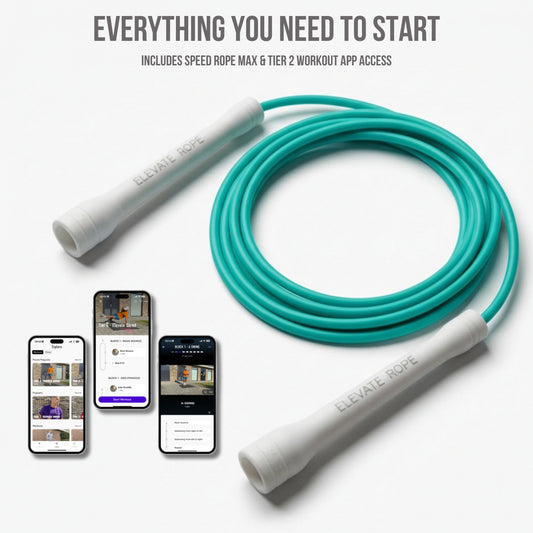
Every Elevate Rope purchase includes free lifetime access to the → Elevate App, with over 100 guided workouts, a beginner pathway specifically built for children, the Elevate26 daily challenge, and progress tracking for each household member. The competing rope brand most parents compare against charges roughly €120 per year for app access. Over five years of family use, that single line item alone covers the entire Elevate kit twice over. For a parent weighing the upfront cost, the app maths is decisive.

The 10-Minute Daily Reset: How the Habit Actually Works
The structure that makes a family kit stick is not a 30-minute workout. Ten minutes is the entire format, and the reason it works is that ten minutes is short enough to never feel like a chore. A typical session breaks down as two minutes of warm-up bouncing, six minutes of alternating intervals between family members, and two minutes of cool-down. One parent, one child, one rope, one mat. The session ends before anyone has time to negotiate their way out of it.
The best slot is usually right after the school day or right before dinner. Both windows already exist in the schedule, both have natural transition energy, and neither requires getting changed into specific clothes. The mat goes down, the rope comes out, the timer runs for ten minutes, and the kit goes back in the cupboard. Most families who establish this pattern report the child asks for the session before the parent does within the first two weeks.
What makes this different from a generic "exercise more as a family" pep talk is the equipment design. A beaded rope ticks on every rotation, which means even a four-year-old hears their own rhythm. The mat defines the space, which means younger children stay put rather than running off mid-session. The app gives the parent a structure to follow, which means there is no "what should we do today" decision to negotiate. Every piece of friction has been removed before the session starts.
Short answer: The 10-minute daily reset uses a fixed structure: two minutes warm-up, six minutes alternating intervals, two minutes cool-down. One parent, one child, one rope, one mat.
Why it matters: Long workouts fail with kids because attention runs out. Ten minutes is short enough to never feel like a chore, which is what turns a one-off into a daily habit.
Best next step: Use the Elevate App's beginner family pathway for the first 30 days. The session is pre-built, so there is no decision to make at the start.

Setting Up the Indoor Space
Most family kits fail not on the rope itself but on the space around it. A jumping area needs roughly 2 metres by 2 metres of clear floor with at least 2.5 metres of overhead clearance. Most kitchens, hallways, and living rooms have this if the coffee table is moved 30 centimetres. The mat goes down first, the rope sits on top, and the area becomes the family's jumping zone. The visual cue alone makes children gravitate toward it.
For hardwood, laminate, or tile floors, the mat is non-negotiable. Beaded ropes make contact with the floor on every rotation, and without protection both the rope and the floor wear down. A purpose-built jump rope mat is roughly 6 to 8mm thick, dense enough to absorb the impact, and large enough to keep a child within the jumping area. Yoga mats are too thin and shift around mid-jump, which is dangerous for younger children. Outdoor sessions on tarmac, paving, or a garden patio need no mat.
Which Family Kit Fits Your Household
The right kit depends on how many people will actually use it. A single child with one parent who occasionally joins in needs less than a two-parent, three-child household. The table below maps the three most common household setups to the right combination.
| Household | Recommended kit | Why |
| One child, occasional parent participation | Dignity Beaded Rope + Jump Rope Mat | One adjustable rope shared between parent and child. Mat protects indoor floor. |
| Two children, both jumping daily | Ascent Bundle + Jump Rope Mat | Each child gets their own rope. Speed rope ready for whichever child progresses fastest. |
| Full family, all ages participating | Ascent Bundle + extra Dignity Beaded Rope + Jump Rope Mat | Three ropes covers the household. Beaded ropes for beginners, speed and heavy for progression. |

The First 30 Days: What to Expect
Week one is the awkward week. Children miss jumps, ropes hit ankles, and the parent wonders whether the family really is going to stick with it. This is normal and brief. By the end of week one, most children who started on a beaded rope can complete 10 to 20 unbroken bounces, which is the threshold where it stops feeling like a struggle and starts feeling like a skill. The audible tick of the beads makes this faster than most parents expect.
Week two and three is the consolidation phase. Children start asking for the session rather than being prompted. The 10-minute structure becomes routine. The parent notices the child's coordination improving in other contexts, from bike-riding to schoolyard games. By week four, most families report the session has become the default rather than the exception. Skip a day and the child reminds you. This is the inflection point that no sport club ever delivers, because no sport club happens daily in your kitchen.
The Elevate26 challenge inside the app gives the first month a structure. It is 26 short daily sessions designed to take a complete beginner from first jump to confident skipping, with each session under 10 minutes. Most families finish the challenge with the child genuinely competing against the parent on session count, which is the moment the kit has paid for itself.

Frequently Asked Questions
What ages does a family jump rope set work for?
The Dignity Beaded Rope adjusts down to roughly one metre, which suits children from age four upward, and extends to three metres for adults up to around 1.95 metres tall. A single rope covers ages four through to adult in the same household, with adjustment taking around five minutes by removing or adding beads.
How much space do we need indoors?
Roughly 2 metres by 2 metres of clear floor with at least 2.5 metres of overhead clearance. Most kitchens, hallways, and living rooms have this once a coffee table or chair is moved. A jump rope mat defines the space and protects the floor from bead impact.
Can the whole family share one rope?
Yes, the Dignity Beaded Rope adjusts in around five minutes between users. For a household where more than one person jumps daily, however, separate ropes remove the sharing friction. The Ascent Bundle covers this with three ropes in a single purchase.
Is a jump rope mat really necessary?
For indoor sessions on hardwood, laminate, or tile, yes. Beaded ropes contact the floor on every rotation, and over time both the rope and the floor wear down without protection. The mat also cushions joints during daily impact and defines the jumping space, which keeps younger children in one spot.
How does the Elevate App compare to paid subscription apps?
Every Elevate Rope purchase includes free lifetime access to the Elevate App, with over 100 workouts, a children's beginner pathway, the Elevate26 challenge, and progress tracking. The competing brand most parents compare against charges around €120 per year for similar features. The lifetime difference covers multiple Elevate kits over five years.
How long before children stick with the habit?
Most families report the daily session becomes a default rather than a prompt by week three or four. Children typically reach 10 to 20 unbroken bounces by the end of week one on a beaded rope, which is the threshold where confidence builds and they start asking for the session themselves.
What if a child outgrows the beginner rope?
The progression is straightforward. Once a child consistently completes 100 unbroken bounces on a beaded rope, they are ready for a speed rope to unlock double-unders and faster cardio. The Ascent Bundle includes both, so the upgrade is built into the kit rather than requiring a second purchase.
Choosing Your Family Kit
For a single child with occasional parent participation, the Dignity Beaded Rope plus a Jump Rope Mat is enough. One adjustable rope, one protected jumping space, free app access, and a clear 10-minute daily structure. Total cost is a fraction of one season of sport clubs and the kit lasts for years.
For two or more active jumpers in the household, the Ascent Bundle plus a Jump Rope Mat is the cleaner long-term decision. Each family member has their own rope, the speed rope is ready for whichever member progresses fastest, and the heavier rope adds strength work as the household matures into the routine. The cost-per-year over five years works out to less than a single month of sport club fees for one child.
Whichever kit fits your household, the equipment is only half of it. The other half is the first ten-minute session, where the audible tick of the beaded rope, the defined jumping space of the mat, and the structured app workout combine to remove every reason a child might back out. Set the kit up once, run the session today, and the habit takes care of itself.
Sources
- Arizona State University, research on jump rope as a cardiovascular substitute for jogging.
- World Health Organisation, physical activity guidelines for children aged 5–17.
- Eurostat, physical activity participation data across EU member states.
- American Academy of Pediatrics, guidance on age-appropriate physical activity and family habit formation.
- National Library of Medicine, research on rhythmic auditory stimulation and motor learning in children.
- PubMed, peer-reviewed research on family fitness behaviour and child sport participation dropout rates.