


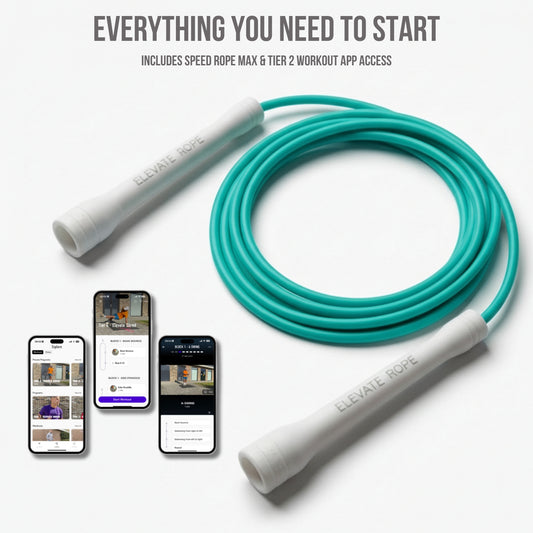




Jump rope cardio deserves more credit than it gets. Many people still treat skipping as a playground game or boxing warm-up. In practice, it can become a serious cardio workout with very little equipment.
You need a rope, enough space, and a few minutes to begin. A jump rope workout can challenge your heart, coordination, rhythm, and lower-body endurance together. Jump rope cardio also keeps the setup simple.
The biggest jump rope benefits do not come from making every session brutal. They come from repeatable practice that fits your current ability.
Below are five reasons jump rope cardio can earn a place in your weekly training.
1. Jump Rope Cardio Trains More Than Your Legs

A good jump rope workout asks several parts of your body to cooperate.
Your wrists guide each rotation. Your shoulders stay relaxed while your trunk keeps you organised. Your calves and feet handle repeated takeoffs and landings.
Your brain also tracks timing. Each rotation asks you to match the rope with a small, controlled jump.
That coordination is one of the most useful jump rope benefits. You are not only trying to raise your heart rate.
You are also learning to move with better rhythm and consistency.
This does not mean skipping is superior to every other cardio workout. Running, cycling, rowing, and swimming each train different qualities.
Jump rope cardio simply combines aerobic effort with a timing challenge. That combination can make a simple session feel surprisingly complete.
A 2022 systematic review examined jump rope training across 21 studies. It reported improvements across several health and sport-related fitness measures.
You can read the systematic review on PubMed for the full research context.
The review included mostly younger participants. That matters when applying the findings to every adult population.
Use the evidence as support for training potential, not a guarantee of identical results.
2. Jump Rope Cardio Can Be Time-Efficient
You do not need a long session to make a jump rope workout useful.
Intensity can rise quickly when your rope speed increases. Short intervals can also make a cardio workout easier to fit around a busy day.
Calorie burn is often used to sell skipping. Exact numbers are less useful than they appear.
Energy expenditure changes with body mass, pace, technique, fitness, and rest periods. Two people can perform the same jump rope workout and burn different amounts.
That is why this guide does not promise a fixed calorie number.
Instead, use effort and consistency to judge the session. You should feel your breathing and heart rate rise as intensity increases.
The CDC explains that aerobic activity counts when it reaches moderate or vigorous intensity. Adults can spread that activity across smaller sessions during the week.
Read the CDC adult activity guidance for current recommendations.
That flexibility is one of the practical jump rope benefits. You can train without planning a long gym visit.
Try five rounds of one minute at a comfortable pace. Rest for one minute after each round.
That gives you a simple ten-minute cardio workout. Beginners can shorten each work period if needed.
More experienced jumpers can use jump rope HIIT. Alternate controlled work with planned recovery.
Our Jump Rope HIIT guide explains how to build those intervals.
Jump rope HIIT should still look controlled. Fast rotations are useful only when your landing and timing remain stable.
3. Jump Rope Cardio Builds Fitness and Coordination
Cardio is only one part of what happens during skipping.
A jump rope workout asks you to repeat a movement while maintaining rhythm. That makes coordination part of the training demand.
A 2025 controlled study examined jump rope training in university students. The intervention included ten minutes of skipping once per week.
Researchers reported improvements in cardiovascular response and several strength measures compared with the control condition.
The study was small and involved university students. It does not prove every jump rope workout creates the same result.
You can review the 2025 jump rope study on PubMed for details.
For everyday training, think about three qualities.
First, keep the rope path consistent. Second, keep your jumps low. Third, keep your breathing under control.
Those habits make jump rope cardio easier to progress.
They also create a foundation for footwork, side swings, crosses, and double unders later.
The skill element is another reason many people enjoy a jump rope workout. Progress is not limited to going longer.
You can improve timing, change footwork, learn transitions, or increase pace.
Those options can make a cardio workout feel more engaging than repeating one movement at one speed.
4. Jump Rope Cardio Keeps Setup Simple
One of the clearest jump rope benefits is convenience. This is where jump rope cardio becomes especially practical.
You do not need a treadmill or large machine. You need enough safe space for the rope to clear your body.
That makes a jump rope workout easier to use at home, outdoors, or while travelling.
A clear surface matters more than a fancy location.
Choose stable ground with enough overhead room. Avoid slippery floors and crowded spaces.
Start with a rope that fits your height and current skill. Poor sizing can make a simple cardio workout unnecessarily frustrating.
A beginner may prefer a rope with more feedback. An experienced jumper may prefer something lighter for speed.
The equipment should match the job.
If your schedule is the main barrier, compare skipping with other options in our busy-people cardio guide.
A jump rope workout can also be easy to scale.
Three minutes may be enough for a beginner practice. Ten minutes can support a short cardio workout.
Longer sessions can work when your conditioning and impact tolerance are ready.
You do not need to earn the right to start. You only need a manageable first session. Convenience is one of the most useful jump rope benefits.
5. Jump Rope Cardio Can Stay Enjoyable

The best cardio workout is difficult to benefit from if you constantly avoid doing it.
Jump rope cardio has a skill element that can make practice feel playful.
You can learn a boxer step. You can add side swings. You can practise crossovers or work toward double unders.
That variety creates goals beyond calorie burn.
A jump rope workout can become a practice session instead of a punishment session.
That difference matters for consistency.
Some people prefer steady basic bounce. Others enjoy freestyle combinations. Some prefer jump rope HIIT because the intervals stay short.
There is no single correct style.
Choose the version you are willing to repeat. Then make progress slowly enough to protect your technique.
Enjoyment is one of the less measurable jump rope benefits. It is still important.
Training that feels rewarding is easier to return to.
How to Start Jump Rope Cardio as a Beginner
Start smaller than you think you need.
Your first jump rope workout should teach timing before endurance.
Use a correctly sized rope. Stand tall and keep your elbows near your sides.
Turn mainly from the wrists. Keep each jump low enough to clear the rope.
Try this simple beginner cardio workout:
- 30 seconds of basic bounce
- 30 to 60 seconds of rest
- Repeat for five rounds
- Stop when your timing breaks down
If 30 seconds feels too long, shorten the interval.
The goal is not exhaustion. The goal is five controlled rounds.
Add time only when the same jump rope workout starts feeling predictable.
After that, you can test small pace changes. This is where jump rope HIIT can become useful.
Do not begin with all-out intervals. Build a base first.
If you want to compare skipping with running, read How Many Calories Does Jump Rope Burn Compared to Running?.
That comparison explains why calorie claims need context.
How to Build a Better Jump Rope Workout
A good jump rope workout needs a purpose.
Choose one goal before starting.
For an easy cardio workout, keep a steady pace and comfortable breathing.
For jump rope HIIT, use short faster intervals with enough recovery.
For skill practice, lower the intensity and focus on rhythm.
You can also combine those goals across separate days.
One session can focus on basic bounce. Another can use jump rope HIIT. A third can focus on footwork.
That structure helps jump rope cardio stay useful instead of repetitive.
Track something simple.
Record total rounds, clean jumps, or interval length. Do not change everything at once.
Small progress is easier to judge.
Common Jump Rope Cardio Mistakes
Starting Too Fast
Speed can hide poor timing for a few seconds. Then the rope catches.
Start slower and build rhythm first.
Jumping Too High
High jumps waste energy and make your cardio workout harder to control.
Use only enough clearance for the rope.
Using Your Shoulders Too Much
Large arm circles disturb the rope path.
Keep your elbows closer and let your wrists guide each turn.
Making Every Session HIIT
Jump rope HIIT is useful, but not every session needs maximum effort.
Easy practice can improve skill while adding less fatigue.
Chasing Calorie Numbers
Calorie estimates are only estimates.
Focus on training quality, consistency, and progression instead.
Those are more useful jump rope benefits than a number from one session.
Final Thoughts: Give Jump Rope Cardio a Fair Chance
Jump rope cardio is simple, portable, and easy to scale.
It can support aerobic fitness while adding coordination and rhythm. It can also fit into shorter training windows.
The rope itself does not create results. Your practice does.
Start with a manageable cardio workout. Keep the jumps low and the rope controlled.
Add jump rope HIIT later if faster intervals match your goals.
Most importantly, choose a jump rope workout you can repeat consistently. Jump rope cardio works best when consistency comes first.
That is where the biggest jump rope benefits begin. Those jump rope benefits matter more than one exhausting workout.
Frequently Asked Questions
Is jump rope cardio good for beginners?
Yes. Jump rope cardio can work for beginners when sessions stay short and controlled. Start with basic bounce intervals and generous rest. Focus on rope timing before speed. Increase duration gradually as your technique improves. Stop when pain appears or your movement changes noticeably.
How long should a jump rope cardio workout be?
There is no single ideal duration. A beginner may start with several short rounds. Experienced jumpers can use longer continuous sets or intervals. The best jump rope cardio duration depends on fitness, technique, recovery, and the rest of your weekly training.
Is jump rope better cardio than running?
Neither option is automatically better. Jump rope adds a coordination and timing challenge. Running makes steady aerobic work easy to structure. Choose the cardio workout that fits your goals, joints, environment, and preferences. Some people use both across the same training week.
Can jump rope help with weight loss?
Jump rope can contribute to the activity side of a weight-loss plan. Weight change still depends on overall energy balance over time. A jump rope workout can increase energy expenditure, but it cannot target fat from one body area. Consistency, nutrition, recovery, and total activity all matter.
Should I do jump rope HIIT every day?
No. Jump rope HIIT creates more fatigue than easy skill practice. Recovery needs vary between people. Alternate harder intervals with easier sessions or rest when needed. Keep enough energy for your other training. Progress frequency only when your technique and recovery remain stable.
What are the main jump rope benefits?
Common jump rope benefits include aerobic training, coordination practice, rhythm, portability, and minimal equipment needs. The exact result depends on how you train. A relaxed skill session and a hard interval workout create different demands. Match the rope session to the outcome you actually want.
About the Author
Geraldo Alken is the founder and CEO of Elevate Rope. He helps people build jump rope skill, fitness, and confidence through practical training.