





Jump rope endurance improves when you can keep a steady rhythm without wasting energy. Good pacing matters as much as speed. Clean technique also helps you stay relaxed for longer rounds.
You do not need long sessions at the start. Short intervals can build conditioning without forcing sloppy reps. As your control improves, you can increase work time, rounds, or exercise difficulty.
This guide gives you five structured workouts for jump rope endurance. You will also learn pacing, rope choice, recovery, and simple ways to measure progress.
Why Jump Rope Endurance Builds Stamina
Jump rope endurance combines repeated jumping with continuous rope control. Your calves, shoulders, core, and cardiovascular system all work together.
A 2025 randomized trial found that interval and continuous rope skipping improved cardiorespiratory fitness in young adults. You can read the rope-skipping study on PubMed.
That does not mean every jump rope workout needs maximum intensity. Endurance training works best when you can maintain the planned pace.
The basic bounce is especially useful here. It is simple, repeatable, and easy to scale. Keep your jumps low and let your wrists turn the rope.
Older claims sometimes say ten minutes of skipping equals thirty minutes of jogging. Comparative research did not support that claim. The rope skipping and jogging study found different training responses.
Think of jump rope endurance as its own conditioning method. Measure progress against your previous sessions, not another sport.
How to Pace a Jump Rope Workout
A good jump rope workout should feel controlled during the early rounds. Starting too fast makes later rounds harder than necessary.
Use a pace that lets you keep your shoulders relaxed. Your elbows should stay near your sides. The rope should move mainly from your wrists.
For endurance training, consistency matters more than one explosive round. Try to finish each interval with similar technique.
A simple bounce should be your default movement. Add alternate foot steps when you want variety without a large technique change.
Double unders increase intensity quickly. Use doubles only when your single jumps stay consistent. They should not turn every round into a sprint.
A light rope can make longer rhythm-based sessions feel smooth and responsive. It also suits jumpers who already control the basic jump.
If you are still learning technique, review our Jump Rope Basics guide. It covers the basic jump and other core skills.
Choosing a Rope for Endurance Training

Your rope should match your current skill level and the purpose of the session.
A beaded rope can help newer jumpers feel the timing of each rotation. A speed rope is useful when you want faster continuous rhythm.
For longer endurance sessions, choose a rope you can control without gripping too hard. Comfortable handles also help you stay relaxed.
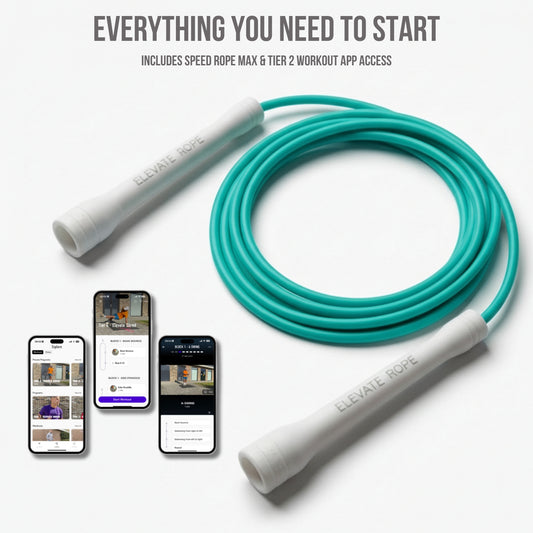
The Speed Rope MAX is one option for fast, repeatable conditioning sessions. Keep the pace controlled before adding harder variations.
A weighted option can change the demand of endurance training. The Titan weighted speed rope adds more resistance than a standard speed rope.
Do not switch ropes only because a workout feels difficult. First check your pace, posture, jump height, and recovery.
5 Jump Rope Endurance Workouts
These five jump rope endurance sessions progress from simple intervals to longer mixed rounds. Reduce the volume when your technique starts to break down.
Warm up before each jump rope workout. Start with easy movement, ankle circles, and light basic jump practice.
Workout 1: Beginner Rhythm Builder
This first workout builds consistency before speed.
Complete 10 rounds:
- 30 seconds basic jump
- 30 seconds rest
Keep every bounce low and quiet. Aim for the same rhythm from the first round to the last.
This endurance training session is intentionally simple. Do not add advanced doubles yet if they interrupt your rhythm.
When all ten rounds feel controlled, shorten the rest slightly. You can also add one or two rounds.
Workout 2: Steady Speed Rope Intervals
Use a speed rope for this session when your timing already feels comfortable.
Complete 12 rounds:
- 45 seconds basic jump
- 15 seconds rest
Stay at a moderate pace for the first six rounds. Increase your turnover slightly during the final six.
This session should challenge your breathing without destroying your technique. Relax your grip and keep the speed rope close to your body.
The goal is better jump rope endurance, not a personal speed record.
Workout 3: Basic Jump and Double Unders
This session introduces short bursts of double unders without making them the entire workout.
Complete 8 rounds:
- 45 seconds basic jump
- 10 double unders
- 45 seconds easy recovery
Return to an easy bounce immediately after each set of double unders. Keep the transition calm.
If double unders are inconsistent, replace them with 20 faster single jumps. The endurance training effect still comes from repeated controlled work.
A speed rope can work well here because the session includes both steady rhythm and faster rotations.
Workout 4: Mixed Endurance Circuit
This jump rope workout combines rope work with simple bodyweight movements.
Complete 5 rounds:
- 60 basic jump repetitions
- 40 alternate foot steps
- 20 high knees
- 10 bodyweight squats
- 60 seconds rest
Keep the rope sections smooth. Do not rush the rope to save time.
You can use a speed rope for a lighter feel. You can also use a weighted rope when you want more resistance.
This endurance training format adds variety while keeping jump rope endurance as the main goal.
Workout 5: Advanced Endurance Ladder
This is the hardest jump rope workout in the guide.
Complete 5 rounds:
- 60 seconds basic jump
- 20 double unders
- 60 seconds alternate foot
- 20 double unders
- 30 seconds fast basic jump
- 60 seconds rest
Use doubles only if you can land them without excessive tension. Otherwise, substitute fast single jumps.
A speed rope suits this ladder because the pace changes several times. Stay relaxed during the slower sections.
The final goal is stable jump rope endurance across all five rounds.
Common Jump Rope Endurance Mistakes
Small technique errors become more noticeable during longer endurance training.
Starting Too Fast
Many jumpers attack the first round. They then lose rhythm before the workout is halfway finished.
Start below your maximum pace. A jump rope workout for stamina should leave room for later rounds.
Jumping Too High
High jumps use more energy than necessary. They can also make the rope timing harder to control.
Keep the basic jump only high enough to clear the rope. This becomes more important as jump rope endurance sessions get longer.
Using Your Arms Too Much
Large arm circles create extra tension. Keep your elbows close and rotate from the wrists.
This helps the speed rope follow a cleaner path. It also makes endurance training feel less frantic.
Adding Double Unders Too Early
Advanced doubles are useful, but they are not required for endurance. Add them after your basic jump becomes reliable.
A difficult skill should not ruin the whole jump rope workout. Scale the movement when needed.
Ignoring Recovery
Hard endurance training does not need to happen every day. Recovery helps you return with better coordination and cleaner technique.
The CDC notes that adults can spread aerobic activity throughout the week. Their physical activity guidance also allows a mix of moderate and vigorous activity.
How to Build Jump Rope Endurance Over Time

Start with a baseline you can repeat safely. Do not test yourself until complete exhaustion.
Choose one simple jump rope workout and record the result. Track completed rounds, work time, rest time, and technique quality.
Repeat the same session before increasing difficulty. This gives your endurance training a clear comparison point.
Increase only one variable at a time. Add a round, extend the interval, or shorten the recovery.
Keep simple single jumps in your program even as you improve. It gives you a reliable movement for longer jump rope endurance sessions.
You can add double unders once or twice per week. Keep them as a small part of the session until they feel controlled.
A speed rope can support progression when your goal becomes faster turnover. Technique still comes before speed.
Progress is not only a longer timer. Better breathing, fewer mistakes, and steadier rhythm also show improved jump rope endurance.
How Often Should You Train Jump Rope Endurance?
Your ideal frequency depends on your current training load and experience.
Beginners can start with two or three short sessions each week. More experienced jumpers can add sessions when recovery stays good.
Not every jump rope workout should be hard. Mix easier rhythm sessions with demanding endurance training.
You can also alternate a speed rope session with easier technique work. This keeps training varied without forcing maximum intensity.
If your calves, feet, or ankles feel unusually sore, reduce the volume. Return when your movement feels comfortable again.
Consistency beats one exhausting week. Jump rope endurance develops through repeatable sessions and gradual progression.
Final Thoughts
Jump rope endurance is built through patience, rhythm, and repeatable work. You do not need to start with long sessions.
Choose one jump rope workout that matches your level. Keep the basic jump clean and use recovery before your technique falls apart.
Add double unders and faster speed rope work only when they support your rhythm. Endurance training should become more demanding gradually.
Track your rounds and work time. Over time, you should be able to do more without losing control.
Watch the full endurance session below if you want to follow a longer jump rope workout with Geraldo.
Frequently Asked Questions
How do I improve jump rope endurance?
Improve jump rope endurance by starting with repeatable intervals and controlled pacing. Keep your basic jump low and relaxed. Increase one variable at a time, such as work duration or total rounds. Use recovery periods that let you maintain clean technique throughout the full jump rope workout.
Is a speed rope good for jump rope endurance?
Yes, a speed rope can work well for jump rope endurance when your timing is already consistent. It supports fast, smooth rotations during longer intervals. Beginners should still prioritize the basic jump first. The best rope is one you can control without excessive grip tension or repeated mistakes.
Should I use double unders during endurance training?
Double unders can be part of endurance training, but they are optional. Add small sets between steady intervals instead of forcing them throughout every round. If double unders break your rhythm, replace them with faster single jumps. Your jump rope workout should stay controlled enough to complete the planned volume.
How long should a jump rope workout be?
A jump rope workout can be short or long depending on your experience. Beginners often benefit from shorter intervals with generous recovery. Advanced jumpers can extend total work time gradually. Focus on consistent technique instead of chasing a specific duration that causes your basic jump to deteriorate.
How often should beginners train jump rope endurance?
Beginners can start jump rope endurance with two or three short sessions each week. Leave enough recovery between harder days. Keep endurance training simple at first. A basic jump session with planned rest gives you a clear baseline before adding more rounds, speed, or double unders.
What if I keep tripping during longer rounds?
Frequent trips usually mean the pace or skill level is too demanding. Slow the jump rope workout and return to the basic jump. Check rope length and wrist position. A speed rope will not fix poor timing by itself. Build control first, then increase endurance training volume gradually.
About the Author
Geraldo Alken is the founder and CEO of Elevate Rope. He helps jumpers build fitness, skill, and stronger training habits.