








You need cardio for bad knees that actually works. Not watered-down exercise that barely raises your heart rate. Not activities so gentle they feel pointless. Real cardio that delivers real results without leaving you limping the next day.
Finding effective cardio for bad knees feels impossible when every option seems to hurt. Running is out. High-impact aerobics destroy you. Even walking flares things up on bad days. You start wondering if cardiovascular fitness is simply no longer available to you.
It is. You just need different tools.
The right cardio for bad knees protects your joints while still challenging your cardiovascular system. These activities exist. They're effective. And they can keep you fit for decades regardless of what your knees have been through.
This article ranks seven cardio options specifically for people with knee issues, explains why each one works, and helps you choose the best fit for your situation.
What you'll learn:
- 7 cardio options ranked by joint protection and effectiveness
- Why each option works for bad knees specifically
- How to modify activities for different severity levels
- The surprising option that research shows is gentler than running
- How to build a sustainable cardio routine around knee limitations
What Makes Cardio "Bad" for Knees
Before ranking the best cardio for bad knees, understanding what damages knees helps you evaluate any activity.
Impact forces:
Every time your foot hits the ground, force transmits through your joints. Running creates impact of 2-3 times body weight per stride. Jumping can create 5-7 times body weight on landing. These forces aren't inherently damaging to healthy joints, but compromised joints handle them poorly.
Repetitive loading:
Even moderate forces become problematic when repeated thousands of times without adequate recovery. A 30-minute run involves roughly 3,000-4,000 foot strikes. If your knees can't recover between sessions, damage accumulates.
Deep flexion under load:
Bending your knee past 90 degrees while bearing weight compresses the joint surfaces maximally. Activities requiring deep squatting or lunging stress knees more than those keeping flexion moderate.
Rotational stress:
The knee is a hinge joint designed to bend and straighten. Twisting movements create shear forces that stress ligaments and cartilage. Sports with cutting, pivoting, and direction changes challenge knees more than linear movements.
The best cardio for bad knees minimises these four factors while still elevating heart rate and building fitness.
Answer Block: What Is the Best Cardio for Bad Knees?
Short answer: Swimming offers the most joint protection with excellent cardiovascular benefit. Cycling provides outstanding results with virtually no impact. Jump rope, performed correctly on cushioned surfaces, produces lower joint forces than running while requiring minimal equipment. The best choice depends on your specific knee issues, available equipment, and personal preferences.
Key insight: Effective cardio for bad knees isn't about avoiding effort. It's about redirecting effort away from activities that stress compromised joints toward activities that challenge your cardiovascular system through different movement patterns.
Starting point: If your knees are severely compromised, start with water-based exercise or cycling. If your knees tolerate some impact, jump rope with proper technique offers exceptional efficiency.

The Rankings: 7 Best Cardio Options for Bad Knees
1. Swimming
Joint protection: ★★★★★ Cardiovascular benefit: ★★★★★ Accessibility: ★★★☆☆ Calorie burn: 400-700 calories/hour
Swimming is the gold standard cardio for bad knees. Water supports your body weight completely, eliminating impact forces entirely. You can achieve extremely high heart rates and significant calorie burn without any joint stress.
Why it works for bad knees:
Buoyancy removes gravity's effect on your joints. Water provides resistance in all directions, challenging muscles without impact. Temperature (slightly cool pool water) can reduce inflammation. Range of motion improves in the supportive environment.
Best strokes for knee issues:
Freestyle and backstroke keep legs relatively straight with flutter kicks that don't stress knees. Breaststroke requires knee flexion during the kick and may aggravate some conditions. Start with freestyle if you're unsure.
Limitations:
Requires pool access, which limits when and where you can train. Swimming technique matters for efficiency. Not everyone enjoys water-based exercise.
Best for: Severe knee problems, arthritis flares, post-surgical recovery, anyone with reliable pool access who enjoys swimming.
2. Cycling (Stationary or Outdoor)
Joint protection: ★★★★★ Cardiovascular benefit: ★★★★★ Accessibility: ★★★★☆ Calorie burn: 400-800 calories/hour
Cycling ranks among the best cardio for bad knees because it eliminates impact while providing excellent cardiovascular training. Your weight rests on the saddle, not your knees. The circular pedalling motion moves joints through a controlled range without loading them.
Why it works for bad knees:
No impact whatsoever. Predictable, controlled motion without surprises. Adjustable resistance allows intensity scaling without increasing joint stress. Knee flexion stays in a comfortable range (typically 25-110 degrees) rather than deep squatting positions.
Setup considerations:
Proper bike fit matters enormously. Saddle too low forces excessive knee flexion. Saddle too high causes overextension. Most knee-friendly position: slight bend (25-35 degrees) at the bottom of the pedal stroke.
Resistance affects joint stress. High resistance/low cadence loads knees more than low resistance/high cadence. Aim for 80-100 RPM with moderate resistance rather than grinding heavy gears slowly.
Stationary vs outdoor:
Stationary bikes offer controlled conditions and work in any weather. Outdoor cycling adds variety and enjoyment but introduces variables like hills and terrain. Both work excellently as cardio for bad knees.
Best for: Knee pain of any severity, people who enjoy cycling, those with access to a bike or gym with stationary cycles.
3. Jump Rope (With Proper Technique)
Joint protection: ★★★★☆ Cardiovascular benefit: ★★★★★ Accessibility: ★★★★★ Calorie burn: 700-1000 calories/hour
This ranking surprises most people searching for cardio for bad knees. Isn't jumping bad for knees?
Research says otherwise. A study published in Gait & Posture found that rope skipping produced lower peak joint forces than running at comparable intensity. The researchers described jump rope as "hip and knee protective."
Why it works for bad knees:
Proper jump rope technique involves landing on the balls of your feet with soft, bent knees. This creates natural shock absorption. Jump height is minimal (1-2cm clearance), reducing impact dramatically compared to running or jumping exercises.
The rope provides immediate feedback. Poor technique (jumping too high, landing hard) causes trips. This feedback naturally encourages efficient, joint-friendly movement.
Critical requirements:
Surface matters enormously. A cushioned mat or rubber flooring absorbs force that would otherwise stress your joints. Never jump on concrete without cushioning.
Technique must be correct. Land softly on balls of feet. Keep knees slightly bent throughout. Jump only high enough to clear the rope. Let wrists drive rotation, not arms.
Why it ranks this high:
Jump rope offers unmatched accessibility as cardio for bad knees. No gym membership, no pool, no expensive equipment. A rope and small space provide complete cardiovascular training anywhere.
The efficiency is remarkable. Ten minutes of jump rope delivers cardiovascular benefits equivalent to thirty minutes of jogging according to Arizona State University research. Less time training means less accumulated joint stress.
Best for: Home workouts, travel, people who find other options boring, those wanting maximum results in minimum time.
4. Rowing Machine
Joint protection: ★★★★☆ Cardiovascular benefit: ★★★★★ Accessibility: ★★★☆☆ Calorie burn: 500-700 calories/hour
Rowing provides full-body cardio for bad knees in a seated, non-impact position. Legs, back, arms, and core all work together through a smooth, controlled motion.
Why it works for bad knees:
No impact. Seated position supports body weight. Motion is linear and predictable. Resistance is adjustable without changing joint stress patterns.
Technique considerations:
The "catch" position (legs fully compressed at the front of the stroke) involves significant knee flexion. If deep flexion aggravates your knees, limit your range by not coming as far forward.
Poor rowing technique can stress the lower back. Learn proper form before adding intensity. The sequence is: legs push, back swings, arms pull. Reverse on the return.
Limitations:
Requires a rowing machine (home purchase or gym access). Technique learning curve is steeper than cycling. Deep knee flexion at catch may bother some conditions.
Best for: Full-body conditioning, people with gym access or space for a rower, those whose knees tolerate moderate flexion.
5. Elliptical Trainer
Joint protection: ★★★★☆ Cardiovascular benefit: ★★★★☆ Accessibility: ★★★☆☆ Calorie burn: 400-600 calories/hour
The elliptical mimics running motion without impact, making it popular cardio for bad knees among former runners.
Why it works for bad knees:
Feet stay on pedals throughout, eliminating landing forces completely. Motion is smooth and controlled. You can achieve running-like cardiovascular challenge without running's impact.
Considerations:
The fixed movement pattern doesn't suit everyone. Some people find the motion unnatural or uncomfortable. Stride length varies between machines—find one that matches your natural gait.
Quality varies significantly. Commercial gym ellipticals typically feel smoother than budget home models. If testing before purchase, pay attention to how natural the motion feels.
Limitations:
Requires machine access (gym or home purchase). Fixed movement pattern may feel awkward. Less engaging than outdoor activities for some people.
Best for: Runners with knee issues wanting similar motion, gym-based training, transition exercise during injury recovery.
6. Walking
Joint protection: ★★★★☆ Cardiovascular benefit: ★★★☆☆ Accessibility: ★★★★★ Calorie burn: 200-400 calories/hour
Walking is the most accessible cardio for bad knees. You can do it anywhere, anytime, with no equipment.
Why it works for bad knees:
One foot always maintains ground contact, limiting impact to 1-1.5 times body weight (versus 2-3 times for running). Pace is controllable. Motion is natural and familiar.
Limitations for cardiovascular training:
Walking doesn't elevate heart rate as significantly as more intense options. Building cardiovascular fitness through walking requires longer duration (45-60+ minutes) or added challenge (hills, incline treadmill, weighted vest).
For people whose knees tolerate nothing more intense, walking provides meaningful cardio for bad knees. But for those who can handle moderate impact, other options deliver more cardiovascular benefit per minute.
Modifications for increased intensity:
Incline walking (treadmill or hills) significantly increases cardiovascular demand without adding impact. Nordic walking with poles engages upper body. Interval walking (alternate brisk and moderate pace) creates training effect without sustained high impact.
Best for: Severe knee limitations, beginners, active recovery days, anyone wanting daily movement without equipment.
7. Water Aerobics
Joint protection: ★★★★★ Cardiovascular benefit: ★★★☆☆ Accessibility: ★★★☆☆ Calorie burn: 300-500 calories/hour
Water aerobics combines swimming's joint protection with upright, varied movements, making it excellent cardio for bad knees.
Why it works for bad knees:
Water supports body weight while providing resistance. Movements that would be painful on land become comfortable in water. Temperature and hydrostatic pressure may reduce swelling.
The social factor:
Classes provide structure, accountability, and social connection. For people who struggle with solo exercise motivation, the group environment helps.
Limitations:
Requires pool access. Class schedules may not fit your availability. Intensity is typically lower than lap swimming. Not ideal for those who prefer independent training.
Best for: Severe arthritis, people who enjoy group fitness, older adults, post-surgical rehabilitation.

Choosing the Right Option for Your Situation
The best cardio for bad knees depends on your specific circumstances.
If your knees are severely compromised:
Start with swimming or water aerobics. The complete elimination of impact allows cardiovascular training without any joint stress. Build fitness in the water, then consider adding land-based options as tolerance improves.
If your knees tolerate moderate activity:
Cycling and jump rope offer excellent options. Both provide intense cardiovascular training with minimal joint stress. Choose based on equipment access and personal preference.
If you want maximum convenience:
Jump rope requires only a rope and small space. Walking requires nothing at all. Both work as cardio for bad knees when performed appropriately.
If you miss running:
The elliptical provides the closest motion match. Alternatively, try run-walk intervals where brief running periods alternate with walking recovery, limiting total running exposure while maintaining some of the experience.
If you need variety:
Combine multiple options throughout your week. Swim Monday, cycle Wednesday, jump rope Friday. Variety prevents boredom and distributes stress across different movement patterns.
Building a Weekly Cardio Routine
Here's how to structure cardio for bad knees into a sustainable weekly routine.
Beginner template (weeks 1-4):
3 sessions per week, 20-30 minutes each. Choose one primary activity your knees tolerate well. Focus on consistency and learning proper technique. Keep intensity moderate—you should be able to hold a conversation.
Intermediate template (weeks 5-12):
4-5 sessions per week, 30-45 minutes each. Introduce a second activity for variety. Add one interval session per week (alternating higher and lower intensity within the workout). Monitor knee response and adjust as needed.
Sample weekly schedule:
Monday: Cycling 30 minutes (steady pace) Tuesday: Strength training (knee-friendly lower body exercises) Wednesday: Jump rope intervals 20 minutes (30 seconds on, 30 seconds rest) Thursday: Rest or walking Friday: Swimming 40 minutes Saturday: Longer cycling session 45-60 minutes (easy pace) Sunday: Rest
This structure provides four cardio sessions with variety, built-in recovery, and complementary strength training. Adjust activities based on what your knees tolerate.
Frequently Asked Questions
Can I still get fit with bad knees?
Absolutely. Cardiovascular fitness depends on challenging your heart and lungs, not on impact. Swimming, cycling, and jump rope can build exceptional fitness without stressing compromised knees. Many elite athletes with knee injuries maintain world-class conditioning through low-impact training.
How do I know if an activity is too much for my knees?
Pain that appears during the activity and worsens as you continue indicates too much stress. Pain that persists or increases in the hours and days after activity suggests you've exceeded your tolerance. Mild discomfort that fades quickly is generally acceptable. Sharp, sudden pain requires immediate stopping.
Will my knee problems get better if I exercise?
Often yes. Appropriate exercise strengthens muscles that support the knee, maintains joint mobility, and can reduce arthritis symptoms. Research consistently shows that people with knee osteoarthritis who exercise appropriately experience less pain than those who avoid activity. The key is "appropriate"—choosing activities your joints tolerate.
Should I take painkillers before cardio to manage knee pain?
Generally no. Pain is feedback. Masking it with medication allows you to exceed your joint's tolerance without realising it. If you need painkillers to exercise, the activity is probably too intense for your current condition. Find activities you can do without medication.
Is it better to do longer, easier sessions or shorter, harder sessions?
For bad knees, longer and easier generally creates less joint stress per calorie burned. High-intensity intervals concentrate more force into brief periods. However, very long sessions accumulate significant total stress. Moderate duration (30-45 minutes) at moderate intensity often works best as cardio for bad knees.
Can I ever run again with bad knees?
Possibly. It depends on what's causing your knee problems and how well you manage other factors. Some people with knee issues successfully return to limited running through careful volume management, proper surfaces, and complementary strength training. Others find running consistently aggravates their knees regardless of modifications. Work with a professional to determine what's realistic for your specific situation.
The Bottom Line: Your Knees Don't End Your Cardio
Bad knees don't mean no cardio. They mean different cardio.
The seven options ranked here provide a complete cardiovascular fitness toolkit that works around knee limitations rather than through them. Swimming and cycling offer zero-impact intensity. Jump rope provides surprising joint protection with unmatched convenience. Walking serves as accessible baseline activity.
You have options. Effective options. Options that can keep you fit for decades regardless of what your knees have been through.
Choose the activities that suit your situation, build gradually, monitor your response, and adjust as needed. Your cardiovascular health doesn't depend on running or high-impact exercise. It depends on consistent effort through whatever activities your body tolerates.
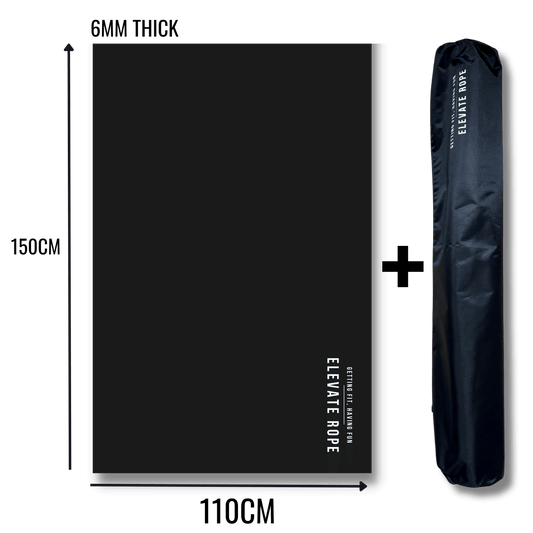
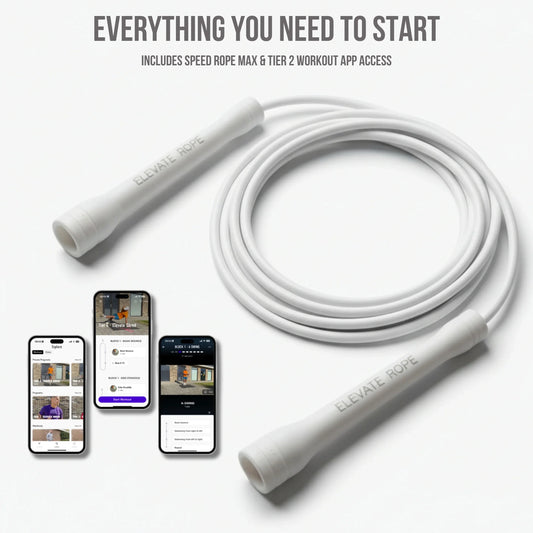
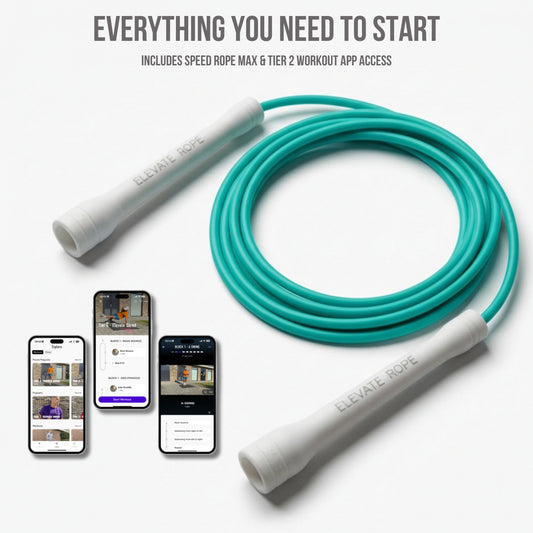
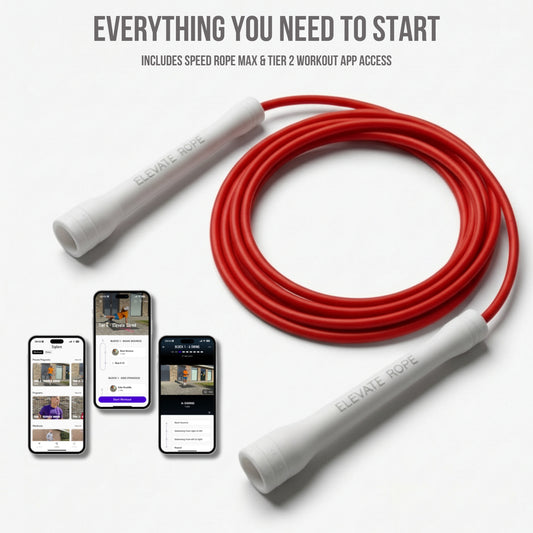
For more on joint-friendly training, read our complete guide to low-impact cardio for bad knees, hips, and joints. If you want to try jump rope as cardio for bad knees, the Elevate Dignity Beaded Rope provides the technique feedback beginners need, and our Jump Rope Mat creates the cushioned surface that protects joints during every session.
Your knees may be bad. Your cardio options aren't.
Sources
Jump rope joint loading comparison references biomechanical research published in Gait & Posture demonstrating lower peak forces during skipping compared to running. Hip and knee protective findings draw from additional Gait & Posture research on joint stress across exercise modalities. Cardiovascular equivalence of jump rope and jogging references research by John A. Baker at Arizona State University. Arthritis and exercise recommendations align with guidelines from the Arthritis Foundation and American College of Sports Medicine.