





Feeling tired after sitting all day is one of the most universally shared experiences among desk workers — and one of the least well understood. You finish a full day of work, close the laptop, and feel genuinely drained. Not sleepy exactly. Not the satisfying tiredness of physical effort. Something more like a grey, low-grade depletion that makes the couch the only reasonable destination. And somewhere in the back of your mind, the same thought surfaces: I haven't actually done anything. Why am I this tired?
The answer is not laziness, poor sleep hygiene, or insufficient caffeine. It's physiology — and once you understand the specific mechanisms behind sedentary fatigue, the fix becomes surprisingly obvious. This article explains exactly what happens to your body, brain, and nervous system during a day of sitting, why "doing nothing" is more physiologically taxing than it sounds, and what a ten-minute intervention actually does to break the cycle.
What you'll learn
The three distinct biological systems that sitting suppresses — and why each produces fatigue independently
Why mental work without physical movement creates a specific type of exhaustion that rest alone doesn't resolve
The cortisol-circulation connection most desk workers have never heard of
What happens to your energy levels within the first 10 minutes of physical movement
Why the most effective energy intervention fits in a desk drawer
You Weren't Doing Nothing: The Hidden Workload of a Sedentary Day
The first thing to understand is that a desk-based working day is not physiologically restful, even though it involves almost no physical movement. Mental effort — sustained concentration, decision-making, processing information, managing stress and interpersonal dynamics — consumes significant metabolic resources. The brain accounts for roughly 20% of the body's total energy expenditure despite representing only about 2% of its mass. A cognitively demanding eight-hour day burns through glucose and neurotransmitter precursors at a rate that accumulates into genuine neurological fatigue by mid-to-late afternoon.
This is sometimes called "decision fatigue" or "cognitive depletion," but those terms undersell the biochemistry. What's actually happening is that the prefrontal cortex — the brain region responsible for sustained attention, planning, and emotional regulation — progressively depletes the neurochemical resources it requires to function. By 3pm or 4pm, sustained focus becomes harder not because you're bored but because the raw materials for it are running low. The desire to stare blankly at something or reach for sugar is a neurological response, not a character flaw.
Why Sitting Makes This Worse, Not Better
Here is the paradox: while the brain is working hard, the body's circulatory system is working at its minimum. Physical stillness reduces heart rate, blood pressure, and cardiac output. Circulation to the extremities drops. Blood pools in the lower body. The delivery of oxygenated blood to the brain — which the brain needs to sustain cognitive function — is reduced precisely when the cognitive demand is highest. The brain is trying to run on a restricted fuel supply while simultaneously burning through that supply at an elevated rate.
Research published in Physiological Reports found that prolonged sitting impairs cerebral blood flow, with measurable reductions in blood velocity in the middle cerebral artery after 90 minutes of continuous sitting. Subsequent studies confirmed that even brief bouts of walking or movement restored cerebral blood flow to baseline levels within minutes. This is not a subtle finding — it means that the experience of afternoon cognitive fog has a direct, measurable vascular explanation, and that the solution is movement, not a fourth coffee.

The Three Systems Sitting Suppresses
Sedentary fatigue isn't produced by one mechanism. It emerges from three distinct biological systems operating in parallel, each contributing its own layer of depletion.
1. The Circulatory System: Sluggish Delivery
The human cardiovascular system is designed around movement. The heart pumps blood, but the skeletal muscles — particularly the large muscle groups in the legs — act as a secondary circulatory pump during physical activity. When you're seated for extended periods, this secondary pump goes offline. Blood pools in the lower limbs. Venous return to the heart slows. Cardiac output decreases. Oxygen delivery to every tissue in the body, including the brain, is reduced. The heaviness in the legs, the slight puffiness around the ankles, the sense of physical inertia that accumulates across a full working day — these are all downstream effects of circulatory stagnation. The body isn't failing; it's adapting to the absence of movement by down-regulating systems that movement would normally maintain.
2. The Endocrine System: Cortisol Without a Release Valve
Work-related stress — deadlines, meetings, emails, performance pressure — triggers the release of cortisol and adrenaline, the body's primary stress hormones. In an ancestral context, these hormones were designed to be burned off through physical action. Cortisol raises blood glucose, increases heart rate, and prepares the muscles for exertion. When the physical exertion never comes, as is the case in desk-based work, cortisol levels remain chronically elevated above baseline. Research consistently links elevated sedentary cortisol with fatigue, reduced mood, impaired sleep quality, and increased appetite for high-sugar foods. The after-work exhaustion many desk workers experience is partly a cortisol hangover — the hormonal residue of a stress response that was never physically resolved.
3. The Musculoskeletal System: Static Load and Postural Fatigue
Sitting is not a rest position for the musculoskeletal system. Maintaining a seated posture requires continuous, low-level contraction from the spinal erectors, neck muscles, and shoulder stabilisers. This sustained isometric loading produces a specific type of fatigue — not the acute fatigue of exercise, but the chronic tension that accumulates over hours of holding the same position against gravity. By the end of a full working day, the muscles of the upper back, neck, and shoulders have been under continuous low-grade load for seven to nine hours. The aching shoulders, the tight neck, and the sense of physical heaviness that most desk workers attribute to stress are largely the result of unrelieved postural load. This tension contributes directly to overall fatigue through the proprioceptive nervous system — pain and tension signals from the muscles create a constant low-level noise that depletes attentional resources and elevates perceived tiredness.
| System | What Sitting Does to It | How You Experience It |
| Circulatory | Reduces venous return, lowers cardiac output, restricts cerebral blood flow | Heavy legs, brain fog, inability to concentrate in the afternoon |
| Endocrine (cortisol) | Stress hormones accumulate without physical release | Grey, flat exhaustion; sugar cravings; poor sleep quality |
| Musculoskeletal | Sustained low-level postural load on spine, neck, and shoulders | Tension headaches, aching upper back, physical heaviness by end of day |
| Neurological (brain) | Cognitive depletion without circulatory support for recovery | Difficulty concentrating after lunch, decision fatigue, irritability |
Short answer: Feeling tired after sitting all day is caused by three simultaneous processes: circulatory stagnation reducing oxygen delivery to the brain, cortisol accumulation from work stress without a physical release, and sustained postural muscle load that depletes the nervous system over time.
Why it matters: Rest alone doesn't fix sedentary fatigue, because the systems causing it aren't fatigued by effort — they're suppressed by stillness. The intervention that resolves all three is brief, structured physical movement.
Best next step: The Elevate App includes guided 10-minute energy-reset routines designed specifically for this after-work fatigue pattern. Free to download.

Why Rest Doesn't Restore You
This is the part that confuses most desk workers. If you're exhausted, rest should help. And yet most people who collapse on the couch after a sedentary workday report that they don't feel meaningfully better an hour later — they feel more inert, not less. The reason is that rest addresses only one component of sedentary fatigue: the neurological depletion from cognitive work. It does nothing for circulatory stagnation, cortisol accumulation, or postural tension. In fact, continued inactivity after a full day of sitting can deepen all three.
Cortisol levels don't drop significantly in response to passive rest — they drop in response to physical exertion that burns off the blood glucose and neurochemical residue the stress response created. Circulation doesn't improve from lying on a couch — it improves when the secondary pump of muscular contraction restores venous return and cardiac output. Postural tension doesn't release through stillness — the muscles need to move through their full range to discharge the accumulated isometric load.
This is not an argument against rest. Sleep is irreplaceable. But the specific fatigue most desk workers experience at the end of a working day is not resolved by passive rest — it's resolved by the one thing that addresses all three underlying mechanisms simultaneously: a brief, moderately intense bout of physical movement.
The 10-Minute Reversal
The physiological response to even a short burst of physical activity is rapid and measurable. Within the first two to three minutes of aerobic exercise, cerebral blood flow begins to increase. By five minutes, heart rate elevation has restored venous return and peripheral circulation. Endorphins, dopamine, and norepinephrine release begins within the first few minutes of moderate exercise — these are precisely the neurochemicals depleted by a day of cognitive work, and physical movement replenishes them. Cortisol, elevated through the working day, begins to metabolise as the physical exertion provides the release the stress response was primed for. Postural muscles release as full-body movement breaks the isometric holding pattern of seated work.
Research published in the British Journal of Sports Medicine found that even 10 minutes of moderate-intensity exercise produced significant improvements in mood, cognitive performance, and self-reported energy levels. A separate analysis found that brief physical activity breaks during or after sedentary work periods reduced fatigue scores by measurable margins compared to passive rest or caffeine consumption. The mechanism isn't mysterious — it's the body doing exactly what it was designed to do when given the signal it has been waiting for all day.

The Most Efficient 10-Minute Energy Intervention
The logical question at this point is: what type of movement? Walking helps. Bodyweight exercises help. Yoga helps. But when the specific goal is addressing all three of the fatigue mechanisms described above — circulatory stagnation, cortisol release, and postural tension discharge — in the shortest possible time, the evidence points consistently toward cardiovascular exercise that involves rhythmic full-body movement.
Jump rope is the most efficient tool for this purpose available to a desk worker. A 10-minute session delivers cardiovascular stimulus equivalent to 30 minutes of jogging, based on research conducted at Arizona State University — meaning it produces the circulatory and neurochemical response of a full cardio session in a fraction of the time. The bilateral, rhythmic nature of jumping engages the entire posterior chain — the calves, hamstrings, glutes, and back muscles that have been functionally suppressed during a day of seated work. The physical demand provides the cortisol release valve that cognitive work alone can never supply. And the consistent upright posture required for jumping moves the spine, shoulders, and neck through the extension patterns that directly counteract the flexed, forward-hunched position of desk work.
For the 50,000+ members of the Elevate community, the pattern reported most consistently is this: they jump for 10 minutes after work expecting it to feel like an obligation, and discover instead that they feel better afterwards than they did before. Not the exhausted satisfaction of a long gym session. Something more immediate and chemical — a clearing of the afternoon fog that coffee was never quite able to produce.
The Elevate App includes structured 10-minute sessions specifically designed for after-work energy restoration — guided audio coaching removes the need to plan or motivate yourself. You press play and follow along. For desk workers who have never jumped rope before, the Dignity Beaded Rope provides the auditory rhythm feedback that makes the learning curve short enough to produce a good session from day one.
Short answer: Jump rope addresses all three mechanisms of desk-worker fatigue in a single 10-minute session — restoring circulation, providing a cortisol release valve, and discharging accumulated postural tension.
Why it matters: Most interventions for afternoon fatigue target one mechanism (caffeine targets neurological alertness only; walking helps circulation but does little for cortisol). Jump rope is the only portable, time-efficient tool that addresses all three simultaneously.
Best next step: The complete desk worker guide — including a 4-week starter plan, science, and product recommendations — is at Jump Rope for Desk Workers: The Complete Guide.

Frequently Asked Questions
Why do I feel so tired when I haven't done anything?
Sitting all day suppresses three biological systems simultaneously: circulation slows, stress hormones accumulate without physical release, and postural muscles fatigue under sustained low-grade load. The result is a specific type of exhaustion that feels unlike physical tiredness — because it is. It's neurological depletion combined with circulatory stagnation, not muscular fatigue from effort.
Does sitting all day really make you more tired than being active?
Yes — and the research consistently supports this. Studies comparing sedentary and moderately active workers find that those who incorporate physical movement throughout the day report lower fatigue scores at day's end, despite expending more energy. The reason is that movement maintains the circulatory and neurochemical systems that support sustained energy, whereas prolonged sitting progressively suppresses them.
Why doesn't resting on the couch after work make me feel better?
Because passive rest only addresses neurological depletion. It does nothing for circulatory stagnation, cortisol accumulation, or postural muscle tension — the other three sources of sedentary fatigue. Brief physical exercise addresses all four simultaneously, which is why most people report feeling significantly better after 10 minutes of movement than after an hour of passive rest.
Is the afternoon energy crash normal for desk workers?
Extremely common — and not simply a post-lunch blood sugar drop, as is often assumed. The afternoon crash in desk workers is primarily caused by the cumulative restriction of cerebral blood flow over several hours of sitting, combined with cortisol depletion from sustained cognitive work. A brief movement break in the early afternoon can prevent or significantly reduce it.
How quickly does movement improve energy levels?
Research indicates measurable improvements in self-reported energy, mood, and cognitive performance within 10 minutes of moderate aerobic exercise. Cerebral blood flow increases within the first two to three minutes. Dopamine and norepinephrine release begins within the first few minutes of sustained movement. The effect is rapid enough to be relevant during a lunch break or immediately after the working day ends.
The Simplest Fix to a Problem You've Had for Years
The fatigue pattern most desk workers experience isn't inevitable, and it isn't a personal failing. It's a physiological response to a working environment that asks the brain to run at high intensity while keeping the body completely still. The two requirements are in direct conflict, and the body eventually loses the ability to sustain both simultaneously without some form of physical intervention.
Ten minutes of jump rope is not a wellness trend or a productivity hack. It's a targeted physiological response to a specific, well-understood problem. It restores blood flow to the brain, metabolises the cortisol that desk work accumulates, and releases the postural tension that hours of sitting create. It does all of this in the time it takes to drink a coffee — and it works where the coffee doesn't.
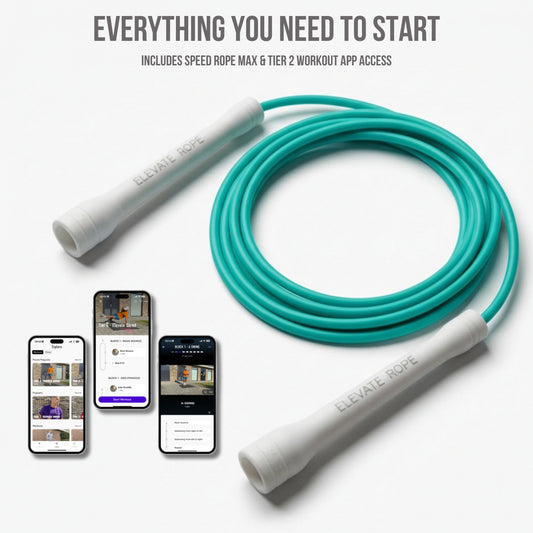
If you want to understand the full picture of what sitting is doing to your body and how to reverse it systematically, the complete desk worker guide covers everything from the science to a 4-week starter plan and the right equipment for your level. If you're ready to start today, the Elevate Beaded Rope and the free Elevate App give you everything you need for that first 10-minute session.
Sources
1. Ogoh et al., "The effect of prolonged sitting on cerebral blood flow" — Physiological Reports, 2017: pubmed.ncbi.nlm.nih.gov/28811315/
2. Hamer et al., "Prolonged sedentary time and physical activity in workplace and non-work contexts" — International Journal of Behavioral Nutrition and Physical Activity, 2010: pubmed.ncbi.nlm.nih.gov/20546607/
3. Stults-Kolehmainen & Sinha, "The effects of stress on physical activity and exercise" — Sports Medicine, 2014: pubmed.ncbi.nlm.nih.gov/23538599/
4. Penedo & Dahn, "Exercise and well-being: a review of mental and physical health benefits" — Current Opinion in Psychiatry, 2005: pubmed.ncbi.nlm.nih.gov/16639173/
5. Lambourne & Tomporowski, "The effect of exercise-induced arousal on cognitive task performance" — Brain Research, 2010: pubmed.ncbi.nlm.nih.gov/20580972/
6. Rope Skipping vs. Jogging equivalence — Arizona State University / AHA: ahajournals.org/doi/10.1161/01.CIR.45.1.104
7. Choi et al., "Muscle fatigue during sustained isometric contractions" — Journal of Applied Physiology, 2010: pubmed.ncbi.nlm.nih.gov/20075255/
You May Also Like
https://www.elevaterope.com/blogs/injuries-solutions/fix-bad-posture-desk-job
https://www.elevaterope.com/blogs/elevate-rope/sitting-all-day-weight-gain
https://www.elevaterope.com/blogs/home-workout-tips/exercise-at-work-break-room-jump-rope
https://www.elevaterope.com/blogs/home-workout-tips/jump-rope-vs-walking-office-workers
https://www.elevaterope.com/blogs/tips-tricks/quick-workout-before-work