





Jump rope for weight loss can be an effective way to burn calories, improve cardiovascular fitness, and build a leaner physique. But here's something many people overlook: jumping rope doesn't automatically mean you're losing body fat.
You can become an excellent jumper without seeing the physical changes you're working toward.
Why? Because your workout is only one part of the process. Nutrition, training intensity, recovery, and consistency all influence your results.
The good news is that you don't need complicated workouts or endless hours in the gym.
In this guide, I'll share six practical tips to help you use jump rope for weight loss. You'll learn how to structure your workouts, choose the right rope, and build habits that support long-term progress.
The goal isn't simply to burn more calories during one workout. It's to create a routine that helps you make progress consistently.
Why Jump Rope for Weight Loss?
Jumping rope is a cardiovascular exercise that challenges your heart, lungs, and muscles.
Every rotation requires coordination between your hands and feet. Meanwhile, your calves, core, shoulders, and forearms help control the movement.
Here are three reasons to consider jump rope for weight loss.
1. Cardiovascular Exercise and Calorie Expenditure
Jumping rope increases your heart rate and requires energy.
The number of calories you burn depends on your body weight, jumping pace, workout duration, and fitness level.
Faster jumping can increase intensity, but you don't need to perform advanced tricks to get a challenging workout.
Basic jumps and boxer steps can also provide effective cardio.
2. The Afterburn Effect
You may have heard about the afterburn effect.
Its scientific name is excess post-exercise oxygen consumption, or EPOC.
After demanding exercise, your body continues using additional energy while returning toward its resting state.
However, the afterburn effect doesn't guarantee significant fat loss.
Your total calorie balance over time matters much more than the calories burned after one workout.
3. Muscular Endurance and Coordination
Jumping rope challenges your lower body through repeated take-offs and landings.
Your arms, shoulders, and core also contribute to controlling the rope.
Over time, consistent practice can develop muscular endurance and coordination.
For muscle growth and maximal strength, combine jumping with progressive resistance training.
Jump rope can support fat loss, but it works best as part of a complete fitness routine.
6 Effective Tips for Jump Rope Weight Loss
Now that you understand the benefits, let's look at how to structure your training.
These six tips will help you approach jump rope for weight loss more effectively.
1. Pay Attention to Your Calorie Intake
Before changing your jumping technique or buying another rope, consider your nutrition.
This is one of the most important factors in losing body fat.
Weight loss generally requires a calorie deficit. This means your body uses more energy than you consume over time.
According to the CDC's weight management guidance, combining physical activity with appropriate dietary changes can create this deficit.
You can complete demanding jump rope workouts and still struggle to lose weight if your food intake consistently exceeds your energy needs.
How to Approach Your Nutrition
You don't need to follow an extreme diet.
Instead, focus on building sustainable eating habits.
Choose balanced meals that include protein, vegetables, fruit, and other nutritious foods.
Pay attention to portion sizes and your overall eating patterns.
Avoid treating every workout as permission to eat significantly more afterward.
Most importantly, don't confuse eating less with eating as little as possible.
Your body still needs enough energy to train and recover.
My advice: start with your nutrition, then use jump rope to support your overall weight-loss plan.
2. Understand Fasted Jump Rope Training
One strategy people often discuss is exercising before breakfast.
This is commonly called fasted cardio.
When you exercise after an overnight fast, your body may use a greater proportion of fat for energy during the session.
However, there's an important distinction.
Burning more fat during exercise doesn't necessarily mean losing more body fat over time.
A systematic review of fasted exercise found no clear weight-loss advantage over exercising after eating. The evidence was limited, but the findings highlight the importance of overall energy balance.
Should You Jump Rope Before Breakfast?
If you enjoy morning workouts without eating first, that may suit your routine.
However, fasting isn't required for jump rope weight loss.
Some people feel more comfortable training after a light meal.
Others prefer exercising before breakfast.
Choose the approach that supports your energy, performance, and consistency.
Avoid fasted exercise if it makes you dizzy or unwell. People managing blood sugar conditions should seek appropriate medical guidance before changing their eating and exercise routines.
The best workout timing is one you can maintain without compromising your health.
3. Add HIIT to Your Jump Rope Workouts
High-intensity interval training, or HIIT, is another way to make your jump rope sessions more challenging.
HIIT alternates demanding exercise with periods of recovery.
Instead of maintaining the same pace throughout your workout, you change the intensity.
This allows you to challenge your cardiovascular system without jumping continuously at maximum effort.
Try This Jump Rope HIIT Routine

Start with a comfortable warm-up.
Then complete the following circuit:
| Exercise | Duration |
| Basic jumps | 30 seconds |
| Recovery | 30 seconds |
| High knees | 30 seconds |
| Recovery | 30 seconds |
| Boxer step | 30 seconds |
| Recovery | 30 seconds |
Repeat the circuit according to your fitness level.
Beginners can increase their recovery periods or reduce their jumping time.
Experienced jumpers can gradually introduce faster rotations or more demanding movements.
Why Use HIIT for Weight Loss?
HIIT provides an opportunity to perform demanding cardiovascular exercise within a manageable session.
However, you don't need every workout to be high intensity.
Combine harder sessions with comfortable jumping and appropriate recovery.
Explore our jump rope HIIT workout guide for more training ideas.
4. Introduce a Heavy Jump Rope

If you've been jumping for a while, consider adding variety through different rope types.
Personally, I enjoy combining heavy ropes with speed ropes.
They create different training experiences and help keep my sessions engaging.
Heavy Rope vs Speed Rope
A speed rope supports responsive rotations and faster jumping combinations.
This makes it useful for cardio intervals, boxer steps, and double unders.
A heavy rope introduces greater resistance during rotation.
Your shoulders, forearms, and core must work harder to control the thicker cable.
However, a heavier rope doesn't automatically guarantee greater weight loss.
Your overall effort, workout duration, and nutrition still determine your progress.
How I Combine Both Rope Types
I like dividing my workout into different sections.
For example:
-
Heavy rope intervals for additional resistance.
-
Speed rope training for faster cardio and footwork.
-
Freestyle practice to develop new skills.
This creates variety without making every minute feel identical.
If you're new to weighted jumping, start with short intervals.
Gradually increase your workload as your technique improves.
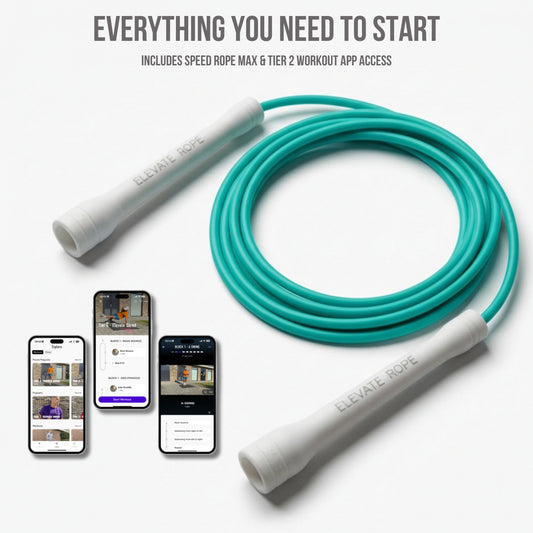
You can explore Elevate's heavy jump ropes and speed ropes to compare your options.
5. Make Your Jump Rope Sessions Count
When using jump rope for weight loss, it's tempting to focus entirely on learning new tricks.
That's one of the things I love about jumping.
There's always another movement to master.
However, constantly stopping to practise unfamiliar tricks can interrupt your cardio session.
A better approach is to separate conditioning from technical practice.
Divide Your Workout Into Three Sections
Here's how I like to structure a longer session.
Part 1: Heavy Rope Training
Use controlled intervals to challenge muscular endurance.
Start with shorter working periods and recover as needed.
Part 2: Cardio and HIIT
Choose movements you've already mastered.
Basic jumps, boxer steps, and alternating-foot jumps are useful options.
Increase intensity while maintaining proper technique.
Part 3: Freestyle Practice
Finish with techniques you're still learning.
Practise crossovers, releases, double unders, or other challenging combinations.
This section keeps the workout enjoyable while developing your skills.
Why This Structure Works
You give each part of the session a clear purpose.
The first section adds resistance.
The second focuses on cardiovascular conditioning.
The final section develops coordination and technique.
You don't need to complete all three sections every day.
Adjust the structure to your current fitness level and available time.
6. Stay Consistent With Your Jump Rope Routine
This might be the most important tip.
You can't expect one demanding workout to transform your physique.
Weight loss and fitness improvements develop through repeated habits.
That's why I encourage people to focus on building a routine they can maintain.
How Often Should You Jump Rope for Weight Loss?
There isn't one schedule that works for everyone.
Beginners may start with short sessions several times per week.
More experienced jumpers can gradually increase their workout duration and intensity.
For general health, the World Health Organization recommends regular aerobic activity alongside muscle-strengthening exercise.
Your jump rope sessions can contribute to those activity goals.
The important thing is finding a sustainable training frequency.
Consistency doesn't mean exhausting yourself every day. It means continuing to show up over time.
How to Track Your Jump Rope Weight Loss Progress
Seeing progress can help you stay motivated.
However, don't measure your success using the scale alone.
Body weight naturally fluctuates, and fitness improvements aren't always immediately visible.
Consider tracking several indicators.
Workout Consistency
Record how often you complete your planned sessions.
A simple workout calendar can help you identify patterns.
Jump Rope Performance
Track improvements in coordination and endurance.
For example, you might progress from ten consecutive jumps to fifty.
That is meaningful progress, even when your weight remains unchanged.
Body Measurements
If your goal includes changes in body composition, consider tracking waist measurements over time.
Use consistent conditions and avoid checking too frequently.
Energy and Recovery
Pay attention to how your body responds.
Are your workouts becoming more comfortable?
Can you maintain your rhythm for longer?
Are you recovering well between sessions?
These observations can help you make better training decisions.
Common Mistakes When Jumping Rope for Weight Loss
Jump rope training can become demanding quickly.
Avoid these mistakes when developing your routine.
Overtraining
More exercise isn't always better.
Repeated jumping places demands on your calves, ankles, and feet.
Allow adequate recovery and increase your workload gradually.
Ignoring Your Technique
Poor technique can make jumping unnecessarily difficult.
Keep your shoulders relaxed, elbows relatively close, and wrists in control of the rope.
Use small jumps and comfortable landings.
Skipping Your Warm-Up
Prepare your body before demanding intervals.
Begin with gentle movement and relaxed jumping.
Gradually increase intensity instead of starting at maximum effort.
Expecting Immediate Results
You may notice coordination improvements before visible changes in body composition.
Don't judge your entire routine after a few sessions.
Focus on the habits you can maintain over the coming weeks.
Frequently Asked Questions
Is jump rope good for weight loss?
Yes. Jump rope for weight loss can be effective because it contributes to physical activity and calorie expenditure. However, losing body fat depends on your overall energy balance. Combine regular workouts with sustainable eating habits, suitable recovery, and strength training for a more complete fitness routine.
How long should I jump rope to lose weight?
Start with a duration that matches your current fitness level. Beginners may benefit from short jumping intervals with generous recovery. More experienced jumpers can gradually increase their working time. There is no universal workout duration that guarantees weight loss. Consistency and overall energy balance matter more.
Should I jump rope every day for weight loss?
Daily jumping isn't necessary. Beginners may benefit from recovery days between demanding sessions. More experienced jumpers can alternate harder workouts with easier activity. Choose a training schedule that supports consistent exercise without excessive fatigue or pain.
Does fasted jumping burn more body fat?
Fasted exercise may increase fat use during an individual workout. However, this doesn't establish greater long-term body fat loss. Your overall calorie balance remains important. Choose your workout timing according to your energy, comfort, and personal circumstances.
Is a heavy rope better for weight loss?
A heavy rope adds resistance and can make a jump rope session more demanding. However, it doesn't automatically produce better weight-loss results than a speed rope. Choose equipment that matches your fitness level and allows consistent training. Both rope types can support cardiovascular exercise.
Conclusion: Make Jump Rope Weight Loss Sustainable
Jump rope for weight loss isn't about performing the hardest possible workout.
It's about combining effective training with habits that support your goals.
Pay attention to your nutrition.
Experiment with different workout structures.
Use HIIT and heavy ropes when appropriate.
Most importantly, stay consistent without neglecting recovery.
You don't need to master every trick or complete long workouts immediately.
Start with what you can manage. Build your rhythm and gradually increase the challenge.
Over time, those individual sessions can become a lasting fitness habit.
Ready to start your jump rope journey?
Explore Elevate Jump Ropes and find equipment that matches your training goals.