
Zum Inhalt springen

LEBENSLANGE GARANTIE (GRIFFE)

90 TAGE KOSTENLOSE RÜCKSENDUNGEN

LOVED BY 50,000+ HAPPY CUSTOMERS

LEBENSLANGE GARANTIE (GRIFFE)

90 TAGE KOSTENLOSE RÜCKSENDUNGEN

LOVED BY 50,000+ HAPPY CUSTOMERS

LEBENSLANGE GARANTIE (GRIFFE)

90 TAGE KOSTENLOSE RÜCKSENDUNGEN

LOVED BY 50,000+ HAPPY CUSTOMERS

Cardio Avoiders Advertorial - Sections 1-4
Woman running on treadmill looking exhausted and miserable

A Sports Physiologist Exposes the Real Reason 73% of Adults Avoid Cardiovascular Exercise

Why You Hate Cardio
(And Why It's Not Your Fault)

She should have loved running.

She was fit. Motivated. Disciplined enough to lift weights four days a week.

But every time she stepped on a treadmill, something died inside her.

If you've ever stared at the gym clock wondering why time moves backward during cardio...

If you've negotiated with yourself—"just 15 minutes"—then quit at 7...

If you've felt guilty about skipping cardio again, even though you know you need it...

Then what I discovered might change everything you believe about cardiovascular exercise.

Because 73% of gym members avoid cardio entirely. Not because they're lazy. Not because they lack willpower.

But because they've been doing the wrong type of cardio.

And this isn't about motivation. This isn't about "pushing through."

This is about neuroscience.

The Breaking Point That Changed My Practice

I'm Dr. Sarah Chen. I spent 19 years as a sports physiologist, working with everyone from professional athletes to weekend warriors.

I thought I understood cardio.

Then I met Rachel.

Rachel was 34. Successful marketing director. Crushed it in the weight room. But she hadn't completed a cardio session in three years.

"I've tried everything. Running. Cycling. Elliptical. Swimming. I hate all of it. I last maybe ten minutes before I want to claw my eyes out."

I gave her the standard advice. Find a workout buddy. Listen to podcasts. Set small goals.

Nothing worked.

Six months later, Rachel was pre-diabetic. Her doctor was concerned about her heart health.

A woman who lifted weights four days a week was developing cardiovascular disease because she couldn't tolerate 20 minutes of cardio.

That's when I realized: The problem wasn't Rachel.

The problem was what we'd been telling people about cardio for 40 years.

The Research That Made Me Angry

I dove into the neuroscience literature. What I found shocked me.

A 2019 study from the University of British Columbia measured brain activity during different forms of exercise.

During treadmill running, the brain's prefrontal cortex essentially shut down within 8 minutes.

The researchers called it "exercise-induced cognitive disengagement."

Translation: Your brain checks out because there's nothing to process.

8 min That's how long before your brain goes into standby mode on a treadmill

You're not weak. You're not lazy. Your brain is literally going into standby mode.

Here's what made me angry:

The fitness industry knows this. They've known for decades. Yet they keep prescribing treadmills and ellipticals—exercises specifically designed to be mindless.

Then they blame you when you can't stick with it.

Powered by Omni Themes
Cardio Avoiders Advertorial - Sections 5-8

The Missing Piece Nobody Talks About

The same UBC study found something else.

When subjects performed skill-based cardiovascular exercise—activities requiring timing, coordination, and rhythm—their brains stayed fully engaged for the entire session.

Not partially engaged. Fully engaged.

The difference? Dopamine.

Mindless cardio produces minimal dopamine. Your brain receives no reward signal. Every minute feels like punishment.

Skill-based cardio triggers continuous dopamine release. Your brain stays engaged because it's actually learning something.

This is why you can scroll social media for two hours but can't survive 15 minutes on a treadmill.

Your brain needs stimulation. Treadmills provide none.

Why Traditional "Solutions" Always Fail

I tested this theory with my patients.

"Listen to music."

Doesn't work.

External stimulation doesn't replace the internal engagement your brain craves. Music becomes background noise within minutes.

"Watch TV while you run."

Doesn't work.

Your brain can't fully engage with visual content while performing repetitive motion. You end up half-watching and fully suffering.

"Find a cardio buddy."

Doesn't work.

Social support helps motivation. It doesn't change the fundamental neuroscience of what your brain needs during exercise.

"Just push through."

Definitely doesn't work.

Willpower is a finite resource. Using it to fight your brain's natural response to boredom guarantees eventual failure.

Every common solution targets symptoms.

None address the actual problem: Your brain needs skill acquisition during cardio.

What Athletes Have Known for Decades

Here's what frustrated me most.

Professional athletes figured this out years ago.

Professional athletes jumping rope - boxer, MMA fighter, CrossFit athlete

Floyd Mayweather doesn't run on treadmills. He jumps rope.

MMA fighters don't use ellipticals. They jump rope.

CrossFit athletes don't suffer through stationary bikes. They jump rope.

The fittest humans on earth avoid the cardio machines we prescribe to everyone else.

Why?

Because jump rope is skill-based cardio. Your brain stays engaged because you're constantly processing timing, rhythm, and coordination.

10 min Jump rope
=
30 min Jogging

And here's the key difference: Those 10 minutes feel like 10 minutes. Not like 10 hours.

The Shift That Changed Everything

I started recommending jump rope to my "cardio-resistant" patients.

The results defied 19 years of clinical experience.

Rachel

Rachel, 34

From 10 min max → 20 min sessions in 3 weeks

The woman who couldn't tolerate 10 minutes of any cardio was jumping rope for 20 minutes within three weeks. Without hating it.

James

James, 52

From 0 cardio → 5 days/week

Hadn't done voluntary cardio in eight years. After switching to jump rope, he completed 15-minute sessions five days a week. He told me it "didn't feel like cardio."

Maria

Maria, 41

Lost 12 lbs in 2 months

Not because jump rope burns more calories—but because she actually did it consistently.

Woman jumping rope at home, smiling and enjoying her workout

The best cardio isn't the one that burns the most calories. It's the one you'll actually do.

Cardio Avoiders Advertorial - Sections 9-12

Why Most Jump Ropes Make the Problem Worse

Here's what I learned the hard way.

Not all jump ropes work for this purpose.

Cheap ropes with swivel bearings

Spin faster than your body can process. Your brain can't establish rhythm because the rope moves unpredictably.

Wire cable ropes

Snap through the air too quickly. Beginners trip constantly, creating frustration instead of engagement.

Heavy weighted ropes

Exhaust your arms before your cardiovascular system gets a workout.

Most jump ropes are designed for people who already know how to jump rope.

For the 73% who've been struggling with cardio? They need something different.

The Rope That Finally Makes Sense

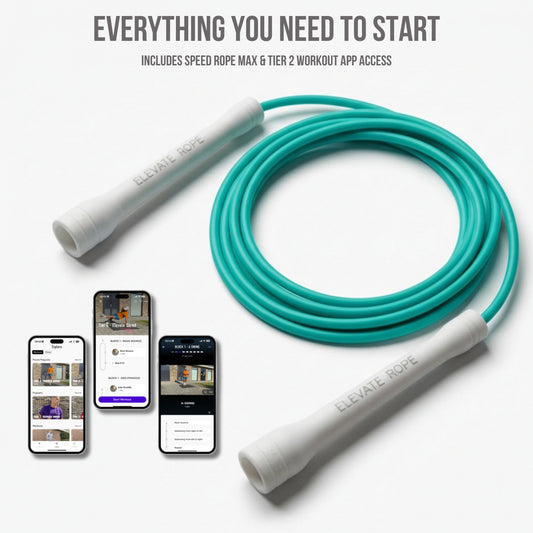
A company called Elevate Rope engineered their equipment specifically for this neuroscience.

Elevate Rope beaded jump rope product shot

2.5cm Beaded Design

Beads catch air during rotation. You can feel where the rope is at all times. Constant feedback for your brain.

No Swivel Bearings

The rope moves at your body's natural pace, not artificially faster.

Flexible PVC

Forgiving when you trip. Which you will. Everyone does at first.

100+ App Tutorials

Week one: basics. Week four: crossovers. Week eight: combinations. Skill progression is the point.

Boredom becomes impossible when you're constantly learning.

90-Day Risk-Free Guarantee
Lifetime Handle Warranty

What "Normal" Should Actually Look Like

After 19 years, I've changed how I think about cardio.

"How do I make myself tolerate boring exercise?"

"Why am I doing boring exercise in the first place?"

You've spent years blaming yourself for not pushing through treadmill sessions.

But your brain was trying to tell you something important.

Mindless cardio is a mismatch for how humans are designed to move.

Skill-based cardio isn't a hack. It's how our ancestors exercised for thousands of years—through movement that required coordination, timing, and engagement.

Invented 1952 Treadmill
200,000 years Your Brain

One of these things understands what you need. The other doesn't.

Limited Offer

Right Now: Buy One, Get One Free

Elevate Rope is running a limited promotion on their complete rope collection.

Buy any rope, get a second rope FREE

Mix and match colors and styles

Buy One Get One Free - two Elevate Rope jump ropes bundle
One for home
One for travel
Or share with a partner

If you've struggled with cardio your entire life—if you've felt guilty, lazy, or broken because you can't tolerate treadmills—this might be the missing piece.

Not more motivation.

Not more willpower.

Just cardio that works with your brain instead of against it.

Check Availability →

90-day risk-free guarantee • Free shipping on orders over €50

Cardio Avoiders Advertorial - Sections 13-14

P.S.

Rachel texted me last month. She's been jumping rope consistently for eight months now. Her A1C is normal. Her doctor is impressed.

She said something that stuck with me:

"I don't hate cardio anymore. I just hated the wrong kind."

Maybe you do too.

Try the BOGO Offer →

Results may vary. Consult your physician before beginning any exercise program. This article is for informational purposes only and does not constitute medical advice. Individual results depend on various factors including starting fitness level, consistency, and adherence to the program.